

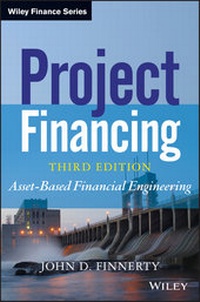
Project Financing
Description

As an effective alternative to conventional direct financing, project financing has become one of the hottest topics in corporate finance. It's being used more and more frequently—and more successfully—on a wide variety of high-profile corporate projects, and has long been used to fund large-scale natural resource projects. But the challenges of successful project financing are immense, and the requirements of the process can easily be misunderstood. That's why John Finnerty has returned with the Third Edition of Project Financing.
Drawing on his vast experience in the field, Finnerty takes you through the process step by step. Using updated examples and case studies that illustrate how to apply the analytical techniques described in the book, he covers the rationale for project financing, how to prepare the financial plan, assess the risks, design the financing mix, raise the funds, and much more.
- Includes completely new chapters that cover the financing of sustainable projects as well as Sharia-compliant (Islamic) project financing
- New material has been added to the discussion of financial modeling and international debt financing
- Explores today's most innovative financing techniques and analyzes the shortcomings of unsuccessful project financing attempts
Whether you're a corporate finance professional, project planner, or private investor, Project Financing, Third Edition demystifies the complexities of project financing and provides an invaluable guide for anyone who wants to master innovation in corporate finance today.
John D. Finnerty, PhD, is Professor of Finance at Fordham University's Graduate School of Business and served as the founding director of the MS in Quantitative Finance Program. He is also Managing Principal of Finnerty Economic Consulting, LLC, which specializes in business valuation, securities valuation, solvency analysis, calculation of damages, and litigation support. Finnerty has testified as an expert in valuation, securities, and other financial matters in federal and state court, and in arbitration and mediation proceedings. His research focuses on corporate finance, including project financing and fixed income securities and derivatives valuation. Finnerty has published thirteen books, including the first and second editions of Project Financing, and more than one hundred articles and professional papers. He is a former president and director of the Fixed Income Analysts Society, and a former president, director, and chair of the trustees of the Eastern Finance Association. Finnerty is a trustee of the Eastern Finance Association and a Director of the Financial Management Association. He was inducted into the Fixed Income Analysts Society Hall of Fame in 2011.
More details
Other editions
Additional editions
Content
- Project Financing: Asset-Based Financial Engineering
- Contents
- Preface
- Acknowledgments
- Chapter 1: What Is Project Financing?
- WHAT I S PROJECT FINANCING?
- A HISTORICAL PERSPECTIVE
- REQUIREMENTS FOR PROJECT FINANCING
- APPROPRIATENESS OF PROJECT FINANCING
- AN EXAMPLE
- CONCLUSION
- Chapter 2: The Rationale for Project Financing
- PRIOR STUDIES' EXPLANATIONS
- THE NEED FOR CONTRACTS
- THE ADVANTAGES OF SEPARATE INCORPORATION
- COUNTERING THE UNDERINVESTMENT PROBLEM
- REALLOCATING FREE CASH FLOW
- REDUCING ASYMMETRIC INFORMATION AND SIGNALING COSTS
- MORE E F F I C I E N T STRUCTURING OF DEBT CONTRACTS
- MORE EFFECTIVE CORPORATE ORGANIZATION AND MANAGEMENT COMPENSATION
- PROJECT FINANCING VERSUS DIRECT FINANCING
- ADVANTAGES OF PROJECT FINANCING
- DISADVANTAGES OF PROJECT FINANCING
- CONCLUSION
- Chapter 3: What Is Special about Large Projects?
- HOW LARGE ARE "LARGE" PROJECTS?
- LENGTH OF PROJECT CONTRACTS
- INITIAL PROJECT CAPITAL STRUCTURE
- WHY STUDYING PROJECT FINANCE I S USEFUL
- WHY STUDY HOW LARGE PROJECTS ARE F I NANCED?
- CONCLUSION
- Chapter 4: Who Finances Large Projects?
- SOURCES OF FUNDS FOR LARGE PROJECTS
- PROJECT BONDS' DEFAULT RISK
- LEAD ARRANGERS, MANAGING UNDERWRITERS, AND ADVISORS
- CONCLUSION
- Chapter 5: Analyzing Project Viability
- TECHNICAL FEASIBILITY
- ECONOMIC VIABILITY
- CREDITWORTHINESS
- CONCLUSION AS TO VIABILITY
- ASSESSING PROJECT RISKS
- COMPLETION RISK
- TECHNOLOGICAL RISK
- RAW MATERIAL SUPPLY RISK
- ECONOMIC RISK
- OPERATING RISK
- FINANCIAL RISK
- CURRENCY RISK
- POLITICAL RISK
- ENVIRONMENTAL RISK
- FORCE MAJEURE RISK
- IMPLICATIONS FOR PROJECT FINANCING
- THE COGENERATION PROJECT
- CONCLUSION
- Chapter 6: Analysis and Financing of Renewable Energy Projects
- WHAT I S SPECIAL ABOUT RENEWABLE E N E R G Y PROJECTS?
- INTERNATIONAL STANDARDS FOR PROMOTING ENVIRONMENTALLY AND S O C I A L L Y RESPONSIBLE INVESTING
- EVALUATING THE V I A B I L I T Y OF A RENEWABLE E N E R G Y PROJECT
- E X A M P L E : THE LA CONFLUENCIA HYDROELECTRIC POWER PROJECT
- THE LA CONFLUENCIA HYDRO ELECTRIC POWER PROJECT AND RESPONSIBLE INVESTING
- CONCLUSION
- Chapter 7: Designing Security Arrangements
- PURPOSE OF SECURITY ARRANGEMENTS
- DIRECTSECURITYINTEREST IN PROJECT FACILITIES
- SECURITYARRANGEMENTS COVERING COMPLETION
- SECURITY ARRANGEMENTS COVERING DEBT SERVICE
- TYPES OF PURCHASE AND SALE CONTRACTS
- RAW MATERIAL SUPPLY AGREEMENTS
- SUPPLEMENTAL CREDIT SUPPORT
- INSURANCE
- THE COGENERATION PROJECT
- CONCLUSION
- Chapter 8: Structuring the Project
- UNDIVIDED JOINT INTEREST
- CORPORATION
- PARTNERSHIP
- LIMITED LI A B I L I T Y COMPANY
- THE COGENERATION PROJECT
- CONCLUSION
- Chapter 9: Preparing the Project Financing Plan
- GENERAL CONSIDERATIONS
- CONSTRUCTION FINANCING
- LONG-TERM FINANCING
- WITHHOLDING TAX CONSIDERATIONS
- ESTIMATING THE BORROWING CAPACITY OF A PROJECT
- LOAN REPAYMENT PARAMETERS
- BORROWING CAPACITY, ASSUMING FULL DRAWDOWN IMMEDIATELY PRIOR TO PROJECT COMPLETION
- BORROWING CAPACITY, ASSUMING PERIODIC LOAN DRAWDOWNS
- APPLICATION TO A HYPOTHETICAL HIGH-SPEED RAIL PROJECT
- ANNUAL COVERAGE TESTS
- CONCLUSION
- Chapter 10: Discounted Cash Flow Analysis
- INCREMENTAL AFTER-TAX CASH FLOWS
- THE HURDLE RATE
- ESTIMATING THE COST OF CAPITAL FOR A PROJECT
- NET PRESENT VALUE ANALYSIS
- INTERNAL RATE OF RETURN ANALYSIS
- COMPARING IRR AND NPV ANALYSES
- CONCLUSION
- Chapter 11: Financial Modeling and Project Evaluation
- PREPARING CASH FLOW PROJECTIONS
- PREPARING PROJECTED FINANCIAL STATEMENTS
- EVALUATING A PROJECT'S DEBT CAPACITY
- MEASURING EXPECTED RATES OF RETURN
- SENSITIVITY ANALYSIS
- CONCLUSION
- Chapter 12: Using Real-Options Analysis to Evaluate a Project
- DESCRIPTION OF THE OIL FIELD PROJECT
- PROJECT'S REAL OPTIONS
- EVALUATING THE PROJECT
- TRADITIONAL DCF ANALYSIS
- SENSITIVITY OF OPTION VALUE TO OIL PRICE VOLATILITY AND TO RESERVE DISPERSION
- CONCLUSION
- Chapter 13: Sources of Project Funds
- EQUITY
- LONG-TERM DEBT MARKET
- COMMERCIAL BANK LOANS
- FIXED-RATE DEBT MARKET
- INTERNATIONAL CAPITAL MARKET
- SUPPLIER CREDITS
- GOVERNMENTAL ASSISTANCE
- WORLD BANK LOANS
- INTER-AMERICAN DEVELOPMENT BANK
- LOCAL SOURCES OF CAPITAL
- CONCLUSION
- Chapter 14: Managing Project Risks
- INTEREST-RATE SWAPS
- CREDIT DEFAULT SWAPS
- OPTIONS
- FORWARDS AND FUTURES
- HEDGING
- HEDGING WITH OPTIONS
- HEDGING FOREIGN EXCHANGE RISK
- CONCLUSION
- Chapter 15: Sharia-Compliant Project Financing
- WHAT I S ISLAMIC FINANCE?
- ISLAMIC FINANCIAL INSTRUMENTS
- ISLAMIC DERIVATIVES
- EXAMPLE: THE SAUDI CHEVRON PETROCHEMICAL PROJECT
- THE FUTURE OF ISLAMIC PROJECT FINANCE
- CONCLUSION
- Chapter 16: Issues for the Host Government
- CONTRIBUTION TO THE HOST JURISDICTION' S ECONOMIC DEVELOPMENT
- HOST JURISDICTION'S EXPECTED ECONOMIC RETURN
- IMPACT ON THE AVAILABILITY OF HARD CURRENCY
- EXPOSURE OF THE HOST GOVERNMENT TO THE PROJECT'S OBLIGATION TO REPAY PROJECT DEBT
- AVOIDING UNDESIRABLE PRECEDENTS
- HIBERNIA OIL FIELD PROJECT
- PUBLIC-PRIVATE INFRASTRUCTURE PARTNERSHIPS
- PUBLIC-PRIVATE FINANCING STRUCTURES
- LEGISLATIVE PROVISIONS THAT CAN AFFECT PUBLIC-PRIVATE PARTNERSHIPS
- CONCLUSION
- Chapter 17: Case Study: The Indiantown Cogeneration Project
- PROJECT DESCRIPTION
- THE PARTNERSHIP AND THE SPONSORS OF THE PROJECT
- PRINCIPAL PROJECT CONTRACTS
- PROJECTED OPERATING RESULTS
- PROJECT FINANCING
- CONCLUSION
- Chapter 18: Case Study: The Tribasa Toll Road Project
- THE MEXICAN GOVERNMENT' S TOLL ROAD PROGRAM
- INFRASTRUCTURE FINANCING ALTERNATIVES
- RISK CONSIDERATIONS IN FOREIGN INFRASTRUCTURE PROJECTS
- TRIBASA TOLL ROAD TRUST 1 FINANCING
- CREDIT ANALYSIS
- RISK MINIMIZATION FEATURES
- CONCLUSION
- Chapter 19: Case Study: The Euro Disneyland Project
- INTRODUCTION
- PROJECT DESCRIPTION
- DISNEY
- PROJECT OWNERSHIP STRUCTURE
- MASTER AGREEMENT WITH THE FRENCH GOVERNMENT
- PROJECT FINANCING
- INTERESTS OF THE PARTICIPANTS IN THE PROJECT
- FINANCIAL PROJECTIONS
- VALUATION
- CORPORATE GOVERNANCE ISSUES
- OPERATING RESULTS
- SUBSEQUENT DEVELOPMENTS
- CONCLUSION
- Chapter 20: Case Study: The Eurotunnel Project
- HISTORICAL BACKGROUND
- THE EUROTUNNEL SYSTEM
- PROJECT OWNERSHIP STRUCTURE
- CONSTRUCTION
- PROJECT FINANCING
- ECONOMIC RISK
- PROJECTED FINANCIAL RESULTS
- PROJECT DEBT FINANCING
- PROJECT EQUITY FINANCING
- SENSITIVITY ANALYSIS
- SUBSEQUENT DEVELOPMENTS
- CONCLUSION
- Chapter 21: Conclusion
- REAPING THE BENEFITS OF PROJECT FINANCING
- RECOGNIZING WHEN PROJECT FINANCING CAN BE BENEFICIAL
- POTENTIAL FUTURE APPLICATIONS OF PROJECT FINANCING
- ORGANIZATIONAL (RE)FORM
- FINANCIAL ENGINEERING
- Appendix A: Comparative Terms of Selected Projects
- Appendix B: Other Examples of Project Financings
- Appendix C: Legal Investment Requirements Governing New York Life Insurance Companies
- Notes
- Bibliography
- Websites
- Index
