

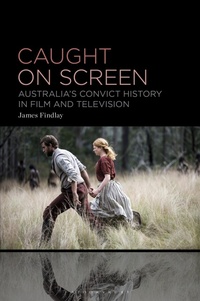
Caught on Screen
Australia'S Convict History in Film and Television
Published on 18. September 2025
272 pages
979-8-7651-0054-7 (ISBN)
Description

From innocent criminals to radical revolutionaries, feisty feminists to manly pioneers, egalitarian settlers to violent invaders, Caught on Screen shows how over successive generations the shape-shifting convict emerged on screen as a potent historical symbol.
Convicts loom large in Australian history. As transported criminals and the first European settlers, they have shackled the nation to a curious and contested origin story. Historians were largely silent on their exploits until the second half of the twentieth century, but before then a tradition of convict representation on screen appeared with the rise of cinema, taking hold of the popular imagination. From silent films to more recent television series, screen culture has elevated the convict experience to become a key historical narrative through which filmmakers and audiences have repeatedly reframed and challenged an understanding of Australia's colonial past. Caught on Screen traverses this history of convict representation for the first time.
Through detailed archival research into their production and reception, the book explores engaging case studies produced in Australia and internationally, including the work of Douglas Sirk, Alfred Hitchcock and Jennifer Kent. It illuminates the fact that the convict as historical symbol is one that intersected with, and helped to direct, major debates about nationalism, the legacies of colonisation, Aboriginal dispossession and the origins and character of Australian society.
Convicts loom large in Australian history. As transported criminals and the first European settlers, they have shackled the nation to a curious and contested origin story. Historians were largely silent on their exploits until the second half of the twentieth century, but before then a tradition of convict representation on screen appeared with the rise of cinema, taking hold of the popular imagination. From silent films to more recent television series, screen culture has elevated the convict experience to become a key historical narrative through which filmmakers and audiences have repeatedly reframed and challenged an understanding of Australia's colonial past. Caught on Screen traverses this history of convict representation for the first time.
Through detailed archival research into their production and reception, the book explores engaging case studies produced in Australia and internationally, including the work of Douglas Sirk, Alfred Hitchcock and Jennifer Kent. It illuminates the fact that the convict as historical symbol is one that intersected with, and helped to direct, major debates about nationalism, the legacies of colonisation, Aboriginal dispossession and the origins and character of Australian society.
More details
Language
English
Place of publication
New York
United States
Publishing group
Bloomsbury Publishing Plc
Target group
Professional and scholarly
Illustrations
30 bw illus
File size
11,23 MB
ISBN-13
979-8-7651-0054-7 (9798765100547)
Copyright in bibliographic data and cover images is held by Nielsen Book Services Limited or by the publishers or by their respective licensors: all rights reserved.
Schweitzer Classification
Other editions
Additional editions
Book
10/2025
Bloomsbury Academic USA
€123.60
Shipment within 15-20 days
Person
James Findlay is Lecturer in Australian history at the University of Sydney, Australia. He has a research focus on historical film and television studies, convict history, Australian popular culture, and public history. He has held the Australian Film Institute Research Collection Fellowship and before becoming a historian worked extensively in film and television production, mostly in the field of documentary.
Content
List of Figures
Acknowledgements
Introduction. How to Watch a Flogging
1. Framing the Innocent: The Silent Era
2. Us Colonials Through Their Eyes: Convict Cinema Goes Global
3. The Ghosts of Port Arthur: Travelogues and Dark Tourism
4. They Came in Chains to Build a Television Nation: Emancipation,
Egalitarianism, and New Nationalism on the Small Screen
5. Bolters and Bushtopias: Narratives of Convict Escape
6. A New Stain: Screening Convict Violence on the Frontier
Conclusion
Bibliography
Index
Acknowledgements
Introduction. How to Watch a Flogging
1. Framing the Innocent: The Silent Era
2. Us Colonials Through Their Eyes: Convict Cinema Goes Global
3. The Ghosts of Port Arthur: Travelogues and Dark Tourism
4. They Came in Chains to Build a Television Nation: Emancipation,
Egalitarianism, and New Nationalism on the Small Screen
5. Bolters and Bushtopias: Narratives of Convict Escape
6. A New Stain: Screening Convict Violence on the Frontier
Conclusion
Bibliography
Index
