

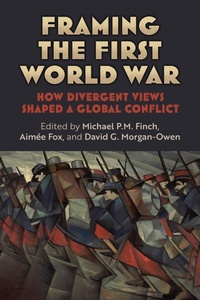
Framing the First World War
Description

This innovative approach to the history of World War I looks at ways in which military actors saw and perceived war, and how that exerted a significant influence over the decisions they made and the actions they took.
The character of the conflict that erupted in 1914 defied the expectations of many political leaders and military analysts. Despite the mountains of books and articles published on World War I, there has been surprisingly little systematic or comparative research on how military commanders and politicians framed and interpreted the conflict?or, indeed, on how they understood war itself?and how that understanding shaped their decision-making.
Wars are fought by organizations and people who have disparate visions of the world they live in and the conflict they are fighting. In Framing the First World War, a team of leading scholars explore the gulf between imagined warfare and the realities of battle. By doing so, they investigate how the military forces that contested the First World War framed the conflict they were involved in and how those perspectives shaped and influenced the ways in which they sought to understand, conduct, and respond to the war. They use the notion of ?frames? and the concept of ?framing? to enable us to engage directly with the complexity and diversity of the conflict, which was fought for different reasons and in different ways, incorporating a range of issues with implications for the conduct of the war.Improving our appreciation of how commanders saw the world around them and their views on the war they were conducting opens up valuable new approaches for understanding debates over the higher direction of the conflict and the civil-military relations that underpinned them. The contributors to Framing the First World War work towards a fuller historical appraisal of how military figures understood the war, moving beyond a purely military analysis to incorporate broader cultural and social topics, including education, medicine, politics, and law.
More details
Other editions
Additional editions
Content
Acknowledgments
Introduction. Framing the First World War, Michael P. M. Finch, Aimée Fox, and David G. Morgan-Owen
Part 1. The Military World as a Social Space
1. The Ottoman ?Military Nation? Idea as a Motivational Notion, Yücel Yanikdağ
2. German Military Medical Views on the Great War, Alina Enzensberger
3. Between You and Me and the Bedpost: Gossip and the Social Life of the British Armed Forces in the First World War, Aimée Fox
Part 2. Visions of International Order
4. Blockade, International Law, and the Conduct of Naval Warfare, Gabriela A. Frei
5. ?Under the Strategic Command of One Admiralissimo?: British Visions of Leadership and International Cooperation at Sea, Louis Halewood
6. Networks of Resistance in North Africa and India: Responses to the First World War in the Middle East, Sneha ReddyPart 3. Military Innovation and Learning
7. Franco-Russian Information Exchange and Russia's Learning of Trench Warfare in 1915?1916, Sofya Anisimova
8. Framing the First World War: The US Army's Experience, Brian McAllister Linn and Mark Grotelueschen
9. Tactical Learning and Innovation in the Habsburg Army, 1914?1918, Alexander Watson
Part 4. Strategy
10. Strategy, War, and Empire: The Entanglements of Anglo-French Military Thinking in the Prewar Era, Michael P. M. Finch and David G. Morgan-Owen
11. Rethinking Alliances, Rethinking War: The Italian Supreme Command's Strategy and War Planning through the Volte-Face of 1914?1915, Vanda Wilcox
12. The Influence of the First World War on Strategy, Hew Strachan
Contributors
Index
