

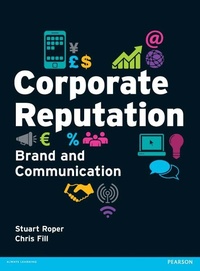
Corporate Reputation, Brand and Communication
Description

Why should and how can organisations manage their reputations? All organisations, the executives who direct them, the employees who create value and their stakeholders who influence them, all interact and can impact corporate reputation.
In a 24/7 media environment, where even a tweet can shape impressions, the importance of reputation management has never been higher. Every single move, decision taken and each isolated event that involves a company or public figure, is scrutinised, documented and publicised globally, compounding the task of reputation managers. Just ask BP, Toyota or Tiger Woods.
The full text downloaded to your computer
With eBooks you can:
- search for key concepts, words and phrases
- make highlights and notes as you study
- share your notes with friends
eBooks are downloaded to your computer and accessible either offline through the Bookshelf (available as a free download), available online and also via the iPad and Android apps.
Upon purchase, you'll gain instant access to this eBook.
Time limit
The eBooks products do not have an expiry date. You will continue to access your digital ebook products whilst you have your Bookshelf installed.
More details
Other editions
Additional editions
Persons
Dr Stuart Roper is Senior Lecturer in Marketing at Manchester Business School (MBS), UK. His main teaching interests focus on branding and communications, corporate reputation, marketing strategy and services marketing. He teaches undergraduate, Masters and MBA classes at the school as well as being involved in executive education with senior managers at a large number of blue chip organisations. He is the Programme Director of MBS's Corporate Communications and Reputation Management Masters programme.
Chris Fill is a Director of Fillassociates. He has authored several books, including his internationally recognised Marketing Communications. Formerly a Principal Lecturer at the University of Portsmouth, Chris is a Visiting Professor at the Business School in Grenoble and is a Fellow of the Chartered Institute of Marketing. He was the Senior Examiner responsible for the development of the CIM's Professional Postgraduate Diploma module, Managing Corporate Reputation.
Content
- Chapter 1 The Rise of Corporate Reputation
- Chapter 2 The Scope of Corporate Reputation
- Chapter 3 The Significance of Corporate Culture
- Chapter 4 Measuring Corporate Reputation
- Chapter 5 The Branding-Reputation Dilemma
- Chapter 6 The Rise of Corporate Brands
- Chapter 7 Measuring Corporate Brands
- Chapter 8 The Future for Brands
- Chapter 9 The Dimensions of Corporate Communication
- Chapter 10 Contexts for Corporate Communication
- Chapter 11 Symbols, Tools and the Media
- Chapter 12 Methods of Corporate Communication
