

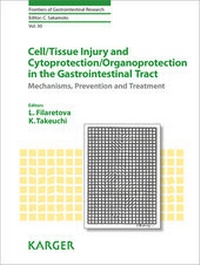
Cell/Tissue Injury and Cytoprotection/Organoprotection in the Gastrointestinal Tract
Mechanisms, Prevention and Treatment.
1st Edition
Published on 22. June 2012
250 pages
978-3-318-02184-4 (ISBN)
Available for download
Description

In recent years, there have been significant advances both in understanding the mechanisms involved in gastrointestinal mucosal injury and protection, as well as in the development of successful strategies for prevention and treatment of gastrointestinal injury. Nevertheless, many people worldwide still suffer from gastrointestinal damage. This book contains contributions by an international panel of researchers in the form of up-to-date reviews on the mechanisms of gastrointestinal injury and protection. These are complemented by papers discussing how these new findings about cell/tissue injury and cytoprotection/organoprotection can be applied to the prevention and treatment of tissue damage in the gastrointestinal tract. Moreover, the publication includes a special chapter on Andre Robert, who has discovered the phenomenon of gastric cytoprotection. This publication will be of great interest for both basic and clinical researchers in gastroenterology and pharmacology, reviewing the advances made so far and pointing towards future developments.
More details
Other editions
Additional editions
Filaretova | Takeuchi
Cell/Tissue Injury and Cytoprotection/Organoprotection in the Gastrointestinal Tract
Mechanisms, Prevention and Treatment.
Book
06/2012
1st Edition
S. Karger
€181.90
Article exhausted; check different version
Persons
Content
- Cover
- Contents
- Preface
- The 'Gastric Cytoprotection' Concept of Andre Robert and the Origins of a New Series of International Symposia
- Abstract
- Evolution of the Concept of Gastric Cytoprotection
- Origins and Development of Related International Symposia
- Acknowledgements
- References
- Importance of Translational Research in GI Pharmacology: Lessons Learned from the Successes in History
- Abstract
- Translational Research in Medicine
- Lesson No. 1: Gastric Acid Secretion
- Lesson No. 2: Brain-Gut Axis
- Lesson No. 3: Gastric Acid Inhibitors
- Lesson No. 4: Helicobacter pylori
- Future Perspectives
- References
- Acetic Acid Ulcer Model - State ofthe Art in 2012
- Abstract
- Mechanism of Ulcer Healing
- New Substances Promising for Ulcer Treatment
- Chemical Removal of a Gastric Cancer Model by Acetic Acid Ulcer
- References
- Roles of EP4 Receptors in Protective and Healing-Promoting Effects of Prostaglandin E2 on NSAID-Induced Small Intestinal Damage
- Abstract
- Pathogenic Mechanisms of NSAID-Induced Small Intestinal Damage
- Protective Effect of PGE2 on NSAID- Induced Small Intestinal Damage
- Functional Alterations Related to the Small Intestinal Protection by PGE2
- Healing of NSAID-Induced Small Intestinal Damage
- Healing-Promoting Effect of PGE2 on NSAID-Induced Small Intestinal Damage
- Conclusion
- Acknowledgements
- References
- Role of Food and Enterobacteria in the Formation and Prevention of Small Intestinal Damage Induced by NSAIDs
- Abstract
- Role of Food
- Role of Enterobacteria
- References
- Synergic Effect of NSAID and Gastric Acid on Superoxide-Anion Production in Stomach
- Abstract
- Mucosal Defense Mechanisms
- Synergic Effects of both NSAID and Acidic Conditions
- Mitochondria as a Target of Oxidative Stress
- Conclusion
- References
- Development of NSAIDs with Lower Gastric Side Effect
- Abstract
- Results and Discussion
- Conclusion
- References
- NSAID-Mucosal Injury: Roles of Drug Chemistry in Pathogenesis
- Abstract
- Ion Trapping, pKa, Lipophilicity and Mucosal Injury
- Conclusions
- References
- Animal Model for Evaluating Gastric Bleeding and Ulcerogenic Response Induced by Aspirin plus Clopidogrel
- Abstract
- Experimental Model of Gastric Bleeding
- Determination of Hemoglobin Concentrations
- Gastric Ulcerogenic and Bleeding Responses to Acidified ASA with or without Clopidogrel Pretreatment
- Effect of Various Antiulcer Drugs on Gastric Bleeding and Ulcerogenic Responses to Acidified ASA plus Clopidogrel
- Commentary
- Conclusion
- References
- Effects of Ibuprofen, and Some Analogues, on the Muscle Tone of Isolated Segments of the Common Digital Artery of the Fallow Deer (Dama dama)
- Abstract
- Methods
- Results and Discussion
- Acknowledgements
- References
- Psychological Stress Induces Visceral Analgesic or Hyperalgesic Response in Rodents: A Role of Preconditions
- Abstract
- Psychological Stressors in Rodent Models
- Monitoring Visceral Pain Response
- Mechanisms of Stress-Induced Visceral Hypersensitivity
- Sexual Dimorphism in Mechanisms of Stress- Induced Visceral Analgesia
- Modulation of Stress Influence by Probiotics
- Clinical Significance: Implications in Irritable Bowel Syndrome
- Acknowledgments
- References
- Neurobiology of Corticotropin-Releasing Factor in the Enteric Nervous System during Stress
- Abstract
- Corticotropin-Releasing Factor Peptides in the Enteric Nervous System
- Corticotropin-Releasing Factor Receptors in the Enteric Nervous System
- Actions of Corticotropin-Releasing Factor in the Enteric Nervous System
- Peripheral Corticotropin-Releasing Factor Signaling in Stress-Related Gastrointestinal Dysmotility
- Peripheral Corticotropin-Releasing Factor Signaling in Stress-Related Mucosal Dysfunction
- Involvement of the Enteric Nervous System in the Colonic Response to Stress
- Conclusion
- References
- Corticotropin-Releasing Factor May Protect the Gastric Mucosa in Stress through Involvement of Glucocorticoids
- Abstract
- HPA Axis Activation as a Gastroprotective Component of Stress Response
- Corticotropin-Releasing Factor and Gastric Ulceration
- Gastroprotective Role of CRF: Involvement of Glucocorticoids
- Conclusion
- Acknowledgements
- References
- Pathogenic Potential of Psychogenic Stress in Gastric Mucosal Injury
- Abstract
- Contractile Activity of the Gastroduodenal Zone under Psychogenic Stress in Rabbits
- Pathogenic Role of Stress-Induced Gastroduodenal Dysmotility
- References
- Advances in Understanding Inflammation in Esophageal Disease
- Abstract
- Conclusion
- References
- Physiopathology of Esophageal Inflammation, Ulcerogenesis and Repair by Studying the Profile of Glycoconjugate
- Abstract
- A Historical Sketch
- Screening Glycoconjugates in Esophageal Mucosa
- Inflammation as a Common Mechanism of Esophageal Ulcerogenesis
- Detection of Glucoconjugates in Esophageal Injuries
- Conclusion
- References
- Analysis of the Effect of Different Neuropeptides in Gastric Mucosal Defense Initiated Centrally
- Abstract
- Gastroprotection, Cholinergic System
- Gastroprotection, Adrenergic System
- Conclusion
- Ackowledgements
- References
- Sulforaphane Enhances Protection and Repair of Gastric Mucosa against Oxidative Stress via Nrf2-Dependent Mechanisms
- Abstract
- H. pylori Infection and NSAIDs as Oxidative Stressor to Human Gastric Mucosa
- 'Adaptive Cytoprotection' of Gastric Mucosa in Response to Oxidative Stresses
- Sulforaphane Affords 'Adaptive Cytoprotection' in Response to Oxidative Stress
- Role of the nrf2 in Protection and Repair of Gastric Mucosa against Oxidative Stress in vitro
- Dietary Sulforaphane- Rich Broccoli Sprouts Reduce Colonization and Attenuate Gastritis in H. pylori-Infected Mice
- References
- Involvement of Renin-Angiotensin System and Vasoactive Angiotensin-(1-7) Metabolite of Angiotensin II in Gastric Mucosal Injury and Gastroprotection
- Abstract
- Physiology of the Renin-Angiotensin System and Angiotensin Receptors
- Importance of RAS in the Mechanism of Gastric Mucosal Integrity
- Vasodilatory and Protective Activity of Ang-(1- 7), One of the Major Angiotensin Metabolites in the GI Tract
- Acknowledgements
- References
- Effect of Pentadecapeptide BPC 157 on Gastrointestinal Tract
- Abstract
- Periodontitis
- Esophagus
- Stomach
- Duodenum
- Intestine
- Liver
- Pancreas
- Mechanism Implications
- Conclusion
- References
- Pathobiology of Gastric Carcinoids and Adenocarcinomas in Rodent Models and Patients: Studies of Gastrocystoplasty, Gender-Related Factors and Autophagy
- Abstract
- Acid Secretion and Development of ECLoma in the Bladder of Rats Subjected to Gastrocystoplasty
- Unknown Gender- Related Factors in Control of the Gastrin-ECL Cells Axis
- Impaired Life-Cycle of Secretory Vesicles and Autophagy in Gastric Carcinoids
- Impaired Autophagy in Gastric Adenocarcinoma
- Conclusions
- Acknowledgements
- References
- Roles of the Hydrogen Sulfide/T-Type Calcium Channel System in Somatic and Visceral Pain Processing
- Abstract
- Roles of H2S in Processing of Somatic Pain Signals in Health and Disease
- Roles of H2S in Processing of Visceral Pain Signals and in the Pathophysiology of Pancreatitis-Related Pain
- Involvement of the Excitation of Sensory Neurons in the H2S-Induced Colonic Mucosal Cytoprotection
- Conclusion and Future Perspective
- References
- Age-Dependent Role of Vasopressin inSusceptibility of Gastric Mucosa toIndomethacin-Induced Injury
- Abstract
- Gastric Ulcer
- Effects of Vasopressin
- Vasopressin and Gastric Ulcer
- Details of Ulcer Development in Brattleboro Rats
- Conclusions
- Acknowledgements
- References
- From Mucosal Energy Metabolism to Capsaicin - Strategies for Understanding Mucosal Protection
- Abstract
- Clinical Pharmacological Studies in Patients with Duodenal Ulcer in 1960-1970
- Biochemical Examinations to Mucosal Energy Metabolisms
- Animal Observations
- Human Observations
- Approach of Capsaicin Action on Gastric Mucosa
- References
- Author Index
- Subject Index
- Cover

