

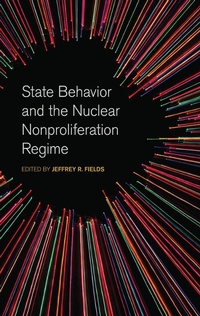
State Behavior and the Nuclear Nonproliferation Regime
Description

This is the first book-length study of why states sometimes ignore, oppose, or undermine elements of the nuclear nonproliferation regime-even as they formally support it. Anchored by the Treaty on the Non-Proliferation of Nuclear Weapons, the nuclear nonproliferation regime is the constellation of agreements, initiatives, and norms that work in concert to regulate nuclear material and technology. The essays gathered here show that attitudes on nonproliferation depend on a "complex, contingent decision calculus," as states continually gauge how their actions within the regime will affect trade, regional standing, and other interests vital to any nation.
The first four essays take theoretical approaches to such topics as a framework for understanding challenges to collective action; clandestine proliferation under the Bush and Obama administrations and its impact on regime legitimacy; threat construction as a lens through which to view resistance to nonproliferation measures; and the debate over the relationship between nuclear disarmament and nonproliferation. Essays comprising the second part of the book use regional and state-specific case studies to look at how U.S. security guarantees affect the willingness of states to support the regime; question the perceived spoiler role of a "vocal minority" within the Non-Aligned Movement; challenge notions that Russia is using the regime to build a coalition hostile to the United States; contrast nonproliferation strategies among Latin American countries; and explain the lag in adoption of an Additional Protocol by some Middle East and North African countries.
Getting countries to cooperate on nonproliferation efforts is an ongoing challenge. These essays show that success must be measured not only by how many states join the effort but also by how they participate once they join.
More details
Other editions
Additional editions
Person
Content
- Cover Page
- Title Page
- Copyright Page
- Contents
- Acknowledgments
- Abbreviations and Acronyms
- Introduction
- Theoretical Approaches
- Chapter 1. Explaining Dynamics and Stasis in the Nuclear Nonproliferation Regime: The Challenges of a Multiplicity of Public Goods
- Chapter 2. Glass Half Full? Evaluating the Impact of New U.S. Policy on the Legitimacy of the Nuclear Nonproliferation Regime
- Chapter 3. Construction of Threat and Nuclear Nonproliferation Measures: Considerations on Theory and Policy
- Chapter 4. Nuclear Disarmament and Nonproliferation: Examining the Linkage Argument
- Country and Regional Explorations
- Chapter 5. How Supportive of the Nonproliferation Regime Are the United States and Its Allies? U.S. Security Guarantees and the Free Rider Problem
- Chapter 6. The Nonproliferation Motivations of the Non-Aligned Movement
- Chapter 7. Russia, Iran, and the Nuclear Nonproliferation Regime
- Chapter 8. Brazil and Mexico in the Nonproliferation Regime: Common Structures and Divergent Trajectories in Latin America
- Chapter 9. The Additional Protocol in the Middle East and North Africa: Explaining Lag in Adoption
- Chapter 10. Conclusion
- Bibliography
- Contributors
- Index
