

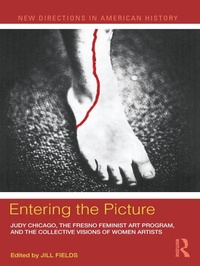
Entering the Picture
Judy Chicago, The Fresno Feminist Art Program, and the Collective Visions of Women Artists
1st Edition
Published on 27. February 2012
378 pages
978-1-136-63892-3 (ISBN)
Description

In 1970, Judy Chicago and fifteen students founded the groundbreaking Feminist Art Program (FAP) at Fresno State. Drawing upon the consciousness-raising techniques of the women's liberation movement, they created shocking new art forms depicting female experiences. Collaborative work and performance art - including the famous "Cunt Cheerleaders" - were program hallmarks. Moving to Los Angeles, the FAP produced the first major feminist art installation, Womanhouse (1972).
Augmented by thirty-seven illustrations and color plates, this interdisciplinary collection of essays by artists and scholars, many of whom were eye witnesses to landmark events, relates how feminists produced vibrant bodies of art in Fresno and other locales where similar collaborations flourished. Articles on topics such as African American artists in New York and Los Angeles, San Francisco's Las Mujeres Muralistas and Asian American Women Artists Association, and exhibitions in Taiwan and Italy showcase the artistic trajectories that destabilized traditional theories and practices and reshaped the art world. An engaging editor's introduction explains how feminist art emerged within the powerful women's movement that transformed America. Entering the Picture is an exciting collection about the provocative contributions of feminists to American art.
Augmented by thirty-seven illustrations and color plates, this interdisciplinary collection of essays by artists and scholars, many of whom were eye witnesses to landmark events, relates how feminists produced vibrant bodies of art in Fresno and other locales where similar collaborations flourished. Articles on topics such as African American artists in New York and Los Angeles, San Francisco's Las Mujeres Muralistas and Asian American Women Artists Association, and exhibitions in Taiwan and Italy showcase the artistic trajectories that destabilized traditional theories and practices and reshaped the art world. An engaging editor's introduction explains how feminist art emerged within the powerful women's movement that transformed America. Entering the Picture is an exciting collection about the provocative contributions of feminists to American art.
Reviews / Votes
'Witness the excitement of women who believe CHANGE IS POSSIBLE AND WE CAN MAKE IT HAPPEN. Detailed insights and histories from pioneers and custodians of the feminist art movement read like a pilgrimage and a call: Activism on behalf of women!'-Joanna Frueh, author of Clairvoyance (For Those in the Desert): Performance Pieces, 1979-2004'Jill Fields' study is an important contribution to the cultural history of feminist art and a collective story of one of its origins at the Feminist Art Program in Fresno, California. The essays by artists and scholars explore interconnections between that locus of activity and feminist strategies nationally and internationally. Entering the Picture establishes a crucial foundation for the aesthetics and ethics of the early feminist movement, based on its magnificent ideas of liberation, exploration, and justice.'-Andrea Liss, Professor of Contemporary Art History and Cultural Theory, California State University San Marcos
'Fields' book, like Chicago's feminist education work that inspired it, continues the rewriting of art history to increase the inclusion of women and people of color. Her cogent introduction contextualizes the 22 essays that range from personal accounts of participation in the key developments of Feminist Art to manifestoes for the continuation of feminist activism.'- Betty Ann Brown, Artillery
'What makes the volume different from existing literature about feminist art movements in the US is its advocacy for, and insistent attention to, collective projects, voices and visions, without diminishing the role of individuals. ... Anyone with an interest in the cultural history of the women's movement in the US, feminist art and feminist pedagogies will find Entering the Picture a rich resource. The numerous essays with interconnected topics and trajectories provide the reader with the possibility of exploring issues in detail. It is likely to be a stimulating read for artists, art historians and scholars interested in the feminist art movement in the US and their collective cultural histories.'- Annette Krauss, European Journal of Women's Studies
More details
Series
Language
English
Place of publication
London
United Kingdom
Publishing group
Taylor & Francis Ltd
Target group
College/higher education
Illustrations
21 s/w Photographien bzw. Rasterbilder, 16 Farbfotos bzw. farbige Rasterbilder
16 Halftones, color; 21 Halftones, black and white
File size
3,27 MB
ISBN-13
978-1-136-63892-3 (9781136638923)
Copyright in bibliographic data and cover images is held by Nielsen Book Services Limited or by the publishers or by their respective licensors: all rights reserved.
Schweitzer Classification
Other editions
Additional editions
Jill Fields
Entering the Picture
Judy Chicago, The Fresno Feminist Art Program, and the Collective Visions of Women Artists
Book
09/2011
1st Edition
Routledge
€245.53
Shipment within 15-20 days
Jill Fields
Entering the Picture
Judy Chicago, The Fresno Feminist Art Program, and the Collective Visions of Women Artists
Book
09/2011
1st Edition
Routledge
€62.00
Shipment within 15-20 days
Person
Jill Fields is Professor of History at California State University, Fresno. She is the author of An Intimate Affair: Women, Lingerie, and Sexuality.
Content
Jill Fields, Introduction, Section I: Emerging--Views from the Periphery
1. Gail Levin, Feminist Class, edited by Melissa Morris
2. Laura Meyer and Faith Wilding, Collaboration and Conflict in the Fresno Feminist Art Program: An Experiment in Feminist Pedagogy
3. Nancy Youdelman and Karen LeCocq, Reflections on the First Feminist Art Program
4. Moira Roth, Interview with Suzanne Lacy, edited by Laura Meyer
5. Paula Harper, The First Feminist Art Program: A View from the 1980s
6. Judy Chicago, Feminist Art Education: Made in California
Section II: Re-Centering--Theory and Practice
7. Valerie Smith, Abundant Evidence: Black Women Artists of the 1960s and 1970s
8. Jennie Klein, 'Teaching to Transgress:' Rita Yokoi and the Fresno Feminist Art Program
9. Lillian Faderman, Joyce Aiken: Thirty Years of Feminist Art and Pedagogy in Fresno
10. Phranc, "Your Vagina Smells Fine Now Naturally"
11. Terezita Romo, Collective History: Las Mujeres Muralistas
12. Joanna Gardner-Huggett, The Woman's Art Cooperative Space as a Site for Social Change: Artemisia Gallery, Chicago (1973-1979)
13. Gloria Orenstein, Salon Women of the Second Wave: Honoring the Great Matrilineage of Creators of Culture
14. Katie Cercone, The New York Feminist Art Institute, 1979-1990
15. Nancy Azara and Darla Bjork, Our Journey to the New York Feminist Art Institute
Section III: Picturing-- Transformation
16. Sylvia Savala, How I Became a Chicana Feminist Artist
17. Lydia Nakashima Degarrod, Searching for Catalyst and Empowerment: The Asian American Women Artists Association, 1989-Present
18. Miriam Schaer, Notes of a Dubious Daughter: My Unfinished Journey Towards Feminism
19. Tressa Berman and Nancy Mithlo, 'The Way Things Are:' Curating Place as Feminist Practice in American Indian Women's Art"
20. Ying-Ying Chien, Marginal Discourse and Pacific Rim Women's Art
21. Jo Anna Isaak, Gaia Cianfanelli and Caterina Iaquinta, Curatorial Practice as Collaboration in the U.S. and Italy
22. Beverly Naidus, Feminist Activist Art Pedagogy
1. Gail Levin, Feminist Class, edited by Melissa Morris
2. Laura Meyer and Faith Wilding, Collaboration and Conflict in the Fresno Feminist Art Program: An Experiment in Feminist Pedagogy
3. Nancy Youdelman and Karen LeCocq, Reflections on the First Feminist Art Program
4. Moira Roth, Interview with Suzanne Lacy, edited by Laura Meyer
5. Paula Harper, The First Feminist Art Program: A View from the 1980s
6. Judy Chicago, Feminist Art Education: Made in California
Section II: Re-Centering--Theory and Practice
7. Valerie Smith, Abundant Evidence: Black Women Artists of the 1960s and 1970s
8. Jennie Klein, 'Teaching to Transgress:' Rita Yokoi and the Fresno Feminist Art Program
9. Lillian Faderman, Joyce Aiken: Thirty Years of Feminist Art and Pedagogy in Fresno
10. Phranc, "Your Vagina Smells Fine Now Naturally"
11. Terezita Romo, Collective History: Las Mujeres Muralistas
12. Joanna Gardner-Huggett, The Woman's Art Cooperative Space as a Site for Social Change: Artemisia Gallery, Chicago (1973-1979)
13. Gloria Orenstein, Salon Women of the Second Wave: Honoring the Great Matrilineage of Creators of Culture
14. Katie Cercone, The New York Feminist Art Institute, 1979-1990
15. Nancy Azara and Darla Bjork, Our Journey to the New York Feminist Art Institute
Section III: Picturing-- Transformation
16. Sylvia Savala, How I Became a Chicana Feminist Artist
17. Lydia Nakashima Degarrod, Searching for Catalyst and Empowerment: The Asian American Women Artists Association, 1989-Present
18. Miriam Schaer, Notes of a Dubious Daughter: My Unfinished Journey Towards Feminism
19. Tressa Berman and Nancy Mithlo, 'The Way Things Are:' Curating Place as Feminist Practice in American Indian Women's Art"
20. Ying-Ying Chien, Marginal Discourse and Pacific Rim Women's Art
21. Jo Anna Isaak, Gaia Cianfanelli and Caterina Iaquinta, Curatorial Practice as Collaboration in the U.S. and Italy
22. Beverly Naidus, Feminist Activist Art Pedagogy
