

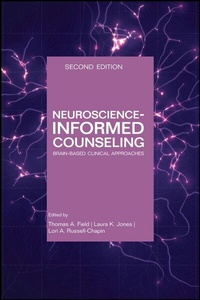
Neuroscience-Informed Counseling
Description

As professional counselors learn more about neuroscience, they need guidance on how to integrate this new knowledge into counselor education and counseling practice with clients. The purpose of this updated edition is to provide a comprehensive resource for translating and applying neuroscientific concepts to the theory and practice of counseling.
The authors provide guidance as to how counselors integrate neuroscience into their work, with the hope of better understanding and identifying methods for effectively and responsibly incorporating key principles of neuroscience into the profession. This new edition incorporates the 2024 CACREP Standards as markers of learning, to ensure that CACREP-accredited programs have the information needed to apply neuroscientific concepts to all the major areas of counseling practice.
This volume addresses the 2024 entry-level educational standards of the main accrediting body of the counseling profession, CACREP. Each of the eight common core areas of counseling knowledge and skills are covered (professional counseling orientation, social and cultural foundations, human growth and development, career development, helping relationships, group counseling and group work, testing and assessment, research and program evaluation). Several 2024 CACREP Standards that are integrated into the eight common core standards, such as the impact of crises, disaster, and traumatic events; the neurobiology of addictions; wellness and optimal performance; and psychopharmacology are also addressed. Some chapters also focus on doctoral-level 2024 CACREP standards for counselor education and supervision.
To purchase print copies, please visit the ACA Store.
Reproduction requests for material from books published by ACA or any other questions about ACA Publications should be directed to publications@counseling.org.
ACA no longer provides complimentary print desk copies. Digital evaluation copies may be requested from Wiley by clicking the link above and completing the details about your institution and course.
