

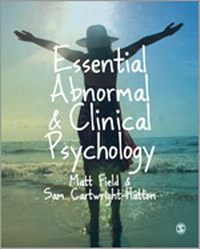
Essential Abnormal and Clinical Psychology
1st Edition
Published on 14. September 2015
360 pages
978-1-4739-3401-6 (ISBN)
Description

This essential introduction to abnormal and clinical psychology explores the key areas, controversies and debates in the field and encourages students to think critically. Key features of this textbook include:
The latest updates from DSM-5 and ICD-10 and a balanced critique of the diagnostic approach, keeping students at the forefront of the developments and debates in the field
"Essential Debate" and "Essential Experience" boxes that encourage critical thinking and provide case study examples to help students critique the findings and apply them in practice
Concise chapters providing students with the essentials they need to get a good grade in their module in Abnormal and Clinical Psychology
Additional student resources available on the companion website.
Suitable for all students taking Abnormal and Clinical Psychology modules.
The latest updates from DSM-5 and ICD-10 and a balanced critique of the diagnostic approach, keeping students at the forefront of the developments and debates in the field
"Essential Debate" and "Essential Experience" boxes that encourage critical thinking and provide case study examples to help students critique the findings and apply them in practice
Concise chapters providing students with the essentials they need to get a good grade in their module in Abnormal and Clinical Psychology
Additional student resources available on the companion website.
Suitable for all students taking Abnormal and Clinical Psychology modules.
Reviews / Votes
An excellent guide to how mental health problems are understood and treated; accessible, wide-ranging, and full of fascinating information on this important topic. -- Daniel Freeman This excellent textbook provides a clear and comprehensive introduction to clinical and abnormal psychology. I will be recommending it as essential reading for both psychology and medical students. -- Rebecca ElliottMore details
Edition
First Edition
Language
English
Place of publication
London
United Kingdom
Target group
College/higher education
ISBN-13
978-1-4739-3401-6 (9781473934016)
Copyright in bibliographic data and cover images is held by Nielsen Book Services Limited or by the publishers or by their respective licensors: all rights reserved.
Schweitzer Classification
Other editions
Additional editions
Matt Field | Sam Cartwright-Hatton
Essential Abnormal and Clinical Psychology
Book
09/2015
1st Edition
SAGE Publications Inc
€212.44
Article exhausted; check for reprint
Matt Field | Sam Cartwright-Hatton
Essential Abnormal and Clinical Psychology
Book
09/2015
1st Edition
SAGE Publications Inc
€134.70
Shipment within 15-20 days
Persons
Matt Field is a Professor of Psychology at the University of Liverpool. While an undergraduate student at Swansea University, his experience of research investigating depressed mood and alcohol craving motivated him to pursue a career in research. He went on to study conditioning processes in tobacco addiction for his PhD, which he received from the University of Sussex in 2001. Following a three-year spell at the University of Southampton, he moved to the University of Liverpool in 2004. He leads the addiction research group, teaches abnormal and clinical psychology to undergraduate and postgraduate students, and does far too much University administration. He is on the Editorial boards of the journals Addiction, Drug and Alcohol Dependence and Psychopharmacology, has published more than 100 articles in peer-reviewed journals (some of them are even quite good!), and this is his first book. He lives with his wife and three cats in Formby.
Sam Cartwright-Hatton is a clinical child psychologist who specializes in anxiety disorders and parenting processes. She started out with an undergraduate degree at the University of Liverpool, and then a PhD at the University of Oxford. This PhD was on anxiety disorders in adults and despite having almost no existing knowledge of or interest in clinical psychology, by the end of it, she was hooked. At the end of the PhD, to the exasperation of her parents, who thought she might never leave university, she moved to Manchester to train as a clinical psychologist. Since then, she has specialized in researching and treating anxiety in young children. She has written around fifty publications, and this is her fourth book. In 2011, she left rainy Manchester for sunny Brighton, where she continues her research at the University of Sussex and lives with her husband and little girl.
Sam Cartwright-Hatton is a clinical child psychologist who specializes in anxiety disorders and parenting processes. She started out with an undergraduate degree at the University of Liverpool, and then a PhD at the University of Oxford. This PhD was on anxiety disorders in adults and despite having almost no existing knowledge of or interest in clinical psychology, by the end of it, she was hooked. At the end of the PhD, to the exasperation of her parents, who thought she might never leave university, she moved to Manchester to train as a clinical psychologist. Since then, she has specialized in researching and treating anxiety in young children. She has written around fifty publications, and this is her fourth book. In 2011, she left rainy Manchester for sunny Brighton, where she continues her research at the University of Sussex and lives with her husband and little girl.
Content
Chapter 1: The Big Issues in classification, diagnosis, and research into psychological disorders
What is Abnormal?
How are Psychological Disorders Classified?
What are the Problems with the Diagnostic Approach?
How do we Conduct Research into Psychological Disorders?
What are the Main Approaches to Understanding Psychological Disorders?
Chapter 2: How are psychological disorders treated?
Medication versus Psychological Approaches
Researching and Evaluating Treatments for Psychological Disorders
The Range and Scope of the Psychologist's Work
How CBT Works
The Ethics of Psychological Therapy
Chapter 3: Childhood disorders
Anxiety Disorders of Childhood
Childhood Depression
Childhood Behaviour Problems
Chapter 4: Schizophrenia
What is schizophrenia?
How does schizophrenia develop?
Brain and cognitive mechanisms in schizophrenia
How is schizophrenia treated?
Chapter 5: Mood disorders
What are depression and mania?
How do mood disorders develop?
Brain and cognitive mechanisms in mood disorders
How are mood disorders treated?
Chapter 6: Generalized anxiety disorder
What is generalized anxiety disorder?
How does GAD develop?
Brain and cognitive mechanisms in GAD
How is GAD treated?
Chapter 7: Specific phobias
What is a specific phobia?
How do we acquire phobias?
Do we think ourselves into being scared?
How are specific phobias treated?
Chapter 8: Panic disorder and social anxiety disorder
How are panic disorder and social anxiety disorder diagnosed and how do they differ from each other?
Can we explain panic disorder?
Can we explain social anxiety disorder?
How are panic disorder and social anxiety disorder treated?
Chapter 9: Substance use disorders
What is substance use disorder?
How does substance use disorder develop?
Brain and cognitive mechanisms in SUD
How are substance use disorders treated?
Chapter 10: Eating disorders
What are eating disorders?
How do eating disorders develop?
Brain and cognitive mechanisms in eating disorders
How are eating disorders treated?
Chapter 11: Personality disorders
What are personality disorders?
How do personality disorders develop?
Brain and cognitive mechanisms in personality disorders
How are personality disorders managed and treated?
What is Abnormal?
How are Psychological Disorders Classified?
What are the Problems with the Diagnostic Approach?
How do we Conduct Research into Psychological Disorders?
What are the Main Approaches to Understanding Psychological Disorders?
Chapter 2: How are psychological disorders treated?
Medication versus Psychological Approaches
Researching and Evaluating Treatments for Psychological Disorders
The Range and Scope of the Psychologist's Work
How CBT Works
The Ethics of Psychological Therapy
Chapter 3: Childhood disorders
Anxiety Disorders of Childhood
Childhood Depression
Childhood Behaviour Problems
Chapter 4: Schizophrenia
What is schizophrenia?
How does schizophrenia develop?
Brain and cognitive mechanisms in schizophrenia
How is schizophrenia treated?
Chapter 5: Mood disorders
What are depression and mania?
How do mood disorders develop?
Brain and cognitive mechanisms in mood disorders
How are mood disorders treated?
Chapter 6: Generalized anxiety disorder
What is generalized anxiety disorder?
How does GAD develop?
Brain and cognitive mechanisms in GAD
How is GAD treated?
Chapter 7: Specific phobias
What is a specific phobia?
How do we acquire phobias?
Do we think ourselves into being scared?
How are specific phobias treated?
Chapter 8: Panic disorder and social anxiety disorder
How are panic disorder and social anxiety disorder diagnosed and how do they differ from each other?
Can we explain panic disorder?
Can we explain social anxiety disorder?
How are panic disorder and social anxiety disorder treated?
Chapter 9: Substance use disorders
What is substance use disorder?
How does substance use disorder develop?
Brain and cognitive mechanisms in SUD
How are substance use disorders treated?
Chapter 10: Eating disorders
What are eating disorders?
How do eating disorders develop?
Brain and cognitive mechanisms in eating disorders
How are eating disorders treated?
Chapter 11: Personality disorders
What are personality disorders?
How do personality disorders develop?
Brain and cognitive mechanisms in personality disorders
How are personality disorders managed and treated?
