

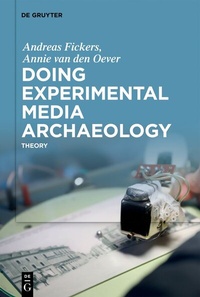
Doing Experimental Media Archaeology
Description

This book offers a plea to take the materiality of media technologies and the sensorial and tacit dimensions of media use into account in the writing of the histories of media and technology. In short, it is a bold attempt to question media history from the perspective of an experimental media archaeology approach. It offers a systematic reflection on the value and function of hands-on experimentation in research and teaching.
Doing Experimental Media Archaeology: Theory is the twin volume to Doing Experimental Media Archaeology: Practice , authored by Tim van der Heijden and Aleksander Kolkowski.
Reviews / Votes
"For anyone - curator, researcher, visitor - who ever wondered how now mute museum objects mattered in their past, here is a compelling means to find out." - Tim Boon , Head of Research & Public History, Science Museum Group UK
***
"A really fantastic, stimulating, thought-provoking book. Convincing, with a broad scope, clearly supported by personal experience (and experiments), collective as well as personal. The very emphasis on the relation between teaching and research is as refreshing as it is crucial for the argument." - Benoît Turquety , Associate Professor for Film Studies at Lausanne University
More details
Other editions
Additional editions
Persons
Andreas Fickers , Direktor des C2DH Luxembourg; Annie van den Oever , Fak. für Künste, Kunst, Kultur und Medien, Universität Groningen.
