

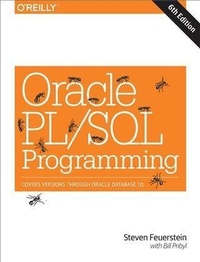
Oracle PL/SQL Programming
Covers Versions Through Oracle Database 12c
6th Edition
Published on 23. January 2014
1392 pages
978-1-4493-2443-8 (ISBN)
Description

Considered the best Oracle PL/SQL programming guide by the Oracle community, this definitive guide is precisely what you need to make the most of Oracles powerful procedural language. The sixth edition describes the features and capabilities of PL/SQL up through Oracle Database 12c Release 1.Hundreds of thousands of PL/SQL developers have benefited from this book over the last twenty years; this edition continues that tradition. With extensive code examples and a lively sense of humor, this book explains language fundamentals, explores advanced coding techniques, and offers best practices to help you solve real-world problems.Get PL/SQL programs up and running quickly, with clear instructions for executing, tracing, testing, debugging, and managing codeUnderstand new 12.1 features, including the ACCESSIBLE_BY clause, WITH FUNCTION and UDF pragma, BEQUEATH CURRENT_USER for views, and new conditional compilation directivesTake advantage of extensive code samples, from easy-to-follow examples to reusable packaged utilitiesOptimize PL/SQL performance with features like the function result cache and Oracle utilities such as PL/Scope and the PL/SQL hierarchical profilerBuild modular, easy-to-maintain PL/SQL applications using packages, procedures, functions, and triggers
More details
Other editions
Additional editions
Steven Feuerstein | Bill Pribyl
Oracle PL/SQL Programming
Book
03/2014
6th Edition
O'Reilly
€79.50
Article not available at the moment
Previous edition
Steven Feuerstein
Oracle PL/SQL Programming
E-Book
08/2005
1st Edition
O'Reilly
€45.49
Available for download
Content
- Cover
- Copyright
- Table of Contents
- Preface
- Objectives of This Book
- Structure of This Book
- About the Contents
- What This Book Does Not Cover
- Conventions Used in This Book
- Which Platform or Version?
- About the Code
- Using Code Examples
- Safari® Books Online
- How to Contact Us
- Acknowledgments
- Part I. Programming in PL/SQL
- Chapter 1. Introduction to PL/SQL
- What Is PL/SQL?
- The Origins of PL/SQL
- The Early Years of PL/SQL
- Improved Application Portability
- Improved Execution Authority and Transaction Integrity
- Humble Beginnings, Steady Improvement
- So This Is PL/SQL
- Integration with SQL
- Control and Conditional Logic
- When Things Go Wrong
- About PL/SQL Versions
- Oracle Database 12c New PL/SQL Features
- Resources for PL/SQL Developers
- The O'Reilly PL/SQL Series
- PL/SQL on the Internet
- Some Words of Advice
- Don't Be in Such a Hurry!
- Don't Be Afraid to Ask for Help
- Take a Creative, Even Radical Approach
- Chapter 2. Creating and Running PL/SQL Code
- Navigating the Database
- Creating and Editing Source Code
- SQL*Plus
- Starting Up SQL*Plus
- Running a SQL Statement
- Running a PL/SQL Program
- Running a Script
- What Is the "Current Directory"?
- Other SQL*Plus Tasks
- Error Handling in SQL*Plus
- Why You Will Love and Hate SQL*Plus
- Performing Essential PL/SQL Tasks
- Creating a Stored Program
- Executing a Stored Program
- Showing Stored Programs
- Managing Grants and Synonyms for Stored Programs
- Dropping a Stored Program
- Hiding the Source Code of a Stored Program
- Editing Environments for PL/SQL
- Calling PL/SQL from Other Languages
- C: Using Oracle's Precompiler (Pro*C)
- Java: Using JDBC
- Perl: Using Perl DBI and DBD::Oracle
- PHP: Using Oracle Extensions
- PL/SQL Server Pages
- And Where Else?
- Chapter 3. Language Fundamentals
- PL/SQL Block Structure
- Anonymous Blocks
- Named Blocks
- Nested Blocks
- Scope
- Qualify All References to Variables and Columns in SQL Statements
- Visibility
- The PL/SQL Character Set
- Identifiers
- Reserved Words
- Whitespace and Keywords
- Literals
- NULLs
- Embedding Single Quotes Inside a Literal String
- Numeric Literals
- Boolean Literals
- The Semicolon Delimiter
- Comments
- Single-Line Comment Syntax
- Multiline Comment Syntax
- The PRAGMA Keyword
- Labels
- Part II. PL/SQL Program Structure
- Chapter 4. Conditional and Sequential Control
- IF Statements
- The IF-THEN Combination
- The IF-THEN-ELSE Combination
- The IF-THEN-ELSIF Combination
- Avoiding IF Syntax Gotchas
- Nested IF Statements
- Short-Circuit Evaluation
- CASE Statements and Expressions
- Simple CASE Statements
- Searched CASE Statements
- Nested CASE Statements
- CASE Expressions
- The GOTO Statement
- The NULL Statement
- Improving Program Readability
- Using NULL After a Label
- Chapter 5. Iterative Processing with Loops
- Loop Basics
- Examples of Different Loops
- Structure of PL/SQL Loops
- The Simple Loop
- Terminating a Simple Loop: EXIT and EXIT WHEN
- Emulating a REPEAT UNTIL Loop
- The Intentionally Infinite Loop
- The WHILE Loop
- The Numeric FOR Loop
- Rules for Numeric FOR Loops
- Examples of Numeric FOR Loops
- Handling Nontrivial Increments
- The Cursor FOR Loop
- Example of Cursor FOR Loops
- Loop Labels
- The CONTINUE Statement
- Tips for Iterative Processing
- Use Understandable Names for Loop Indexes
- The Proper Way to Say Goodbye
- Obtaining Information About FOR Loop Execution
- SQL Statement as Loop
- Chapter 6. Exception Handlers
- Exception-Handling Concepts and Terminology
- Defining Exceptions
- Declaring Named Exceptions
- Associating Exception Names with Error Codes
- About Named System Exceptions
- Scope of an Exception
- Raising Exceptions
- The RAISE Statement
- Using RAISE_APPLICATION_ERROR
- Handling Exceptions
- Built-in Error Functions
- Combining Multiple Exceptions in a Single Handler
- Unhandled Exceptions
- Propagation of Unhandled Exceptions
- Continuing Past Exceptions
- Writing WHEN OTHERS Handling Code
- Building an Effective Error Management Architecture
- Decide on Your Error Management Strategy
- Standardize Handling of Different Types of Exceptions
- Organize Use of Application-Specific Error Codes
- Use Standardized Error Management Programs
- Work with Your Own Exception "Objects"
- Create Standard Templates for Common Error Handling
- Making the Most of PL/SQL Error Management
- Part III. PL/SQL Program Data
- Chapter 7. Working with Program Data
- Naming Your Program Data
- Overview of PL/SQL Datatypes
- Character Data
- Numbers
- Dates, Timestamps, and Intervals
- Booleans
- Binary Data
- ROWIDs
- REF CURSORs
- Internet Datatypes
- "Any" Datatypes
- User-Defined Datatypes
- Declaring Program Data
- Declaring a Variable
- Declaring Constants
- The NOT NULL Clause
- Anchored Declarations
- Anchoring to Cursors and Tables
- Benefits of Anchored Declarations
- Anchoring to NOT NULL Datatypes
- Programmer-Defined Subtypes
- Conversion Between Datatypes
- Implicit Data Conversion
- Explicit Datatype Conversion
- Chapter 8. Strings
- String Datatypes
- The VARCHAR2 Datatype
- The CHAR Datatype
- String Subtypes
- Working with Strings
- Specifying String Constants
- Using Nonprintable Characters
- Concatenating Strings
- Dealing with Case
- Traditional Searching, Extracting, and Replacing
- Padding
- Trimming
- Regular Expression Searching, Extracting, and Replacing
- Working with Empty Strings
- Mixing CHAR and VARCHAR2 Values
- String Function Quick Reference
- Chapter 9. Numbers
- Numeric Datatypes
- The NUMBER Type
- The PLS_INTEGER Type
- The BINARY_INTEGER Type
- The SIMPLE_INTEGER Type
- The BINARY_FLOAT and BINARY_DOUBLE Types
- The SIMPLE_FLOAT and SIMPLE_DOUBLE Types
- Numeric Subtypes
- Number Conversions
- The TO_NUMBER Function
- The TO_CHAR Function
- The CAST Function
- Implicit Conversions
- Numeric Operators
- Numeric Functions
- Rounding and Truncation Functions
- Trigonometric Functions
- Numeric Function Quick Reference
- Chapter 10. Dates and Timestamps
- Datetime Datatypes
- Declaring Datetime Variables
- Choosing a Datetime Datatype
- Getting the Current Date and Time
- Interval Datatypes
- Declaring INTERVAL Variables
- When to Use INTERVALs
- Datetime Conversions
- From Strings to Datetimes
- From Datetimes to Strings
- Working with Time Zones
- Requiring a Format Mask to Match Exactly
- Easing Up on Exact Matches
- Interpreting Two-Digit Years in a Sliding Window
- Converting Time Zones to Character Strings
- Padding Output with Fill Mode
- Date and Timestamp Literals
- Interval Conversions
- Converting from Numbers to Intervals
- Converting Strings to Intervals
- Formatting Intervals for Display
- Interval Literals
- CAST and EXTRACT
- The CAST Function
- The EXTRACT Function
- Datetime Arithmetic
- Date Arithmetic with Intervals and Datetimes
- Date Arithmetic with DATE Datatypes
- Computing the Interval Between Two Datetimes
- Mixing DATEs and TIMESTAMPs
- Adding and Subtracting Intervals
- Multiplying and Dividing Intervals
- Using Unconstrained INTERVAL Types
- Date/Time Function Quick Reference
- Chapter 11. Records
- Records in PL/SQL
- Benefits of Using Records
- Declaring Records
- Programmer-Defined Records
- Working with Records
- Comparing Records
- Trigger Pseudorecords
- Chapter 12. Collections
- Collections Overview
- Collections Concepts and Terminology
- Types of Collections
- Collection Examples
- Where You Can Use Collections
- Choosing a Collection Type
- Collection Methods (Built-ins)
- The COUNT Method
- The DELETE Method
- The EXISTS Method
- The EXTEND Method
- The FIRST and LAST Methods
- The LIMIT Method
- The PRIOR and NEXT Methods
- The TRIM Method
- Working with Collections
- Declaring Collection Types
- Declaring and Initializing Collection Variables
- Populating Collections with Data
- Accessing Data Inside a Collection
- Using String-Indexed Collections
- Collections of Complex Datatypes
- Multilevel Collections
- Working with Collections in SQL
- Nested Table Multiset Operations
- Testing Equality and Membership of Nested Tables
- Checking for Membership of an Element in a Nested Table
- Performing High-Level Set Operations
- Handling Duplicates in a Nested Table
- Maintaining Schema-Level Collections
- Necessary Privileges
- Collections and the Data Dictionary
- Chapter 13. Miscellaneous Datatypes
- The BOOLEAN Datatype
- The RAW Datatype
- The UROWID and ROWID Datatypes
- Getting ROWIDs
- Using ROWIDs
- The LOB Datatypes
- Working with LOBs
- Understanding LOB Locators
- Empty Versus NULL LOBs
- Writing into a LOB
- Reading from a LOB
- BFILEs Are Different
- SecureFiles Versus BasicFiles
- Temporary LOBs
- Native LOB Operations
- LOB Conversion Functions
- Predefined Object Types
- The XMLType Type
- The URI Types
- The Any Types
- Part IV. SQL in PL/SQL
- Chapter 14. DML and Transaction Management
- DML in PL/SQL
- A Quick Introduction to DML
- Cursor Attributes for DML Operations
- RETURNING Information from DML Statements
- DML and Exception Handling
- DML and Records
- Transaction Management
- The COMMIT Statement
- The ROLLBACK Statement
- The SAVEPOINT Statement
- The SET TRANSACTION Statement
- The LOCK TABLE Statement
- Autonomous Transactions
- Defining Autonomous Transactions
- Rules and Restrictions on Autonomous Transactions
- Transaction Visibility
- When to Use Autonomous Transactions
- Building an Autonomous Logging Mechanism
- Chapter 15. Data Retrieval
- Cursor Basics
- Some Data Retrieval Terms
- Typical Query Operations
- Introduction to Cursor Attributes
- Referencing PL/SQL Variables in a Cursor
- Choosing Between Explicit and Implicit Cursors
- Working with Implicit Cursors
- Implicit Cursor Examples
- Error Handling with Implicit Cursors
- Implicit SQL Cursor Attributes
- Working with Explicit Cursors
- Declaring Explicit Cursors
- Opening Explicit Cursors
- Fetching from Explicit Cursors
- Column Aliases in Explicit Cursors
- Closing Explicit Cursors
- Explicit Cursor Attributes
- Cursor Parameters
- SELECT...FOR UPDATE
- Releasing Locks with COMMIT
- The WHERE CURRENT OF Clause
- Cursor Variables and REF CURSORs
- Why Use Cursor Variables?
- Similarities to Static Cursors
- Declaring REF CURSOR Types
- Declaring Cursor Variables
- Opening Cursor Variables
- Fetching from Cursor Variables
- Rules for Cursor Variables
- Passing Cursor Variables as Arguments
- Cursor Variable Restrictions
- Cursor Expressions
- Using Cursor Expressions
- Restrictions on Cursor Expressions
- Chapter 16. Dynamic SQL and Dynamic PL/SQL
- NDS Statements
- The EXECUTE IMMEDIATE Statement
- The OPEN FOR Statement
- About the Four Dynamic SQL Methods
- Binding Variables
- Argument Modes
- Duplicate Placeholders
- Passing NULL Values
- Working with Objects and Collections
- Dynamic PL/SQL
- Build Dynamic PL/SQL Blocks
- Replace Repetitive Code with Dynamic Blocks
- Recommendations for NDS
- Use Invoker Rights for Shared Programs
- Anticipate and Handle Dynamic Errors
- Use Binding Rather than Concatenation
- Minimize the Dangers of Code Injection
- When to Use DBMS_SQL
- Obtain Information About Query Columns
- Meeting Method 4 Dynamic SQL Requirements
- Minimizing Parsing of Dynamic Cursors
- Oracle Database 11g New Dynamic SQL Features
- Enhanced Security for DBMS_SQL
- Part V. PL/SQL Application Construction
- Chapter 17. Procedures, Functions, and Parameters
- Modular Code
- Procedures
- Calling a Procedure
- The Procedure Header
- The Procedure Body
- The END Label
- The RETURN Statement
- Functions
- Structure of a Function
- The RETURN Datatype
- The END Label
- Calling a Function
- Functions Without Parameters
- The Function Header
- The Function Body
- The RETURN Statement
- Parameters
- Defining Parameters
- Actual and Formal Parameters
- Parameter Modes
- Explicit Association of Actual and Formal Parameters in PL/SQL
- The NOCOPY Parameter Mode Qualifier
- Default Values
- Local or Nested Modules
- Benefits of Local Modularization
- Scope of Local Modules
- Sprucing Up Your Code with Nested Subprograms
- Subprogram Overloading
- Benefits of Overloading
- Restrictions on Overloading
- Overloading with Numeric Types
- Forward Declarations
- Advanced Topics
- Calling Your Function from Inside SQL
- Table Functions
- Deterministic Functions
- Implicit Cursor Results (Oracle Database 12c)
- Go Forth and Modularize!
- Chapter 18. Packages
- Why Packages?
- Demonstrating the Power of the Package
- Some Package-Related Concepts
- Diagramming Privacy
- Rules for Building Packages
- The Package Specification
- The Package Body
- Initializing Packages
- Rules for Calling Packaged Elements
- Working with Package Data
- Global Within a Single Oracle Session
- Global Public Data
- Packaged Cursors
- Serializable Packages
- When to Use Packages
- Encapsulate Data Access
- Avoid Hardcoding Literals
- Improve Usability of Built-in Features
- Group Together Logically Related Functionality
- Cache Static Session Data
- Packages and Object Types
- Chapter 19. Triggers
- DML Triggers
- DML Trigger Concepts
- Creating a DML Trigger
- DML Trigger Example: No Cheating Allowed!
- Multiple Triggers of the Same Type
- Who Follows Whom
- Mutating Table Errors
- Compound Triggers: Putting It All in One Place
- DDL Triggers
- Creating a DDL Trigger
- Available Events
- Available Attributes
- Working with Events and Attributes
- Dropping the Undroppable
- The INSTEAD OF CREATE Trigger
- Database Event Triggers
- Creating a Database Event Trigger
- The STARTUP Trigger
- The SHUTDOWN Trigger
- The LOGON Trigger
- The LOGOFF Trigger
- The SERVERERROR Trigger
- INSTEAD OF Triggers
- Creating an INSTEAD OF Trigger
- The INSTEAD OF INSERT Trigger
- The INSTEAD OF UPDATE Trigger
- The INSTEAD OF DELETE Trigger
- Populating the Tables
- INSTEAD OF Triggers on Nested Tables
- AFTER SUSPEND Triggers
- Setting Up for the AFTER SUSPEND Trigger
- Looking at the Actual Trigger
- The ORA_SPACE_ERROR_INFO Function
- The DBMS_RESUMABLE Package
- Trapped Multiple Times
- To Fix or Not to Fix?
- Maintaining Triggers
- Disabling, Enabling, and Dropping Triggers
- Creating Disabled Triggers
- Viewing Triggers
- Checking the Validity of Triggers
- Chapter 20. Managing PL/SQL Code
- Managing Code in the Database
- Overview of Data Dictionary Views
- Display Information About Stored Objects
- Display and Search Source Code
- Use Program Size to Determine Pinning Requirements
- Obtain Properties of Stored Code
- Analyze and Modify Trigger State Through Views
- Analyze Argument Information
- Analyze Identifier Usage (Oracle Database 11g's PL/Scope)
- Managing Dependencies and Recompiling Code
- Analyzing Dependencies with Data Dictionary Views
- Fine-Grained Dependency (Oracle Database 11g)
- Remote Dependencies
- Limitations of Oracle's Remote Invocation Model
- Recompiling Invalid Program Units
- Compile-Time Warnings
- A Quick Example
- Enabling Compile-Time Warnings
- Some Handy Warnings
- Testing PL/SQL Programs
- Typical, Tawdry Testing Techniques
- General Advice for Testing PL/SQL Code
- Automated Testing Options for PL/SQL
- Tracing PL/SQL Execution
- DBMS_UTILITY.FORMAT_CALL_STACK
- UTL_CALL_STACK (Oracle Database 12c)
- DBMS_APPLICATION_INFO
- Tracing with opp_trace
- The DBMS_TRACE Facility
- Debugging PL/SQL Programs
- The Wrong Way to Debug
- Debugging Tips and Strategies
- Using Whitelisting to Control Access to Program Units
- Protecting Stored Code
- Restrictions on and Limitations of Wrapping
- Using the Wrap Executable
- Dynamic Wrapping with DBMS_DDL
- Guidelines for Working with Wrapped Code
- Introduction to Edition-Based Redefinition (Oracle Database 11g Release 2)
- Chapter 21. Optimizing PL/SQL Performance
- Tools to Assist in Optimization
- Analyzing Memory Usage
- Identifying Bottlenecks in PL/SQL Code
- Calculating Elapsed Time
- Choosing the Fastest Program
- Avoiding Infinite Loops
- Performance-Related Warnings
- The Optimizing Compiler
- Insights on How the Optimizer Works
- Runtime Optimization of Fetch Loops
- Data Caching Techniques
- Package-Based Caching
- Deterministic Function Caching
- THe Function Result Cache (Oracle Database 11g)
- Caching Summary
- Bulk Processing for Repeated SQL Statement Execution
- High-Speed Querying with BULK COLLECT
- High-Speed DML with FORALL
- Improving Performance with Pipelined Table Functions
- Replacing Row-Based Inserts with Pipelined Function-Based Loads
- Tuning Merge Operations with Pipelined Functions
- Asynchronous Data Unloading with Parallel Pipelined Functions
- Performance Implications of Partitioning and Streaming Clauses in Parallel Pipelined Functions
- Pipelined Functions and the Cost-Based Optimizer
- Tuning Complex Data Loads with Pipelined Functions
- A Final Word on Pipelined Functions
- Specialized Optimization Techniques
- Using the NOCOPY Parameter Mode Hint
- Using the Right Datatype
- Optimizing Function Performance in SQL (12.1 and higher)
- Stepping Back for the Big Picture on Performance
- Chapter 22. I/O and PL/SQL
- Displaying Information
- Enabling DBMS_OUTPUT
- Write Lines to the Buffer
- Read the Contents of the Buffer
- Reading and Writing Files
- The UTL_FILE_DIR Parameter
- Working with Oracle Directories
- Open Files
- Is the File Already Open?
- Close Files
- Read from Files
- Write to Files
- Copy Files
- Delete Files
- Rename and Move Files
- Retrieve File Attributes
- Sending Email
- Oracle Prerequisites
- Configuring Network Security
- Send a Short (32,767 Bytes or Less) Plain-Text Message
- Include "Friendly" Names in Email Addresses
- Send a Plain-Text Message of Arbitrary Length
- Send a Message with a Short (32,767 Bytes or Less) Attachment
- Send a Small File (32,767 Bytes or Less) as an Attachment
- Attach a File of Arbitrary Size
- Working with Web-Based Data (HTTP)
- Retrieve a Web Page in "Pieces"
- Retrieve a Web Page into a LOB
- Authenticate Using HTTP Username/Password
- Retrieve an SSL-Encrypted Web Page (via HTTPS)
- Submit Data to a Web Page via GET or POST
- Disable Cookies or Make Cookies Persistent
- Retrieve Data from an FTP Server
- Use a Proxy Server
- Other Types of I/O Available in PL/SQL
- Database Pipes, Queues, and Alerts
- TCP Sockets
- Oracle's Built-in Web Server
- Part VI. Advanced PL/SQL Topics
- Chapter 23. Application Security and PL/SQL
- Security Overview
- Encryption
- Key Length
- Algorithms
- Padding and Chaining
- The DBMS_CRYPTO Package
- Encrypting Data
- Encrypting LOBs
- SecureFiles
- Decrypting Data
- Performing Key Generation
- Performing Key Management
- Cryptographic Hashing
- Using Message Authentication Codes
- Using Transparent Data Encryption
- Transparent Tablespace Encryption
- Row-Level Security
- Why Learn About RLS?
- A Simple RLS Example
- Static Versus Dynamic Policies
- Using Column-Sensitive RLS
- RLS Debugging
- Application Contexts
- Using Application Contexts
- Security in Contexts
- Contexts as Predicates in RLS
- Identifying Nondatabase Users
- Fine-Grained Auditing
- Why Learn About FGA?
- A Simple FGA Example
- Access How Many Columns?
- Checking the Audit Trail
- Using Bind Variables
- Using Handler Modules
- Chapter 24. PL/SQL Architecture
- DIANA
- How Oracle Executes PL/SQL Code
- An Example
- Compiler Limits
- The Default Packages of PL/SQL
- Execution Authority Models
- The Definer Rights Model
- The Invoker Rights Model
- Combining Rights Models
- Granting Roles to PL/SQL Program Units (Oracle Database 12c)
- "Who Invoked Me?" Functions (Oracle Database 12c)
- BEQUEATH CURRENT_USER for Views (Oracle Database 12c)
- Constraining Invoker Rights Privileges (Oracle Database 12c)
- Conditional Compilation
- Examples of Conditional Compilation
- The Inquiry Directive
- The $IF Directive
- The $ERROR Directive
- Synchronizing Code with Packaged Constants
- Program-Specific Settings with Inquiry Directives
- Working with Postprocessed Code
- PL/SQL and Database Instance Memory
- The SGA, PGA, and UGA
- Cursors, Memory, and More
- Tips on Reducing Memory Use
- What to Do If You Run Out of Memory
- Native Compilation
- When to Run in Interpreted Mode
- When to Go Native
- Native Compilation and Database Release
- What You Need to Know
- Chapter 25. Globalization and Localization in PL/SQL
- Overview and Terminology
- Unicode Primer
- National Character Set Datatypes
- Character Encoding
- Globalization Support Parameters
- Unicode Functions
- Character Semantics
- String Sort Order
- Binary Sort
- Monolingual Sort
- Multilingual Sort
- Multilingual Information Retrieval
- IR and PL/SQL
- Date/Time
- Timestamp Datatypes
- Date/Time Formatting
- Currency Conversion
- Globalization Development Kit for PL/SQL
- UTL_118N Utility Package
- UTL_LMS Error-Handling Package
- GDK Implementation Options
- Chapter 26. Object-Oriented Aspects of PL/SQL
- Introduction to Oracle's Object Features
- Object Types by Example
- Creating a Base Type
- Creating a Subtype
- Methods
- Invoking Supertype Methods in Oracle Database 11g and Later
- Storing, Retrieving, and Using Persistent Objects
- Evolution and Creation
- Back to Pointers?
- Generic Data: The ANY Types
- I Can Do It Myself
- Comparing Objects
- Object Views
- A Sample Relational System
- Object View with a Collection Attribute
- Object Subview
- Object View with Inverse Relationship
- INSTEAD OF Triggers
- Differences Between Object Views and Object Tables
- Maintaining Object Types and Object Views
- Data Dictionary
- Privileges
- Concluding Thoughts from a (Mostly) Relational Developer
- Chapter 27. Calling Java from PL/SQL
- Oracle and Java
- Getting Ready to Use Java in Oracle
- Installing Java
- Building and Compiling Your Java Code
- Setting Permissions for Java Development and Execution
- A Simple Demonstration
- Finding the Java Functionality
- Building a Custom Java Class
- Compiling and Loading into Oracle
- Building a PL/SQL Wrapper
- Deleting Files from PL/SQL
- Using loadjava
- Using dropjava
- Managing Java in the Database
- The Java Namespace in Oracle
- Examining Loaded Java Elements
- Using DBMS_JAVA
- LONGNAME: Converting Java Long Names
- GET_, SET_, and RESET_COMPILER_OPTION: Getting and Setting (a Few) Compiler Options
- SET_OUTPUT: Enabling Output from Java
- EXPORT_SOURCE, EXPORT_RESOURCE, and EXPORT_CLASS: Exporting Schema Objects
- Publishing and Using Java in PL/SQL
- Call Specs
- Some Rules for Call Specs
- Mapping Datatypes
- Calling a Java Method in SQL
- Exception Handling with Java
- Extending File I/O Capabilities
- Other Examples
- Chapter 28. External Procedures
- Introduction to External Procedures
- Example: Invoking an Operating System Command
- Architecture of External Procedures
- Oracle Net Configuration
- Specifying the Listener Configuration
- Security Characteristics of the Configuration
- Setting Up Multithreaded Mode
- Creating an Oracle Library
- Writing the Call Specification
- The Call Spec: Overall Syntax
- Parameter Mapping: The Example Revisited
- Parameter Mapping: The Full Story
- More Syntax: The PARAMETERS Clause
- PARAMETERS Properties
- Raising an Exception from the Called C Program
- Nondefault Agents
- Maintaining External Procedures
- Dropping Libraries
- Data Dictionary
- Rules and Warnings
- Appendix A. Regular Expression Metacharacters and Function Parameters
- Metacharacters
- Functions and Parameters
- Regular Expression Functions
- Regular Expression Parameters
- Appendix B. Number Format Models
- Denoting Monetary Units
- Appendix C. Date Format Models
- Index
- About the Authors
