

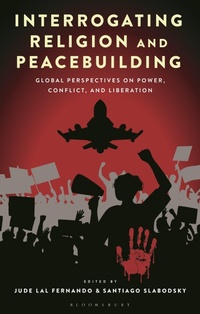
Interrogating Religion and Peacebuilding
Global Perspectives on Power, Conflict, and Liberation
Will be published approx. on 23. July 2026
336 pages
979-8-216-37971-3 (ISBN)
Description

Challenges the dominant narratives that frame peace as a civilizational ideal. At a time when millions demand an end to war, occupation, and systemic oppression, this volume gathers diverse voices in a transnational and decolonial conversation. The contributors interrogate how "peace" is too often deployed as a mirage-reproducing systems of exclusion and violence under the guise of stability, order, and reform.
Exposing the coloniality embedded within hegemonic peace discourses, contributors reveal how imperial power configurations transform freedom into occupation, democracy into exclusion, and security into violence. Through critically self-reflective engagement with both religious and secular worldviews, contributors propose that peace is not an abstract ideal, but a deeply political construct shaped by empire, enforced through intervention, and justified by a faith in modernity's civilizing mission. Rejecting both reformist inclusion and idealized neutrality, these essays embody a political commitment to the tormented, the resisting, and the marginalized.
From "post-conflict" pacification to imperial "peace deals," contributors unmask peacebuilding as often war by other means-while advancing liberative spiritualities that reimagine peace as justice from below. This book is not merely critique-it is a call to transformation.
Exposing the coloniality embedded within hegemonic peace discourses, contributors reveal how imperial power configurations transform freedom into occupation, democracy into exclusion, and security into violence. Through critically self-reflective engagement with both religious and secular worldviews, contributors propose that peace is not an abstract ideal, but a deeply political construct shaped by empire, enforced through intervention, and justified by a faith in modernity's civilizing mission. Rejecting both reformist inclusion and idealized neutrality, these essays embody a political commitment to the tormented, the resisting, and the marginalized.
From "post-conflict" pacification to imperial "peace deals," contributors unmask peacebuilding as often war by other means-while advancing liberative spiritualities that reimagine peace as justice from below. This book is not merely critique-it is a call to transformation.
More details
Series
Language
English
Place of publication
United States
Publishing group
Bloomsbury Publishing Plc
Target group
College/higher education
Illustrations
8 b&w images
File size
1,00 MB
ISBN-13
979-8-216-37971-3 (9798216379713)
Copyright in bibliographic data and cover images is held by Nielsen Book Services Limited or by the publishers or by their respective licensors: all rights reserved.
Schweitzer Classification
Other editions
Additional editions
Jude Lal Fernando | Santiago Slabodsky
Interrogating Religion and Peacebuilding
Global Perspectives on Power, Conflict, and Liberation
Book
approx. 08/2026
Religion in the Modern World
€31.50
Not yet published
Persons
Jude Lal Fernando is Associate Professor at the Irish School of Ecumenics, School of Religion, Theology, and Peace Studies in Trinity College Dublin and the Director of the Irish School of Ecumenics. He is the author of Religion, Conflict and Peace in Sri Lanka: The Politics of Interpretation of Nationhoods, and the editor of Resistance to Empire and Militarization: Reclaiming the Sacred and Faith in the Face of Militarization: Indigenous, Feminist and Interreligious Voices.
Santiago Slabodsky is an Argentinean sociologist who currently holds the Kaufman Endowed Chair in Jewish Studies and served as the inaugural associate director of the Center for the Study of Race, Culture and Social Justice at Hofstra University in New York. He is currently co-director of the journal Decolonial Horizons, based in South America and associate editor of the journal ReOrient: Critical Muslim Studies, the UK.
Santiago Slabodsky is an Argentinean sociologist who currently holds the Kaufman Endowed Chair in Jewish Studies and served as the inaugural associate director of the Center for the Study of Race, Culture and Social Justice at Hofstra University in New York. He is currently co-director of the journal Decolonial Horizons, based in South America and associate editor of the journal ReOrient: Critical Muslim Studies, the UK.
Content
Introduction
Section 1: North Transatlantic
1. Kawtar Najib (Algeria/UK/France), Secularism, Multiculturalism and Geopolitics: French and British Islamophobia as Peacebuilding
2. Victoria Turner (UK), Whose Peacebuilding? Challenging the Worship of Hero or Appropriation of Victimhood
3. Kathleen McGarvey (Ireland/Nigeria), Thinking Beyond Religious and Secular: In Search for a Prophetic Dialogue in Ireland
4. Vincent W. Lloyd (USA), Abolitionism as Peacebuilding, Abolitionism as Political Theology
Section II: South Transatlantic
5. Xhanti Mhlambiso (South Africa), The Long Walk to Freedom Continues: Land, Race, Justice and the Paradox of Post-1994 South Africa
6. Javier Giraldo Moreno and Jude Lal Fernando (Colombia/Ireland), The Prognosis of Violence and Just Peace in Colombia: In the light of Camilo Torres
7. Zerihun Addisu Kinate (Ethiopia/Canada): Can the Locals in Africa Speak? Empowering Emancipatory Peacebuilding Practices in Ethiopia
8. Emilce Cuda (Argentina/Italy), The Politics of Love vs. The Politics of Apathy: Reading Francis on Conditions for Justice and Peace
Section III: Transmediterranean
9. Mitri Raheb (Palestine), Peacebuilding in the Context of Settler Colonialism: The Case of Palestine
10. Atalia Omer (USA/Palestine), Not a Panacea but a Shackle: Economic Conceptions of Peacebuilding Conceal Root Causes of Violence Until They Can't
11. Shifana Mohammed Niyas (Sri Lanka/Ireland), Resistance to Nazism and Zionism as Peacebuilding: Dietrich Bonhoeffer and Hilarion Cappucci as Companions
12. Erin Shea Martin (USA/Turkey), Trees Worship Allah, the AKP Worships Capital: Acting Beyond the Binary, Religious vs. Secular in Turkey
Section IV: Transpacific
13. Jurgette Nectarinia Montes Rocas (Philippines), The Case of Jennifer Laude, the Philippines and the USA: There is No Peace without an Anti-colonial Queer Critique
14. Julianus Mojau, Beril Huliselan, Sirayandris J. Botara, Liliane Mojau (Indonesia), Models of Peaceful Relations and Religious Identity-Based Political Competition: Muslims and Christians in North Moluccas
15. Freya Dasgupta (India/Ireland), Singing Truth to Power: Dissent and Defiance through Song in Saffron India
16. Kyongili Jung (Korea), Spiritual Roots of Protest: Envisioning a Social Spirituality in the Age of Neoliberalism
Section 1: North Transatlantic
1. Kawtar Najib (Algeria/UK/France), Secularism, Multiculturalism and Geopolitics: French and British Islamophobia as Peacebuilding
2. Victoria Turner (UK), Whose Peacebuilding? Challenging the Worship of Hero or Appropriation of Victimhood
3. Kathleen McGarvey (Ireland/Nigeria), Thinking Beyond Religious and Secular: In Search for a Prophetic Dialogue in Ireland
4. Vincent W. Lloyd (USA), Abolitionism as Peacebuilding, Abolitionism as Political Theology
Section II: South Transatlantic
5. Xhanti Mhlambiso (South Africa), The Long Walk to Freedom Continues: Land, Race, Justice and the Paradox of Post-1994 South Africa
6. Javier Giraldo Moreno and Jude Lal Fernando (Colombia/Ireland), The Prognosis of Violence and Just Peace in Colombia: In the light of Camilo Torres
7. Zerihun Addisu Kinate (Ethiopia/Canada): Can the Locals in Africa Speak? Empowering Emancipatory Peacebuilding Practices in Ethiopia
8. Emilce Cuda (Argentina/Italy), The Politics of Love vs. The Politics of Apathy: Reading Francis on Conditions for Justice and Peace
Section III: Transmediterranean
9. Mitri Raheb (Palestine), Peacebuilding in the Context of Settler Colonialism: The Case of Palestine
10. Atalia Omer (USA/Palestine), Not a Panacea but a Shackle: Economic Conceptions of Peacebuilding Conceal Root Causes of Violence Until They Can't
11. Shifana Mohammed Niyas (Sri Lanka/Ireland), Resistance to Nazism and Zionism as Peacebuilding: Dietrich Bonhoeffer and Hilarion Cappucci as Companions
12. Erin Shea Martin (USA/Turkey), Trees Worship Allah, the AKP Worships Capital: Acting Beyond the Binary, Religious vs. Secular in Turkey
Section IV: Transpacific
13. Jurgette Nectarinia Montes Rocas (Philippines), The Case of Jennifer Laude, the Philippines and the USA: There is No Peace without an Anti-colonial Queer Critique
14. Julianus Mojau, Beril Huliselan, Sirayandris J. Botara, Liliane Mojau (Indonesia), Models of Peaceful Relations and Religious Identity-Based Political Competition: Muslims and Christians in North Moluccas
15. Freya Dasgupta (India/Ireland), Singing Truth to Power: Dissent and Defiance through Song in Saffron India
16. Kyongili Jung (Korea), Spiritual Roots of Protest: Envisioning a Social Spirituality in the Age of Neoliberalism
