

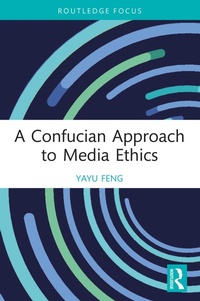
A Confucian Approach to Media Ethics
1st Edition
Published on 23. January 2025
114 pages
978-1-040-33619-9 (ISBN)
Description

A Confucian Approach to Media Ethics offers a comprehensive theorization of an approach to media ethics based on the moral philosophy that originated from China and that profoundly influenced East Asian countries.
This book engages with foundational concepts from Confucian ethics and explicates a new framework that can be used for guiding media practices, as well as media ethics research and teaching. It suggests that the Confucian ideals of He (harmony), Zhong (equilibrium), and the notion of Junzi can be applied to guide intercultural media practices, and sets out a fresh model for ethics education centered on Xiuji (self-cultivation) that is different from the training-based and decision-making-centered model prevalent in the Western classrooms. This is also a framework that emphasizes both individual moral growth and the moral character of the broader professional community.
Filling a gap in the conversation between Eastern and Western approaches to media ethics, this innovative and important volume will offer new perspectives to students and scholars of media ethics, communication studies, and comparative philosophy.
This book engages with foundational concepts from Confucian ethics and explicates a new framework that can be used for guiding media practices, as well as media ethics research and teaching. It suggests that the Confucian ideals of He (harmony), Zhong (equilibrium), and the notion of Junzi can be applied to guide intercultural media practices, and sets out a fresh model for ethics education centered on Xiuji (self-cultivation) that is different from the training-based and decision-making-centered model prevalent in the Western classrooms. This is also a framework that emphasizes both individual moral growth and the moral character of the broader professional community.
Filling a gap in the conversation between Eastern and Western approaches to media ethics, this innovative and important volume will offer new perspectives to students and scholars of media ethics, communication studies, and comparative philosophy.
More details
Series
Edition
1. Auflage
Language
English
Place of publication
London
United Kingdom
Publishing group
Taylor & Francis Ltd
Target group
College/higher education
File size
4,26 MB
ISBN-13
978-1-040-33619-9 (9781040336199)
Copyright in bibliographic data and cover images is held by Nielsen Book Services Limited or by the publishers or by their respective licensors: all rights reserved.
Schweitzer Classification
Other editions
Additional editions
Yayu Feng
A Confucian Approach to Media Ethics
Book
approx. 07/2026
1st Edition
Routledge
€30.00
Not yet published
Yayu Feng
A Confucian Approach to Media Ethics
Book
01/2025
1st Edition
Routledge
€77.90
Shipment within 10-20 days
Person
Yayu Feng is an assistant professor in the Department of Emerging Media at the University of St. Thomas, United States.
Content
Preface
1. Inviting Confucius to Media Ethics Theory
2. Media Ethics Roundtable: From Western Frameworks to Confucian Ethics
3. Confucian Virtue System: Bring Media Ethics (Back) To a Humanistic Path
4. Learning From Confucius: Moral Self-Cultivation (Xiuji) and Its Application in Media Ethics Education
5. Communal Focus of Confucian Ethics: Building The Moral Character of Media Professional Community
6. Embracing the Confucian Approach to Media Ethics in the Global Age: A Discussion of Universality and Future Possibilities
Index
1. Inviting Confucius to Media Ethics Theory
2. Media Ethics Roundtable: From Western Frameworks to Confucian Ethics
3. Confucian Virtue System: Bring Media Ethics (Back) To a Humanistic Path
4. Learning From Confucius: Moral Self-Cultivation (Xiuji) and Its Application in Media Ethics Education
5. Communal Focus of Confucian Ethics: Building The Moral Character of Media Professional Community
6. Embracing the Confucian Approach to Media Ethics in the Global Age: A Discussion of Universality and Future Possibilities
Index
