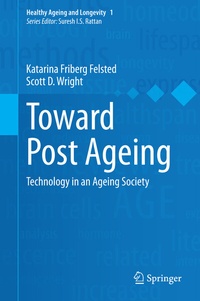
Toward Post Ageing
Description

This book examines the emergent and expanding role of technologies that hold both promise and possible peril for transforming the ageing process in this century. It discusses the points and counterpoints of technological advances that would influence a reconstruction of what it means to age when embedded in a post-human vision for a post-biological future.
The book presents a provocative interdisciplinary meta-analysis that contrasts paradigms with inflection points, making the case that society has entered a new inflection point, provisionally labeled as Post Ageing. It goes on to discuss the moderate and radical versions of this inflection point and the philosophical issues that need to be addressed with the advent of post ageing activities: postponing and possibly ending ageing, primarily through technological advances.
This book will be a valuable resource for professionals who wish to review the continuum of varied constructs and intersects of technologies ranging from those purporting to enhance the activities of daily living in older adults, to those that would enable the older worker to stay competitive in the labor market, to those that propose to extend longevity and ultimately, claim to transcend ageing itself-moving toward a transhumanistic domain and more specifically, a post-ageing inflection point.
More details
Other editions
Additional editions