

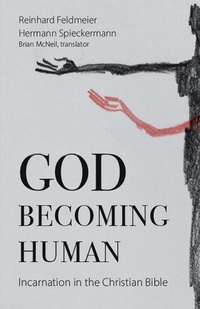
God Becoming Human
Description

The incarnation-the act of God assuming mortal flesh through Jesus Christ-reveals God's radical love for a world marked by the rebellion of the created against their creator. God becomes human to create life and restore the disrupted divine-human relationship. This doctrine is thus the theme of the Christian faith par excellence. However, the incarnation does not begin with its ultimate realization in Jesus Christ; that single event is preceded by a long history of a God who continually reunites with his people to lead them from death to life, from bondage to freedom.
God Becoming Human pursues the astonishing arc of the incarnation, chronicling the varying ways Scripture recounts the divide between God and the creatures of his likeness as well as the diverse expressions the text gives regarding the desire for reconciliation. As the expectations of an existing intermediary that can somehow bridge this gap between God and humans dwindle throughout the Old Testament, hope is increasingly placed on new forms of closeness to God. The closeness made possible by Jesus Christ receives a wide range of interpretations by New Testament witnesses and is continued by a rich chorus that culminates in the early church with the theology of the incarnation.
Reinhard Feldmeier and Hermann Spieckermann invite readers to see that the doctrine of the incarnation, the pinnacle of the scriptural saga of redemption, reveals that God's ultimate purpose in dealing with creation was to become human. As narrated in the story of the fall, if paradise was lost because humanity wanted to emulate God, the one reconciled with God through Christ is now given the opportunity-and challenge-to become a child of God. In accordance with the One who descended from the heavenly throne, one must precisely lower oneself and thus fully embrace one's created humanness. It is through the flesh that the created and their creator are joined; there is no other path to unity.
More details
Other editions
Additional editions
Persons
Content
ForewordTranslator's NoteAbbreviationsIntroduction: The Aims of This WorkA. The Prehistory of the Incarnation1 In the BeginningThe Creator and His Problematic Image2 Mediators of God's Nearness3 New Figures of God's Nearness4 At the Point of TransitionFrom Death to LifeB. Conceptions of Incarnation1 The Galilean Man of GodFrom the Jesus of Memory to the Christ of Faith2 Kyrios Jesus ChristosPaul on the One Who Became Human3 The Proclaimer as the ProclaimedThe Synoptic Tradition4 The Incarnation of the LogosThe Johannine Tradition5 Christ and the ChristiansThe Early Christian TestimonyConclusion: The God Who Became Human--and Our Becoming Human
