

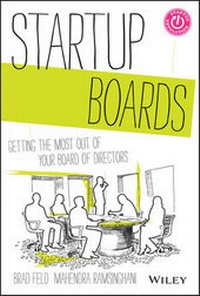
Startup Boards
Getting the Most Out of Your Board of Directors
Published on 6. December 2013
240 pages
978-1-118-51684-3 (ISBN)
Description

An essential guide to understanding the dynamics of a startup'sboard of directors
Let's face it, as founders and entrepreneurs, you have a lot onyour plate--getting to your minimum viable product, developingcustomer interaction, hiring team members, and managing theaccounts/books. Sooner or later, you have a board of directors,three to five (or even seven) Type A personalities who seek yourattention and at times will tell you what to do. While you might behesitant to form a board, establishing an objective outside groupis essential for startups, especially to keep you on track, callyou out when you flail, and in some cases, save you fromyourself.
In Startup Boards, Brad Feld--a Boulder,Colorado-based entrepreneur turned-venture capitalist--shareshis experience in this area by talking about the importance ofhaving the right board members on your team and how to manage themwell. Along the way, he shares valuable insights on various aspectsof the board, including how they can support you, help youunderstand your startup's milestones and get to them faster, andhold you accountable.
* Details the process of choosing board members, includinginterviewing many people, checking references, and remembering thatthere should be no fear in rejecting a wrong fit
* Explores the importance of running great meetings, mixingsocial time with business time, and much more
* Recommends being a board member yourself at some otherorganization so you see the other side of the equation
Engaging and informative, Startup Boards is a practicalguide to one of the most important pieces of the startuppuzzle.
Let's face it, as founders and entrepreneurs, you have a lot onyour plate--getting to your minimum viable product, developingcustomer interaction, hiring team members, and managing theaccounts/books. Sooner or later, you have a board of directors,three to five (or even seven) Type A personalities who seek yourattention and at times will tell you what to do. While you might behesitant to form a board, establishing an objective outside groupis essential for startups, especially to keep you on track, callyou out when you flail, and in some cases, save you fromyourself.
In Startup Boards, Brad Feld--a Boulder,Colorado-based entrepreneur turned-venture capitalist--shareshis experience in this area by talking about the importance ofhaving the right board members on your team and how to manage themwell. Along the way, he shares valuable insights on various aspectsof the board, including how they can support you, help youunderstand your startup's milestones and get to them faster, andhold you accountable.
* Details the process of choosing board members, includinginterviewing many people, checking references, and remembering thatthere should be no fear in rejecting a wrong fit
* Explores the importance of running great meetings, mixingsocial time with business time, and much more
* Recommends being a board member yourself at some otherorganization so you see the other side of the equation
Engaging and informative, Startup Boards is a practicalguide to one of the most important pieces of the startuppuzzle.
All prices
More details
Other editions
New editions
Brad Feld | Matt Blumberg | Mahendra Ramsinghani
Startup Boards
A Field Guide to Building and Leading an Effective Board of Directors
E-Book
06/2022
2nd Edition
Wiley
€19.99
Available for download
Additional editions
Book
02/2014
Wiley
€28.50
Shipment within 15-20 days
Persons
Brad Feld has been an early-stage investor andentrepreneur for over twenty years. Prior to cofounding FoundryGroup--a Boulder, Colorado-based early-stage venturecapital fund that invests in information technology companies allover the United States--he cofounded Mobius Venture Capitaland, prior to that, founded Intensity Ventures. Feld is also acofounder of Techstars and has been active with several nonprofitorganizations. He is a nationally recognized speaker on the topicsof venture capital investing and entrepreneurship.
Mahendra Ramsinghani has over fifteen years of investmentand entrepreneurial experience and has led investments in overfifty seed stage companies. He helped draft the underlyinglegislation for a fund-of-funds for the state of Michigan. For hiscontributions, Ramsinghani's immigration to the United States wasapproved under "national interest." He is the author of TheBusiness of Venture Capital (Wiley). His articles and blogshave been published in Forbes, MIT Technology Review,Thomson Reuters, and the Huffington Post. His educationalbackground includes a BE in electronics and MBA in finance andmarketing from the University of Pune, India.
Mahendra Ramsinghani has over fifteen years of investmentand entrepreneurial experience and has led investments in overfifty seed stage companies. He helped draft the underlyinglegislation for a fund-of-funds for the state of Michigan. For hiscontributions, Ramsinghani's immigration to the United States wasapproved under "national interest." He is the author of TheBusiness of Venture Capital (Wiley). His articles and blogshave been published in Forbes, MIT Technology Review,Thomson Reuters, and the Huffington Post. His educationalbackground includes a BE in electronics and MBA in finance andmarketing from the University of Pune, India.
Content
FOREWORD ix
ACKNOWLEDGMENTS xiii
PART ONE: OVERVIEW 1
CHAPTER ONE
Introduction 3
CHAPTER TWO
What Is a Board? 11
PART TWO: BUILDING YOUR BOARD 23
CHAPTER THREE
Creating Your Board 25
CHAPTER FOUR
Recruiting Board Members 49
CHAPTER FIVE
The Formal Structure of the Board 63
CHAPTER SIX
Aligning Your Board 71
CHAPTER SEVEN
Is an Advisory Board Useful? 77
PART THREE: THE BUSINESS OF THE BOARD MEETING 85
CHAPTER EIGHT
The Actual Board Meeting 87
CHAPTER NINE
Motions and Votes 101
CHAPTER TEN
Legal Challenges 111
PART FOUR: COMMUNICATIONS 115
CHAPTER ELEVEN
Managing Ongoing Expectations 117
CHAPTER TWELVE
Trying New Things 131
CHAPTER THIRTEEN
Communication Confl icts 135
CHAPTER FOURTEEN
CEO Transitions 143
PART FIVE: TRANSACTIONS 151
CHAPTER FIFTEEN
Financings 153
CHAPTER SIXTEEN
Selling a Company 157
CHAPTER SEVENTEEN
Going Public 167
CHAPTER EIGHTEEN
Going Out of Business 173
CHAPTER NINTEEN
Conclusion 179
APPENDIX
Checklist 1: Preparing Your Board Package 183
Checklist 2: Conducting Your Board's Annual Assessment185
Checklist 3: Question for Your Legal Counsel 187
Checklist 4: Should You Get Directors and Offi cers Insurance?189
Checklist 5: Stock Option Grants and 409A Valuation 191
NOTES 195
INTERVIEWS 199
BIBLIOGRAPHY 201
ABOUT THE AUTHORS 203
INDEX 205
Excerpt from Startup CEO 211
ACKNOWLEDGMENTS xiii
PART ONE: OVERVIEW 1
CHAPTER ONE
Introduction 3
CHAPTER TWO
What Is a Board? 11
PART TWO: BUILDING YOUR BOARD 23
CHAPTER THREE
Creating Your Board 25
CHAPTER FOUR
Recruiting Board Members 49
CHAPTER FIVE
The Formal Structure of the Board 63
CHAPTER SIX
Aligning Your Board 71
CHAPTER SEVEN
Is an Advisory Board Useful? 77
PART THREE: THE BUSINESS OF THE BOARD MEETING 85
CHAPTER EIGHT
The Actual Board Meeting 87
CHAPTER NINE
Motions and Votes 101
CHAPTER TEN
Legal Challenges 111
PART FOUR: COMMUNICATIONS 115
CHAPTER ELEVEN
Managing Ongoing Expectations 117
CHAPTER TWELVE
Trying New Things 131
CHAPTER THIRTEEN
Communication Confl icts 135
CHAPTER FOURTEEN
CEO Transitions 143
PART FIVE: TRANSACTIONS 151
CHAPTER FIFTEEN
Financings 153
CHAPTER SIXTEEN
Selling a Company 157
CHAPTER SEVENTEEN
Going Public 167
CHAPTER EIGHTEEN
Going Out of Business 173
CHAPTER NINTEEN
Conclusion 179
APPENDIX
Checklist 1: Preparing Your Board Package 183
Checklist 2: Conducting Your Board's Annual Assessment185
Checklist 3: Question for Your Legal Counsel 187
Checklist 4: Should You Get Directors and Offi cers Insurance?189
Checklist 5: Stock Option Grants and 409A Valuation 191
NOTES 195
INTERVIEWS 199
BIBLIOGRAPHY 201
ABOUT THE AUTHORS 203
INDEX 205
Excerpt from Startup CEO 211
