

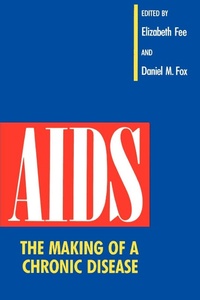
AIDS
The Making of a Chronic Disease
1st Edition
Published on 1. September 2023
417 pages
978-0-520-91244-1 (ISBN)
Description

When AIDS was first recognized in 1981, most experts believed that it was a plague, a virulent unexpected disease. They thought AIDS, as a plague, would resemble the great epidemics of the past: it would be devastating but would soon subside, perhaps never to return. By the middle 1980s, however, it became increasingly clear that AIDS was a chronic infection, not a classic plague.
In this follow-up to AIDS: The Burdens of History, editors Elizabeth Fee and Daniel M. Fox present essays that describe how AIDS has come to be regarded as a chronic disease. Representing diverse fields and professions, the twenty-three contributors to this work use historical methods to analyze politics and public policy, human rights issues, and the changing populations with HIV infection. They examine the federal government's testing of drugs for cancer and HIV, and show how the policy makers' choice of a specific historical model (chronic disease versus plague) affected their decisions. A powerful photo essay reveals the strengths of women from various backgrounds and lifestyles who are coping with HIV. A sensitive account of the complex relationships of the gay community to AIDS is included. Finally, several contributors provide a sampling of international perspectives on the impact of AIDS in other nations.
This title is part of UC Press's Voices Revived program, which commemorates University of California Press's mission to seek out and cultivate the brightest minds and give them voice, reach, and impact. Drawing on a backlist dating to 1893, Voices Revived makes high-quality, peer-reviewed scholarship accessible once again using print-on-demand technology. This title was originally published in 1992.
When AIDS was first recognized in 1981, most experts believed that it was a plague, a virulent unexpected disease. They thought AIDS, as a plague, would resemble the great epidemics of the past: it would be devastating but would soon subside, perhaps neve
In this follow-up to AIDS: The Burdens of History, editors Elizabeth Fee and Daniel M. Fox present essays that describe how AIDS has come to be regarded as a chronic disease. Representing diverse fields and professions, the twenty-three contributors to this work use historical methods to analyze politics and public policy, human rights issues, and the changing populations with HIV infection. They examine the federal government's testing of drugs for cancer and HIV, and show how the policy makers' choice of a specific historical model (chronic disease versus plague) affected their decisions. A powerful photo essay reveals the strengths of women from various backgrounds and lifestyles who are coping with HIV. A sensitive account of the complex relationships of the gay community to AIDS is included. Finally, several contributors provide a sampling of international perspectives on the impact of AIDS in other nations.
This title is part of UC Press's Voices Revived program, which commemorates University of California Press's mission to seek out and cultivate the brightest minds and give them voice, reach, and impact. Drawing on a backlist dating to 1893, Voices Revived makes high-quality, peer-reviewed scholarship accessible once again using print-on-demand technology. This title was originally published in 1992.
When AIDS was first recognized in 1981, most experts believed that it was a plague, a virulent unexpected disease. They thought AIDS, as a plague, would resemble the great epidemics of the past: it would be devastating but would soon subside, perhaps neve
More details
Other editions
Additional editions
Book
12/1991
1st Edition
University of California Press
€32.24
Article not available at the moment

Book
12/1991
1st Edition
University of California Press
€43.40
Article exhausted; check different version
Content
Introduction: The Contemporary Historiography of AIDS
Elizabeth Fee and Daniel M. Fox
PART I. THE VIRUS AND ITS PUBLICS
AIDS and Beyond: Defining the Rules for Viral Traffic
Stephen S. Morse
Causes, Cases, and Cohorts: The Role of Epidemiology
in the Historical Construction of AIDS
Gerald M. Oppenheimer
The Mass-Mediated Epidemic: The Politics of AIDS on
the Nightly Network News
Timothy E. Cook and David C. Colby
PART II. LAW, ETHICS, AND PUBLIC POLICY
The Politics of HIV Infection: 1989-1990 as Years of
Change
Daniel M. Fox
The AIDS Litigation Project: A National Review of Court
and Human Rights Commission Decisions on Discrimination
Larry Costin
The History of Transfusion AIDS: Practice and Policy
Alternatives
Harvey M. Sapo/sky and Stephen L. Boswell
Scientific Rigor and Medical Realities: Placebo Trials in
Cancer and AIDS Research
David]. Rothman and Harold Edgar
Entering the Second Decade: The Politics of Prevention,
the Politics of Neglect
Ronald Bayer
PART III. AFFECTED POPULATIONS
Until That Last Breath: Women with AIDS
Ann Meredith
Riding the Tiger: AIDS and the Gay Community
Robert A. Padgug and Gerald M. Oppenheimer
The First City: HIV among Intravenous Drug Users in
New York City
Don C. Des ]arlais, Samuel R. Friedman, and ]o L.
Sotheran
PART IV. INTERNATIONAL PERSPECTIVES
AIDS Policies in the United Kingdom: A Preliminary
Analysis
Virginia Berridge and Philip Strong
Foreign Blood and Domestic Politics: The Issue of AIDS
in Japan
James W. Dearing
Medical Research on AIDS in Africa: A Historical
Perspective
Randall M. Packard and Paul Epstein
AIDS and HIV Infection in the Third World: A First
World Chronicle
Paula A. Treichler
Notes on Contributors
Index
Contents
Elizabeth Fee and Daniel M. Fox
PART I. THE VIRUS AND ITS PUBLICS
AIDS and Beyond: Defining the Rules for Viral Traffic
Stephen S. Morse
Causes, Cases, and Cohorts: The Role of Epidemiology
in the Historical Construction of AIDS
Gerald M. Oppenheimer
The Mass-Mediated Epidemic: The Politics of AIDS on
the Nightly Network News
Timothy E. Cook and David C. Colby
PART II. LAW, ETHICS, AND PUBLIC POLICY
The Politics of HIV Infection: 1989-1990 as Years of
Change
Daniel M. Fox
The AIDS Litigation Project: A National Review of Court
and Human Rights Commission Decisions on Discrimination
Larry Costin
The History of Transfusion AIDS: Practice and Policy
Alternatives
Harvey M. Sapo/sky and Stephen L. Boswell
Scientific Rigor and Medical Realities: Placebo Trials in
Cancer and AIDS Research
David]. Rothman and Harold Edgar
Entering the Second Decade: The Politics of Prevention,
the Politics of Neglect
Ronald Bayer
PART III. AFFECTED POPULATIONS
Until That Last Breath: Women with AIDS
Ann Meredith
Riding the Tiger: AIDS and the Gay Community
Robert A. Padgug and Gerald M. Oppenheimer
The First City: HIV among Intravenous Drug Users in
New York City
Don C. Des ]arlais, Samuel R. Friedman, and ]o L.
Sotheran
PART IV. INTERNATIONAL PERSPECTIVES
AIDS Policies in the United Kingdom: A Preliminary
Analysis
Virginia Berridge and Philip Strong
Foreign Blood and Domestic Politics: The Issue of AIDS
in Japan
James W. Dearing
Medical Research on AIDS in Africa: A Historical
Perspective
Randall M. Packard and Paul Epstein
AIDS and HIV Infection in the Third World: A First
World Chronicle
Paula A. Treichler
Notes on Contributors
Index
Contents
