

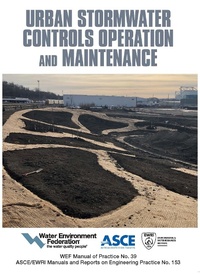
Urban Stormwater Controls Operations and Maintenance
Published on 14. December 2022
371 pages
978-1-57278-426-0 (ISBN)
Description

The effectiveness of stormwater management programs depends largely on how well and how safely stormwater control measures (SCMs) perform over time. This manual provides best practices for the continued operation of SCMs, with a target audience of designers, utility managers, and O&M staff.
More details
Other editions
Additional editions
Water Environment Federation
Urban Stormwater Controls Operations and Maintenance
Book
09/2022
Water Environment Federation,US
€152.50
Shipment within 3-4 weeks
Content
- Intro
- Title Page
- Copyright
- Contents
- List of Figures
- List of Tables
- Preface
- Chapter 1 Introduction-Fernando Pasquel
- 1.0 The Importance of Stormwater Control Measure Maintenance
- 2.0 Manual Overview
- 3.0 How to Use this Manual
- 4.0 Funding Operations and Maintenance Activities
- 5.0 Terminology
- 6.0 References
- Chapter 2 Program Development and Regulatory Framework-Jason T. Sanson, PE
- Anwer Ahmed, PE, DWRE
- & Maya Carrasquillo, PhD
- 1.0 Introduction
- 2.0 Maintenance Drivers
- 2.1 Regulatory Drivers
- 2.2 Land Development
- 2.3 Performance
- 3.0 Roles of Regulatory Agencies
- 3.1 Federal
- 3.2 State
- 3.3 Local
- 3.4 Stormwater Control Measure Inspection During Construction
- 3.5 Private and Public Parties
- 4.0 Program Development
- 4.1 Overview
- 4.2 Extent and Level of Service
- 4.3 Program Models and Functions
- 4.3.1 Program Components
- 4.3.2 Scoping the Maintenance Program
- 4.4 Program Organization
- 4.5 Program Funding
- 4.5.1 Stormwater Fees
- 4.5.2 Loans Programs
- 4.5.3 Grant Funding
- 4.6 Training
- 5.0 Resilience Considerations in Operations and Maintenance
- 6.0 Sample Maintenance Agreements
- 7.0 References
- Chapter 3 Design and Construction Maintenance Considerations-Andy Sauer, PE, ENV SP
- Lauren Moore, PE, ENV SP
- & Brenda Macke, PE, CFM, PMP
- 1.0 Introduction
- 2.0 Design Considerations: Design with Maintenance in Mind
- 2.1 Establishing the Functional Performance With Design
- 2.2 The Designer Perspective
- 2.3 Function and Potential Fail Points
- 2.4 Designing for Potential Fail Points
- 3.0 Maintenance Needs during Construction
- 3.1 Control and Protection Measures
- 3.1.1 Perimeter Controls
- 3.1.2 Surface Controls
- 3.1.3 Enclosed System Control
- 3.1.4 Stabilization Control
- 3.2 Phasing of Construction: Plan, Communicate, Plan
- 3.2.1 Location Considerations
- 3.2.2 Stormwater Control Function and Fail Points
- 3.2.3 Control, Protection, and Sequencing Plan, and Specification Development
- 3.2.4 Construction Timing and Execution Constraints
- 3.3 Construction Responsibilities
- 3.3.1 Construction Responsibilities and Oversight
- 3.3.2 Training of the Construction Worker-Developing Skilled Stormwater Control Measure Labor
- 4.0 Reference
- Chapter 4 Conventional Stormwater Control Measures and Green Infrastructure Maintenance-Shandor Szalay & Kevin Flynn
- 1.0 Introduction
- 1.1 Maintenance Goals
- 1.1.1 Sustained Function
- 1.1.2 System Longevity
- 1.1.3 Aesthetics
- 1.1.4 Balancing Maintenance Level of Service
- 1.1.5 Public and Worker Safety
- 1.2 Key Processes
- 1.2.1 Vegetation and Soil Associations and Feedback
- 1.2.2 Hydraulics, Erosion, and Sedimentation
- 1.2.3 Structural Deterioration
- 2.0 Maintenance to Optimize Performance and Longevity
- 2.1 Maintaining Health Vegetation and Soils
- 2.2 Managing Erosion and Sedimentation Processes
- 2.1.1 Minimizing Erosion, Scour, and Settlement
- 2.2.2 Managing Sedimentation and Clogging
- 2.3 Maintaining Structural Components
- 3.0 Special Considerations
- 3.1 Considerations for Infiltrating Systems
- 3.2 Considerations for Slow-Release Systems
- 3.3 Considerations for Proprietary/Manufactured Devices
- 4.0 Maintenance Summary by Stormwater Control Measures Type
- 4.1 Surface Practices
- 4.1.1 Forebays
- 4.1.1.1 Routine Maintenance
- 4.1.1.2 Common Problems
- 4.1.2 Dry Basins
- 4.1.2.1 Routine Maintenance
- 4.1.2.2 Common Problems
- 4.1.3 Wet Basins
- 4.1.3.1 Routine Maintenance
- 4.1.3.2 Common Problems
- 4.1.4 Wetlands (Including Subsurface Gravel Wetlands)
- 4.1.4.1 Routine Maintenance
- 4.1.4.2 Common Problems
- 4.1.5 Bioretention Filters
- 4.1.5.1 Routine Maintenance
- 4.1.5.2 Common Problems
- 4.1.6 Infiltration Basins
- 4.1.6.1 Routine Maintenance
- 4.1.6.2 Common Problems
- 4.1.7 Surface Sand Filters
- 4.1.7.1 Routine Maintenance
- 4.1.7.2 Common Problems
- 4.1.8 Swales and Strips
- 4.1.8.1 Routine Maintenance
- 4.1.8.2 Common Problems
- 4.2 Subsurface Practices
- 4.2.1 Drain Inlet Inserts and Manufactured Filters
- 4.2.1.1 Routine Maintenance
- 4.2.1.2 Common Problems
- 4.2.2 Vaults and Swirl Concentrators
- 4.2.3 Oil and Water Separators
- 4.2.3.1 Routine Maintenance
- 4.2.3.2 Common Problems
- 4.2.3.3 Special Considerations
- 4.2.4 Infiltration/Retention Trenches and Vaults
- 4.2.5 Dry Wells
- 4.2.5.1 Routine Maintenance
- 4.2.5.2 Common Problems
- 4.3 Cisterns and Rain Barrels
- 4.3.1 Routine Maintenance
- 4.3.2 Common Problems
- 4.4 Landscaped Roofs (Green Roofs)
- 4.4.1 Routine Maintenance
- 4.4.2 Common Problems
- 4.5 Permeable Pavement
- 4.5.1 Routine Maintenance
- 4.5.2 Common Problems
- 5.0 References
- Chapter 5 Inspection and Maintenance During and After Construction (Protocols)- Ed Othmer & Maureen Kerner, PE
- 1.0 Overview of Inspection and Maintenance Protocols
- 2.0 Types of Stormwater Control Measures and Components
- 2.1 Stormwater Control Measure Types
- 2.1.1 Basins
- 2.1.2 Swales and Strips
- 2.1.3 Filters
- 2.1.4 Infiltrators
- 2.1.5 Gross Pollutant Traps and Mechanical Operations
- 2.2 Stormwater Control Measure Components
- 3.0 Inspection and Maintenance Preparation
- 3.1 Health and Safety
- 3.2 Site Location and Access
- 3.3 Permits and Approvals
- 3.4 Personnel Education and Training
- 4.0 During Construction Protocols
- 4.1 Inspections
- 4.1.1 Verification of Proper Stormwater Control Measures
- 4.1.2 Verification of Location and Contributing Drainage Area
- 4.1.3 Verification of Size and Configuration
- 4.1.4 Verification of Elevations, Grades, and Dimensions
- 4.1.5 Verification of Conformance With Plans and Specifications
- 4.1.6 Verification of Structure Safety
- 4.1.7 Verification of Maintainability
- 4.1.7.1 Verification of Accessibility
- 4.1.7.2 Verification of Durability
- 4.1.8 Verification of Noncompaction
- 4.1.9 Verification of Structural Integrity
- 4.1.10 Verification of Soil/Filter Media
- 4.1.11 Verification of Hydraulic Performance
- 4.1.12 Verification of Plant Establishment
- 4.1.13 As-Built Drawings, Inspection Documentation, and Records Management
- 5.0 Postconstruction Protocols
- 5.1 Inspections
- 5.1.1 Inspect for Debris and Litter
- 5.1.2 Inspect for Sediment Accumulation
- 5.1.3 Inspect Vegetation
- 5.1.4 Inspect for Erosion
- 5.1.5 Inspect for Settling
- 5.1.6 Inspect Structural Features
- 5.1.7 Inspect Permanent Pool
- 5.1.8 Inspect for Damage/Malfunction of Mechanical, Electrical, Pneumatic, and Hydraulic Components
- 5.1.9 Inspect Porous Pavement
- 5.1.10 Inspect Media
- 5.1.11 Inspect for Evidence/Presence of Nuisance Conditions and Animals
- 5.1.11.1 Inspect for Undesirable Plant Communities
- 5.1.11.2 Inspect for Water Quality Degradation
- 5.1.11.3 Inspect for Water Bird Damage
- 5.1.12 Inspect for Vectors
- 5.1.13 Inspect for Snow and Ice
- 5.1.14 Inspect for Miscellaneous Site Damage
- 5.2 Routine Maintenance Protocols
- 5.2.1 Debris and Litter Removal Control
- 5.2.2 Sediment Removal and Disposal
- 5.2.3 Vegetation Maintenance
- 5.2.3.1 Weed Control
- 5.2.3.2 Mowing
- 5.2.3.3 Dead and Damaged Vegetation Removal
- 5.2.3.4 Pruning and Trimming
- 5.2.3.5 Soil Management
- 5.2.3.6 Reseeding and Replanting
- 5.2.3.7 Mulching
- 5.2.3.8 Watering
- 5.2.4 Minor Erosion
- 5.2.5 Settling Repair
- 5.2.6 Structure Maintenance
- 5.2.6.1 Pretreatment Device, Inlets, Outlet Structures, Chambers, and Subsurface Structures
- 5.2.6.2 Screens and Trash Racks
- 5.2.6.3 Pipes
- 5.2.6.4 Standing Water
- 5.2.6.5 Permanent Pool
- 5.2.7 Mechanical, Electrical, Pneumatic, and Hydraulic Maintenance
- 5.2.7.1 Valves, Orifices, and Aerators
- 5.2.7.2 Pumps and Switches
- 5.2.8 Porous Pavement Cleaning and Winter Maintenance
- 5.2.9 Media Maintenance
- 5.2.10 Nuisance Control
- 5.2.10.1 Animals
- 5.2.10.2 Water Birds
- 5.2.10.3 Undesirable Plant Communities
- 5.2.10.4 Water Quality Degradation
- 5.2.11 Vector Management
- 5.2.12 Snow and Ice Removal
- 5.2.13 Miscellaneous Site Damage
- 5.3 Nonroutine/Emergency Maintenance Protocols
- 5.3.1 Structural Repairs
- 5.3.2 Mechanical Equipment Repairs
- 5.3.3 Dam, Embankment, and Slope Repairs
- 5.3.4 Dewatering
- 5.3.5 Pond Maintenance
- 5.3.6 Fence Repair
- 5.3.7 Elimination of Woody Vegetation
- 5.3.8 Spills
- 5.4 Aesthetic Maintenance
- 5.4.1 Graffiti Removal
- 5.4.2 Vegetation Maintenance
- 5.4.3 Overall Site Maintenance
- 6.0 Prioritizing Corrective Maintenance
- 7.0 Maintenance Threshold Indicators
- 8.0 Checklists
- 9.0 References
- 10.0 Suggested Readings
- Chapter 6 Asset Management and Tools-Mark Van Auken & Maureen Kerner, PE
- 1.0 Overview of Asset Management
- 1.1 Needs
- 1.2 Definitions
- 1.3 Benefits
- 1.4 History
- 1.5 United States Environmental Protection Agency 10-Step Asset Management Process
- 2.0 Evaluate Current State of Assets
- 2.1 Types of Assets
- 2.2 Asset Characteristics
- 2.3 Asset Organization
- 2.4 Gathering Asset Information
- 3.0 Identify the Appropriate Level of Service
- 4.0 Evaluate Critical Assets
- 5.0 Evaluate Investment Strategies
- 5.1 Categorizing Assets for Operations and Maintenance or Capital Programs
- 5.2 Identifying Other Program Costs
- 5.3 Gathering Cost Data
- 5.4 Optimizing Operations and Maintenance Investments
- 5.5 Optimizing Capital Investments
- 6.0 Evaluate Long-Term Funding Options
- 6.1 Funding Strategies
- 6.2 Documenting the Asset Management Plan
- 7.0 Adaptive Management
- 7.1 Strategies
- 7.2 Tracking Performance Over Time
- 7.3 Feedback
- 7.4 Update of Asset Management Program
- 8.0 References
- Chapter 7 Personnel, Equipment, and Cost Considerations-Fernando Pasquel & Shandor Szalay
- 1.0 Personnel and Equipment Requirements
- 1.1 Surface Inspection and Maintenance
- 1.1.1 Crew Requirements
- 1.1.2 Equipment
- 1.1.3 Materials
- 1.2 Subsurface Inspection and Maintenance
- 1.2.1 Crew Requirements
- 1.2.2 Equipment and Materials
- 1.3 Porous Pavement Inspection and Maintenance
- 1.3.1 Crew Requirements
- 1.3.2 Equipment
- 1.3.3 Materials
- 1.4 Nonroutine and Specialty Maintenance
- 1.4.1 Crew Requirements
- 1.4.2 Equipment
- 1.4.3 Materials
- 2.0 Budgeting Considerations for Operations and Maintenance Programs
- 2.1 Budget Components
- 2.2 Estimating/Budgeting Program Costs
- 2.2.1 Factors Affecting Budget Estimates
- 2.2.2 Estimating Life-Cycle Costs
- 3.0 Maintenance Capital Improvement Program
- 4.0 References
- 5.0 Suggested Reading
- Chapter 8 Maintenance Scheduling-Brian Currier & Kirk Van Rooyan
- 1.0 Introduction
- 1.1 Maintenance Scheduling Scenarios
- 1.1.1 Regularly Scheduled or Routine Maintenance
- 1.1.2 Postinspection Ad-Hoc Maintenance
- 1.1.3 Maintenance During Inspection
- 1.1.4 Emergency or Nonroutine Maintenance
- 1.1.5 Inspection During Maintenance
- 2.0 Considerations, Priorities, and Tools for Scheduling Maintenance
- 2.1 Considerations for Setting Schedules for Activities, Crews, Equipment, and Routes
- 2.1.1 Predictability of Maintenance Activity
- 2.1.2 Availability of Workforce and Equipment
- 2.1.3 Availability of Maintenance Products and Materials
- 2.1.4 Seasonal Workload
- 2.1.5 Seasonal Species Conflicts
- 2.1.6 Seasonal Access
- 2.1.7 Logistics and Work Schedules
- 2.1.8 Regional Factors
- 2.2 Prioritization
- 2.3 Scheduling Tools
- 3.0 Adaptive Management Process to Optimize Scheduling
- 4.0 Referral to the Design Professional
- 5.0 References
- Chapter 9 Operations and Maintenance Forms, Logs, and Reporting-Aiza Jose-Sanchez, Eric Caldwell, Jordan Duncan, & Kelia Smoot
- 1.0 Importance of Tracking and Reporting Inspections and Maintenance
- 1.1 Importance of Inspections and Maintenance During Construction
- 1.2 Importance of Inspections and Maintenance During Operation
- 2.0 Components of Standard Operating Procedures for the Successful Operations and Maintenance of Stormwater Control Measures
- 2.1 Coordination, Responsibilities, and Communication Protocols
- 2.2 Health and Safety Plans and Incident/Near-Miss Reporting
- 2.3 Data Collection, Processing, Reporting, and Recordkeeping
- 2.3.1 Data Collection
- 2.3.2 Reporting and Processing
- 2.3.3 Recordkeeping
- 2.4 Public Outreach
- 2.5 Enforcement
- 3.0 Considerations for the Development of Inspection Forms
- 3.1 Stormwater Control Measure Inventory and Relevant Information
- 3.2 Importance of Rainfall Data
- 3.3 Tools, Databases, and Systems Utilized for Inventory and Data Management
- 3.4 Typical Stormwater Control Measure Concerns During Construction
- 3.4.1 Vegetated Swales and Strips
- 3.4.2 Basins
- 3.4.2.1 Dry Basins
- 3.4.2.2 Wet Basins
- 3.4.2.3 Swirl Concentrators and Vaults
- 3.4.3 Filters
- 3.4.3.1 Media Filters
- 3.4.3.2 Bioretention Filters
- 3.4.3.3 Inlet Basket
- 3.4.3.4 Landscaped Roofs
- 3.4.4 Infiltration
- 3.4.4.1 Infiltration Trench
- 3.4.4.2 Infiltration Basin
- 3.4.4.3 Pervious Pavement
- 3.4.5 Catch Basins
- 3.4.6 Gross Pollutant Controls
- 3.5 Typical Stormwater Control Measure Concerns During Operation
- 3.5.1 Vegetated Swales and Strips
- 3.5.2 Basins
- 3.5.2.1 Dry Basins
- 3.5.2.2 Wet Basins
- 3.5.2.3 Swirl Concentrators and Vaults
- 3.5.3 Filters
- 3.5.3.1 Media Filters
- 3.5.3.2 Bioretention Filters
- 3.5.3.3 Inlet Basket
- 3.5.3.4 Landscaped Roofs
- 3.5.4 Infiltration
- 3.5.4.1 Infiltration Trench
- 3.5.4.2 Infiltration Basin
- 3.5.4.3 Pervious Pavement
- 3.5.5 Catch Basins
- 3.5.6 Gross Pollutant Controls
- 4.0 Sample Inspection and Maintenance Reporting Forms
- 4.1 Inspection Forms During Construction
- 4.2 Inspection Forms During Operations and Maintenance
- 5.0 Summary
- 6.0 References
- Chapter 10 Case Studies-Fernando Pasquel
- Victoria Chou, PE
- Lisa Treese
- & Brenda Macke, PE, CFM, PMP
- 1.0 Introduction
- 2.0 Case Study 1-Kansas City, MO
- 2.1 Stormwater Management Program Overview
- 2.1.1 General Program
- 2.1.2 Operations and Maintenance Activities
- 2.2 Types of Stormwater Control Measures
- 2.2.1 Public Stormwater Control Measures
- 2.2.2 Private Stormwater Control Measures
- 2.3 Maintenance of Stormwater Control Measures
- 2.3.1 Performance of Inspection and Maintenance Activities
- 2.3.2 Lessons Learned
- 2.3.2.1 Green Solutions
- 2.3.2.2 Green Stewards
- 2.3.2.3 Construction Contractor Maintenance
- 2.4 Inspection and Maintenance Responsibilities and Recordkeeping
- 2.4.1 Public Practices
- 2.4.1.1 Maintenance Frequencies and Reporting
- 2.4.1.2 Responsible Parties
- 2.4.1.3 Recordkeeping
- 2.4.2 Private Practices
- 2.4.2.1 Maintenance Frequencies and Reporting
- 2.4.2.2 Responsible Parties
- 2.4.2.3 Recordkeeping
- 2.5 Funding Inspections and Maintenance
- 2.5.1 Public Practices
- 2.5.1.1 Funding Mechanisms
- 2.5.1.2 Summary of Annual Costs
- 2.5.2 Private Practices
- 2.5.2.1 Funding Mechanisms
- 2.5.2.2 Summary of Annual Costs
- 2.6 Challenges and Future Initiatives
- 2.6.1 Asset Management
- 2.6.2 In-House Maintenance
- 2.6.3 Contracted Assistance
- 2.6.4 Green Stewards
- 2.6.5 Overall Operations and Maintenance Program Planning
- 3.0 Case Study 2-City of Lancaster, PA
- 3.1 Stormwater Management Program Overview
- 3.2 Types of Stormwater Control Measures
- 3.3 Maintenance of Stormwater Control Measures
- 3.3.1 Inspection and Maintenance Activities
- 3.3.2 Lessons Learned
- 3.4 Inspection and Maintenance Responsibilities and Recordkeeping
- 3.4.1 Maintenance Frequencies and Reporting
- 3.4.2 Recordkeeping
- 3.5 Funding Inspections and Maintenance
- 3.5.1 Public Practices
- 3.5.2 Private Practices
- 3.6 Challenges and Future Initiatives
- 4.0 Case Study 3-Philadelphia Water Department
- 4.1 Stormwater Management Program Overview
- 4.2 Types of Stormwater Control Measures
- 4.3 Maintenance of Stormwater Control Measures
- 4.3.1 Inspection and Maintenance Activities
- 4.3.2 Lessons Learned
- 4.4 Inspection and Maintenance Responsibilities and Recordkeeping
- 4.4.1 Public Practices
- 4.4.1.1 Maintenance Frequencies and Reporting
- 4.4.1.2 Recordkeeping
- 4.4.2 Asset Management Considerations
- 4.5 Funding Inspections and Maintenance
- 4.6 Challenges and Future Initiatives
- 4.6.1 Inspection and Maintenance Challenges
- 4.6.2 Future Initiatives to Ensure Continued Performance
- 5.0 References
- 6.0 Suggested Reading
