

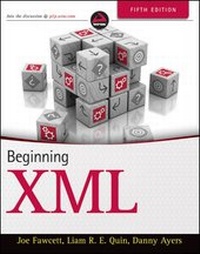
Beginning XML
5th Edition
Published on 25. June 2012
864 pages
978-1-118-23948-3 (ISBN)
Description

A complete update covering the many advances to the XMLlanguage
The XML language has become the standard for writing documentson the Internet and is constantly improving and evolving. This newedition covers all the many new XML-based technologies that haveappeared since the previous edition four years ago, providing youwith an up-to-date introductory guide and reference. Packed withreal-world code examples, best practices, and in-depth coverage ofthe most important and relevant topics, this authoritative resourceexplores both the advantages and disadvantages of XML and addressesthe most current standards and uses of XML.
* Features the most updated content built on audience feedbackfrom the previous edition as well as the vast knowledge from XMLdeveloper teams
* Boasts new chapters on RELAX NG and Schematron, XMLfunctionality in databases, LINQ to XML, Jabber and XMLPP, XHTML,HTML5, and more
* Offers in-depth coverage on extracting data from XML andupdated material on Web Services
Beginning XML, Fifth Edition delivers the most importantaspects of XML in regard to what it is, how it works, whattechnologies surround it, and how it can best be used in a varietyof situations.
The XML language has become the standard for writing documentson the Internet and is constantly improving and evolving. This newedition covers all the many new XML-based technologies that haveappeared since the previous edition four years ago, providing youwith an up-to-date introductory guide and reference. Packed withreal-world code examples, best practices, and in-depth coverage ofthe most important and relevant topics, this authoritative resourceexplores both the advantages and disadvantages of XML and addressesthe most current standards and uses of XML.
* Features the most updated content built on audience feedbackfrom the previous edition as well as the vast knowledge from XMLdeveloper teams
* Boasts new chapters on RELAX NG and Schematron, XMLfunctionality in databases, LINQ to XML, Jabber and XMLPP, XHTML,HTML5, and more
* Offers in-depth coverage on extracting data from XML andupdated material on Web Services
Beginning XML, Fifth Edition delivers the most importantaspects of XML in regard to what it is, how it works, whattechnologies surround it, and how it can best be used in a varietyof situations.
All prices
More details
Other editions
Additional editions
Joe Fawcett | Danny Ayers | Liam R. E. Quin
Beginning XML
Book
07/2012
5th Edition
Wrox Press
€37.50
Shipment within 15-20 days
Persons
Joe Fawcett is the head of software at Kaplan Financialand was one of the first Microsoft MVPs for XML.
Liam R. E. Quin is the W3C XML Activity Lead and StaffContact for the XML Query Working Group, and the XSL-FO subgroup ofthe XSL Working Group.
Danny Ayers works for Talis on applications for theirhosted semantic web platform.
Liam R. E. Quin is the W3C XML Activity Lead and StaffContact for the XML Query Working Group, and the XSL-FO subgroup ofthe XSL Working Group.
Danny Ayers works for Talis on applications for theirhosted semantic web platform.
Content
INTRODUCTION XXVII
PART I: INTRODUCING XML
CHAPTER 1: WHAT IS XML? 3
CHAPTER 2: WELL-FORMED XML 25
CHAPTER 3: XML NAMESPACES 53
PART II: VALIDATION
CHAPTER 4: DOCUMENT TYPE DEFINITIONS 83
CHAPTER 5: XML SCHEMAS 117
CHAPTER 6: RELAX NG AND SCHEMATRON 175
PART III: PROCESSING
CHAPTER 7: EXTRACTING DATA FROM XML 211
CHAPTER 8: XSLT 239
PART IV: DATABASES
CHAPTER 9: XQUERY 307
CHAPTER 10: XML AND DATABASES 341
PART V: PROGRAMMING
CHAPTER 11: EVENT-DRIVEN PROGRAMMING 403
CHAPTER 12: LINQ TO XML 451
PART VI: COMMUNICATION
CHAPTER 13: RSS, ATOM, AND CONTENT SYNDICATION 485
CHAPTER 14: WEB SERVICES 539
CHAPTER 15: SOAP AND WSDL 573
CHAPTER 16: AJAX 615
PART VII: DISPLAY
CHAPTER 17: XHTML AND HTML 5 649
CHAPTER 18: SCALABLE VECTOR GRAPHICS (SVG) 689
PART VIII: CASE STUDY
CHAPTER 19: CASE STUDY: XML IN PUBLISHING 727
APPENDIX A: ANSWERS TO EXERCISES 749
APPENDIX B: XPATH FUNCTIONS 773
APPENDIX C: XML SCHEMA DATA TYPES 797
INDEX 811
PART I: INTRODUCING XML
CHAPTER 1: WHAT IS XML? 3
CHAPTER 2: WELL-FORMED XML 25
CHAPTER 3: XML NAMESPACES 53
PART II: VALIDATION
CHAPTER 4: DOCUMENT TYPE DEFINITIONS 83
CHAPTER 5: XML SCHEMAS 117
CHAPTER 6: RELAX NG AND SCHEMATRON 175
PART III: PROCESSING
CHAPTER 7: EXTRACTING DATA FROM XML 211
CHAPTER 8: XSLT 239
PART IV: DATABASES
CHAPTER 9: XQUERY 307
CHAPTER 10: XML AND DATABASES 341
PART V: PROGRAMMING
CHAPTER 11: EVENT-DRIVEN PROGRAMMING 403
CHAPTER 12: LINQ TO XML 451
PART VI: COMMUNICATION
CHAPTER 13: RSS, ATOM, AND CONTENT SYNDICATION 485
CHAPTER 14: WEB SERVICES 539
CHAPTER 15: SOAP AND WSDL 573
CHAPTER 16: AJAX 615
PART VII: DISPLAY
CHAPTER 17: XHTML AND HTML 5 649
CHAPTER 18: SCALABLE VECTOR GRAPHICS (SVG) 689
PART VIII: CASE STUDY
CHAPTER 19: CASE STUDY: XML IN PUBLISHING 727
APPENDIX A: ANSWERS TO EXERCISES 749
APPENDIX B: XPATH FUNCTIONS 773
APPENDIX C: XML SCHEMA DATA TYPES 797
INDEX 811
