

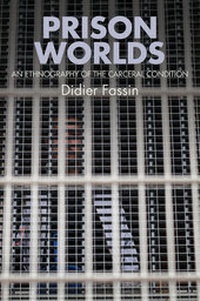
Prison Worlds
Description

To answer these questions, Didier Fassin conducted a four-year-long study in a French short-stay prison, following inmates from their trial to their release. He shows how the widespread use of imprisonment has reinforced social and racial inequalities and how advances in civil rights clash with the rationales and practices used to maintain security and order. He also analyzes the concerns and compromises of the correctional staff, the hardships and resistance of the inmates, and the ways in which life on the inside intersects with life on the outside. In the end, the carceral condition appears to be irreducible to other forms of penalty both because of the chain of privations it entails and because of the experience of meaninglessness it comprises. Examined through ethnographic lenses, prison worlds are thus both a reflection of society and its mirror.
At a time when many countries have begun to realize the impasse of mass incarceration and question the consequences of the punitive turn, this book will provide empirical and theoretical tools to reflect on the meaning of punishment in contemporary societies.
More details
Other editions
Additional editions
Person
Didier Fassin, born in 1955, is a French anthropologist and sociologist. He is currently the James D. Wolfensohn Professor of Social Science at the Institute for Advanced Study in Princeton and holds a Direction of Studies in Political and Moral Anthropology at the École des Hautes Études en Sciences Sociales in Paris.
Content
Preface to the English Edition
Acknowledgements
Prologue: Where it all begins
"So this case is quite extraordinary!" That driving one's vehicle with a revoked license can lead to prison, and how the carceral world is both a mirror for and a reflection of society.
Introduction: The expanding prison
A recent invention. That the punitive turn of the late twentieth century has led to a carceral inflation that is presented as justified despite the evidence, and how a study in a short-stay prison can shed light on the consequences.
Chapter 1: For whom the cells fill
"Put me in solitary!" That contemporary developments in penal policy and practice have precipitated prison overcrowding, and how they reveal a way of dealing with inequalities.
Chapter 2: A well-kept public secret
"Let's face it." That the overrepresentation of ethnic and racial minorities in a short-stay prison is rendered invisible, and how disparities in social structures and the penal chain help to explain this.
Chapter 3: Ye who enter here
"Tell them I'm holding up." That incarceration shock means different things depending on whether one is a judge or correctional staff, and how the prison attempts to mitigate its impact by applying the European Penitentiary Rules.
Chapter 4: Life in prison: a user's manual
"There shouldn't be all this wasted time here." That imprisonment represents a spatial, temporal and sensorial experience without equivalent, and how each individual strives to cope with the emptiness of prison life.
Chapter 5: In the nature of things
"It's their way of resisting us." That the usage of the peephole, the circulation of cellphones, and the exchanges of tobacco say a great deal about life in prison, and how everyday objects speak of politics and morality.
Chapter 6: A profession in search of honor
"I never tell anyone what I do for a living." That prison staff suffer from an undeservedly poor reputation, and how comparison with the world of law enforcement helps better understand the world of the guards.
Chapter 7: Violent, all too violent
"He's not a bad guy: it's just he's fed up with being in his cell." That violence between inmates and assaults on staff are less unpredictable than is claimed, and how we can understand the rationales of violence.
Chapter 8: Rights, interrupted
"The problem is that prisoners have more rights all the time." That the carceral regime is imposed on programs of work, assistance, and education, and how the law in prison does not always guarantee more rights for inmates.
Chapter 9: Land of order and security
"I've called you in because we're dealing with a serious situation." That the proliferation of security measures contributes to reinforcing the carceral order, and how small adjustments of the rules are nevertheless negotiated day to day.
Chapter 10: The never-ending punishment
"Before, it was a hearing. Now, it's a proper tribunal." That the thinking behind distribution of sanctions resists advances in disciplinary law, and how some punishments are survivals from the prehistory of prison.
Chapter 11: An unfinished business
"Prison prepares you for coming back to prison." That the rarity of sentence adjustments leads to unprepared release that fosters recidivism, and how ultimately it is easier to enter prison than to leave.
Conclusion: The meaning of prison
Research put to the test of time? That the inertia of prison resists attempts to change it, and how the carceral condition, despite being traversed by the reality outside, remains an irreducible fact in terms of meaning and experience.
Epilogue: Ethnography regained
"To understand something, you have to live it." That research in a carceral environment, and writing about life in prison, involve a particular conception of the social sciences, and how ethnography helps us to understand and lead others to understand the contemporary world.
Notes
References
Index
Preface to the English Edition
A World of Prisons
Presented by its promoters two and a half centuries ago as moral progress in the administration of punishment, prison has become over the past decades one of the most vexing and unsettling issues in Western societies for both the spectacular increase of its population and the grim reality of its facilities. But while imprisonment is today in most countries the ineluctable reference and the ultimate horizon of the penal system, until recently neither its efficacy in reducing crime nor its respect for democratic principles has been seriously discussed outside a few academic circles. The correctional institution has been taken for granted and is barely visible. An elephant in the room, it has largely been ignored by the public. To take the most extreme example, in the United States, the number of people incarcerated increased more than sevenfold over four decades, reaching the impressive figure of 2.3 million inmates in the early 2010s, which made the country's incarceration rate the highest in the world, yet without provoking a major debate. New laws were constantly being passed, imposing new mandatory minimum sentencing and criminalizing new offenses. New facilities were regularly being built, involving new private actors and new security measures. An ever tougher legislation and an expanding correctional system were business as usual in government, and these widely popular policies were little questioned. Only in recent years has the problem begun to be addressed, in large part because of the colossal share it represents in the states' budgets. The political, moral, and social implications of mass incarceration have remained for the most part in the background.
In fact, what prisons entail involves two distinct, albeit related, aspects: penal and correctional - how offenders are punished and how incarceration is conducted. Studying the penal system involves analyzing how problems are socially constructed, how the public emotionally reacts to particular events, how some crimes are deemed serious and others are not, how the executive and the legislator produce norms and laws, how the police use their discretionary power to focus on specific offenses or offenders, how prosecutors and judges decide to indict and sentence certain acts while ignoring others. In the end, it is this entire complex process that leads to the filling or emptying of prisons and determines the composition of their population. Studying the correctional system implies examining the infrastructure and functioning of its facilities, the recruitment, training, activity, and supervision of its personnel, the rights and obligations that inmates are supposed to have, the daily interactions among those who are confined and with those who guard them, the formal and informal modes of regulating, settling, and sanctioning the various issues that may arise. Indeed, it is this dense network of material and immaterial elements that defines what life in prison looks like for those who serve a sentence as well as for those who work there.
Both the investigation of the penal chain and the inquiry into the correctional apparatus are indispensable to a full understanding of the prison system. However, they represent distinct challenges for social scientists, since the former, being open, is much more accessible to direct observation and other scientific approaches than the latter, which is, by definition, closed. This explains why most research is carried out on the penal chain, while little knowledge is available about the correctional apparatus. This is particularly true in the United States, where an impressive sum of sociological, historical, and legal studies exists on the logics and mechanisms that have led to the phenomenon known as mass incarceration, but where what it means to be incarcerated for the millions of individuals who enter prisons and jails each year is hardly studied. Indeed, the Federal Bureau of Prisons, most of the 50 State Departments of Corrections, and the 3,000 local jails have maintained a high degree of opacity regarding what goes on in their facilities, restricting both scientific activities and external assessment, and therefore avoiding public or legal accountability about how prisoners are treated. It is much less the case, however, in other countries, such as Britain, where observational methods and interview techniques have recently resulted in substantial works on prison.
In France, the penal chain and correctional apparatus are relatively open to outsiders' gaze. The ministry of justice, which is in charge of both, has its own small research unit, as does the National School of Prison Administration, and it finances the main public research center in criminology. Social scientists and legal scholars are regularly solicited to conduct surveys on various aspects of the justice and prison systems, notably to evaluate new policies or respond to specific questions, but independently conceived projects can also be granted permission, which has given birth to a growing field of research on justice and prison. The present book has greatly benefited from this relative opening. Over four years, I have been able to spend time, day and night for a total of seven months, in the short-stay facility of an important urban area. Such an institution is generally reserved for pre-trial detainees, the proportion of whom has recently decreased to one-fourth of the facility's population, and for convicted persons with a sentence of less than two years, although some inmates may remain five years or more. During my research I have gradually been authorized - and have progressively authorized myself - to be present in all parts of the facility and attend all sorts of its activities, from cultural programs to parole board meetings, from disciplinary hearings to the solitary confinement unit. It has been more difficult to gain the trust of the prisoners than that of the personnel, and probably also to have sufficient confidence in myself to sit with the former in their cells than to stay with the latter in the walkways. But however fascinating life in such a facility may be, and however demanding its observation may become, I have repeatedly tried to step outside, on the one hand to study the everyday work of the justice system in the district criminal court, and, on the other, to examine the considerable body of legal, administrative, and statistical documents on the evolution of punishment practices, in order to apprehend the processes that have led to the prison system being what it is. This book is thus an attempt to analyze both the penal chain and the correctional apparatus. It aims at characterizing the punitive moment through which French society - like many others - is going, and at comprehending the carceral condition as it is experienced by those who endure it.
* * *
France today has the highest number of prisoners of its peacetime history. Its incarceration rate is 100 per 100,000 inhabitants, which is still seven times less than in the United States. In the past six decades, there has been a more than threefold increase in the prison population, which has swelled from 20,000 in 1955 to 67,000 in 2015. One could logically imagine the reason for this evolution to be a rise in crime. Such is not the case, however. Although the curve of crime statistics is always difficult to interpret, since it is influenced by the way offenses are represented in the public sphere and constituted under the law as well as by the activity of the police and the decisions of the judges, for the most robust data available, which also corresponds to the most serious crime, namely homicides, the trend over the past century and a half is clearly of decline, except for a short period in the 1970s when a moderate increase was observed. In fact, the dramatic expansion of the prison population is the consequence of a more severe penal system. This repressive turn results from two main phenomena. First, new offenses have been criminalized. Driving without a license, for instance, was until the 1990s a rare violation of traffic laws usually sanctioned by a fine. In the following decade, with the creation of a penalty point system and the multiplication of radars on the roads, the number of suspended licenses skyrocketed, while a 2004 law made it an offense punishable by a one-year prison sentence. Today, driving with a suspended license is the cause of one incarceration out of ten. Second, for a given breach of the law, prison sentences have been passed more frequently and for longer periods. Most notably, a 2007 law establishing mandatory minimum sentencing for recidivists has contributed to an increase of 9 percent in prison sentences and 17 percent in time to be served that was observed during the following five years. But when one examines these statistics closely, it appears that, paradoxically, the smaller the offense the greater the escalation in harshness. Other factors have also played a role, in particular the growing use of immediate appearance trials, which has a prison sentencing rate twice that of the normal procedure, and the activation of prison sentences for minor offenses perpetrated several years earlier, for which probation was already in progress. In sum, an increase in harshness rather than a rise in crime caused the expansion of the prison population. French society was undergoing a punitive moment.
This repressive trend being what it is, two further questions need to be asked. Is punishment justly allocated? Is it fairly distributed? In other words, are the crimes that cause more damage to society the most severely sanctioned (justice), and is the same offense punished in the same...
