

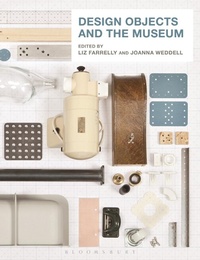
Design Objects and the Museum
1st Edition
Published on 28. January 2016
216 pages
978-1-4725-7724-5 (ISBN)
Description

Design Objects and the Museum brings together leading design historians, curators, educators and archivists to consider the place of contemporary design objects within museums. Contributors draw on a wide range of 20th century and contemporary examples from international museums to consider how design objects have been curated and displayed within and beyond the museum. The book continues contemporary global debates on the ways in which museums of design engage and educate their public.
Chapters are grouped into three thematic sections addressing The Canon and Design in the Museum; Positioning Design within and Beyond the Museum; and Interpretation and the Challenge of Design, with chapters exploring museological practice and issues, the roles people play in creating meaning, and the challenges contemporary design presents to interpretation and learning within the museum.
Chapters are grouped into three thematic sections addressing The Canon and Design in the Museum; Positioning Design within and Beyond the Museum; and Interpretation and the Challenge of Design, with chapters exploring museological practice and issues, the roles people play in creating meaning, and the challenges contemporary design presents to interpretation and learning within the museum.
More details
Edition
1. Auflage
Language
English
Place of publication
London
United Kingdom
Publishing group
Bloomsbury Publishing PLC
Target group
Professional and scholarly
College/higher education
Illustrations
40 bw illus
ISBN-13
978-1-4725-7724-5 (9781472577245)
Copyright in bibliographic data and cover images is held by Nielsen Book Services Limited or by the publishers or by their respective licensors: all rights reserved.
Schweitzer Classification
Other editions
Additional editions
Liz Farrelly | Joanna Weddell
Design Objects and the Museum
Book
01/2016
Bloomsbury Academic
€161.80
Shipment within 15-20 days
Liz Farrelly | Joanna Weddell
Design Objects and the Museum
Book
01/2016
Bloomsbury Academic
€53.41
Shipment within 15-20 days
Persons
Liz Farrelly writes and edits books and articles on design and visual culture, with stints on staff at Blueprint and Eye magazines. She teaches at University of Brighton, UK and her current research about museums and design focuses on London's Design Museum.
Joanna Weddell has a background in architecture and is currently researching post-war design and museology at the Research Department of the Victoria & Albert Museum and the University of Brighton, UK; she also teaches History of Art.
Joanna Weddell has a background in architecture and is currently researching post-war design and museology at the Research Department of the Victoria & Albert Museum and the University of Brighton, UK; she also teaches History of Art.
Content
Acknowledgements
List of Contributors
Preface: Jonathan Woodham, University of Brighton, UK
Introduction: Liz Farrelly, University of Brighton and Design Museum, UK and Joanna Weddell, University of Brighton and Research Department, Victoria & Albert Museum, UK
Section 1: The Canon and Design in the Museum
1. Exhibiting 'the Taste of Everyday Things': Kenneth Clark and CEMA's Wartime Exhibitions of Design, Sue Breakell, University of Brighton, UK
2. The Ethos of the Victoria and Albert Museum (V&A) Circulation Department 1947-1960, Joanna Weddell, University of Brighton and the Victoria and Albert Museum, UK
3. 'I Would Suggest That You Should Not Think of the Design Centre as a Museum; It Is a Live, Active, Moving Thing': Designs of the Year 1957, Ness Wood, University of Brighton, UK
4. Designing for a New Nigeria: Hayes Textiles Limited and the British Manufacture of Gele in the Post-colonial Period, Nicola Stylianou, Open University, UK
5. Towards an Uncensored History of Design: Ideal Homes and Constance Spry at the Design Museum, London, Deborah Sugg Ryan, University College Falmouth, UK
6. Ghosts and Dancers: Immaterials and the Museum, Jana Scholze, Victoria and Albert Museum, UK
Section 2: Positioning Design Within and Beyond the Museum
7. Indian Living Cultures: Collected, Exhibited and Performed, Megha Rajguru and Nicola Ashmore, University of Brighton, UK
8. Triennale Design Museum: An Evolving Curatorial Project, Virginia Lucarelli, Politecnico di Milano, Italy
9. Gallery Envy and Contingent Autonomy: Exhibiting Design Art, Damon Taylor, University of Brighton, UK
10. Contemporary Designers, Cultural Diplomacy and the Museum Without Walls, Gareth Williams, Royal College of Art, UK
11. Curating Critical Design: An Embodied Criticality, Gillian Russell, Royal College of Art, UK
Section 3: Interpretation and the Challenge of Design
12. Design, Politics and Museum Presentation, Marianne Lamonaca, Bard Graduate Center, USA
13. You are Here, We are There: Tracing NID's Design Histories, Tom Wilson, University of Brighton, the Design Museum, London and the British Council, UK
14. Just What is it that Makes Curating Design so Different, so Appealing? Helen Charman, Design Museum, UK
15. Design and Museum Interpretation: Contemporary Characterisitcs and Practice, Jason Cleverly, Falmouth University, UK
16. Interactions in the Museum: Design Culture Salons at the Victoria and Albert Museum, Guy Julier and Leah Armstrong, University of Brighton, UK and Victoria and Albert Museum, UK
17. Museums Online and Digital: Some Innovations and Implications, Liz Farrelly, University of Brighton and Design Museum, UK
Closing Comments
Index
List of Contributors
Preface: Jonathan Woodham, University of Brighton, UK
Introduction: Liz Farrelly, University of Brighton and Design Museum, UK and Joanna Weddell, University of Brighton and Research Department, Victoria & Albert Museum, UK
Section 1: The Canon and Design in the Museum
1. Exhibiting 'the Taste of Everyday Things': Kenneth Clark and CEMA's Wartime Exhibitions of Design, Sue Breakell, University of Brighton, UK
2. The Ethos of the Victoria and Albert Museum (V&A) Circulation Department 1947-1960, Joanna Weddell, University of Brighton and the Victoria and Albert Museum, UK
3. 'I Would Suggest That You Should Not Think of the Design Centre as a Museum; It Is a Live, Active, Moving Thing': Designs of the Year 1957, Ness Wood, University of Brighton, UK
4. Designing for a New Nigeria: Hayes Textiles Limited and the British Manufacture of Gele in the Post-colonial Period, Nicola Stylianou, Open University, UK
5. Towards an Uncensored History of Design: Ideal Homes and Constance Spry at the Design Museum, London, Deborah Sugg Ryan, University College Falmouth, UK
6. Ghosts and Dancers: Immaterials and the Museum, Jana Scholze, Victoria and Albert Museum, UK
Section 2: Positioning Design Within and Beyond the Museum
7. Indian Living Cultures: Collected, Exhibited and Performed, Megha Rajguru and Nicola Ashmore, University of Brighton, UK
8. Triennale Design Museum: An Evolving Curatorial Project, Virginia Lucarelli, Politecnico di Milano, Italy
9. Gallery Envy and Contingent Autonomy: Exhibiting Design Art, Damon Taylor, University of Brighton, UK
10. Contemporary Designers, Cultural Diplomacy and the Museum Without Walls, Gareth Williams, Royal College of Art, UK
11. Curating Critical Design: An Embodied Criticality, Gillian Russell, Royal College of Art, UK
Section 3: Interpretation and the Challenge of Design
12. Design, Politics and Museum Presentation, Marianne Lamonaca, Bard Graduate Center, USA
13. You are Here, We are There: Tracing NID's Design Histories, Tom Wilson, University of Brighton, the Design Museum, London and the British Council, UK
14. Just What is it that Makes Curating Design so Different, so Appealing? Helen Charman, Design Museum, UK
15. Design and Museum Interpretation: Contemporary Characterisitcs and Practice, Jason Cleverly, Falmouth University, UK
16. Interactions in the Museum: Design Culture Salons at the Victoria and Albert Museum, Guy Julier and Leah Armstrong, University of Brighton, UK and Victoria and Albert Museum, UK
17. Museums Online and Digital: Some Innovations and Implications, Liz Farrelly, University of Brighton and Design Museum, UK
Closing Comments
Index
