

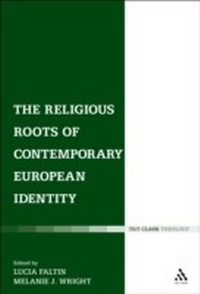
The Religious Roots of Contemporary European Identity
1st Edition
Published on 1. September 2007
248 pages
978-0-8264-2348-1 (ISBN)
Description

This volume provides a coherent critical examination of current issues related to the religious roots of contemporary, i.e. post-1990 European identity, by analyzing the components of contemporary European identity, the presence of religion in the development of national identities, manifestation of religious roots in secular society, and the role of religion in further European integration and social inclusion. The book involves a multi and interdisciplinary approach to the theme, by bringing together scholars in history, religious studies, sociology, cultural studies, European studies, and international relations. This rigorously edited volume provides a coherent analysis of the religious roots of Europe's identity today, with particular attention to the secular context of religious communities. Europe is often perceived as secular by most of its citizens, regardless of their creed. Bearing this in mind, the authors build upon their expertise in different fields of arts and humanities to identify some of the key elements of European religious heritage and its manifestation in Europe's identity, be it secular or otherwise perceived. The authors also indicate the role these elements play in further European integration. With this focused approach, the publication identifies a number of similarities across faiths and, more holistically, vis-a-vis Europe. This serves the readers to perceive their own identity in a wider context of shared values, reaching beyond a particular faith or non-religious framework.
Reviews / Votes
"Many have spoken of the increased secularization of Europe. This excellent volume from an international conference in Cambridge offers a comprehensive overview of the current debate, placing it as well in a historical context. It takes up ongoing questions such as antisemitism but also more contemporary ones such as an intense discussion over the role of Islam. Perspectives come from all parts of Europe--West, Central, East and from all the major European religious traditions. An indispensable addition to this vital debate." John T Pawlikowski, OSM, Ph.D, Professor of Social Ethics, Director, Catholic-Jewish Studies Program, Catholic Theological Union, Chicago, USA. "At the start of this century, Europe - once so fragmented in its history - stands on the threshold of a new era of power and influence on the world stage. But unless we can understand the roots of Europe's potential unity, we cannot work to actualize it. This book delves deep, and challenges the prevailing view that religious identity, built up over centuries, can be overlooked, dismissed, or reduced in the quest for a new human future. The great constituents of European identity - Judaism, Christianity, Islam, and secular values - are analyzed here with illuminating perspicuity. A book of such depth, richness and originality needs to be read more than once. We owe its editors an immense debt of gratitude". Professor Julius Lipner, Professor of Hinduism and the Comparative Study of Religion, Divinity Faculty, University of Cambridge. 'The book is multidisciplinary in its approach and combines insights from history, social sciences, philosophy, religious studies and theology. Although it only occasionally touches upon educational issues, the book gives useful perspectives on how to deal with European complexity in the context of civic and religious education.' 'This book offers valuable insights into the concerns of religious educationists during their subject's definitive period of transformation as well as giving a clear account of Gate's own contribution. Gates captures and reflects the humane and liberal spirit of Smart's seminal contribution to religious education. His own approach to issues is thoughtful and balanced and has careful regard to the realities of school life and a concern for the broader personal development of children and young people.'More details
Edition
1. Auflage
Language
English
Place of publication
New York
United States
Target group
Professional and scholarly
ISBN-13
978-0-8264-2348-1 (9780826423481)
Copyright in bibliographic data and cover images is held by Nielsen Book Services Limited or by the publishers or by their respective licensors: all rights reserved.
Schweitzer Classification
Other editions
Additional editions
Lucia Faltin | Melanie J. Wright
The Religious Roots of Contemporary European Identity
Book
04/2011
Continuum Publishing Corporation
€63.30
Shipment within 15-20 days
Persons
Lucia Faltin: Centre for the Study of Jewish-Christian Relations; Director of International Programmes and Coordinator of a course on History of Jewish-Christian Relations in the Master of Studies programme, University of Cambridge, UK.
Melanie J. Wright was Academic Director of the Centre for the Study of Jewish-Christian Relations, and a Lecturer in Religious Studies at the Open University, UK. She is the author of numerous articles and books including Understanding Judaism (Orchard Academic), and Religion and Film: An Introduction (I. B. Tauris). With Lucia Faltin she co-edited The Religious Roots of Contemporary European Identity, which is also published by Continuum.
Melanie J. Wright was Academic Director of the Centre for the Study of Jewish-Christian Relations, and a Lecturer in Religious Studies at the Open University, UK. She is the author of numerous articles and books including Understanding Judaism (Orchard Academic), and Religion and Film: An Introduction (I. B. Tauris). With Lucia Faltin she co-edited The Religious Roots of Contemporary European Identity, which is also published by Continuum.
Content
Table of contents:
Acknowledgements
Preface
Jan Figel
Introduction: The Religious Roots of Contemporary European Identity
Lucia Faltin
The Islamic Challenge to European Identity'/ 'Does Islam Challenge European Identity?
Sara Silvestri
Re-viewing My Son the Fanatic (Udayan Prasad, 1997) after 7/7; or, Roots, Routes, and Rhizomes
Melanie J. Wright
Only Connect: A Case Study of the Influence of the English Church and the Non-Catholic Cults in the Florence of the Risorgimento
Penny Mittler
At the European roots of the inter-religious dialogue between Christian Orthodoxy and Judaism: history, the study of images, and modernity
Philippe Gardette
Historical Memory: Blessing or Burden? Russian Orthodox Christians in the Modern World
Irina Levinskaya
The Russian Orthodox Church and the European Union; Constructing a Russian Orthodox identity in Europe
Grant S. White
The impact of post-1989 changes on Polish-Jewish relations and perceptions: memories and debates
Slawomir Kapralski
Memory and Civic Education: Holocaust and coming to terms with national history
Jolanta Ambrosewicz-Jacobs
The Roman Catholic Church in Poland and the Dynamics of Social Identity in Polish Society
Zdzislaw Mach
The Europe of citizens vis-a-vis the Europe of nation states
Milan Lycka
The Religious Society of Czech Unitarians (RSCU) and the construction of Czech national identity
Andrew Brown
Pope Benedict XVI Europe and Interreligious Dialogue: A Theological Contribution
Patrick Morrow
The Quarrel over the Religious Roots of European Identity in the European Constitution and the Nature of Historical Explanation: A Catholic Coign of Vantage
Paul Kerry
Interfaith Dialogue
Stanislaw Krajewski
Afterword: How secular is Europe today?
Tomas Halik
Bibliography
About the Authors
Acknowledgements
Preface
Jan Figel
Introduction: The Religious Roots of Contemporary European Identity
Lucia Faltin
The Islamic Challenge to European Identity'/ 'Does Islam Challenge European Identity?
Sara Silvestri
Re-viewing My Son the Fanatic (Udayan Prasad, 1997) after 7/7; or, Roots, Routes, and Rhizomes
Melanie J. Wright
Only Connect: A Case Study of the Influence of the English Church and the Non-Catholic Cults in the Florence of the Risorgimento
Penny Mittler
At the European roots of the inter-religious dialogue between Christian Orthodoxy and Judaism: history, the study of images, and modernity
Philippe Gardette
Historical Memory: Blessing or Burden? Russian Orthodox Christians in the Modern World
Irina Levinskaya
The Russian Orthodox Church and the European Union; Constructing a Russian Orthodox identity in Europe
Grant S. White
The impact of post-1989 changes on Polish-Jewish relations and perceptions: memories and debates
Slawomir Kapralski
Memory and Civic Education: Holocaust and coming to terms with national history
Jolanta Ambrosewicz-Jacobs
The Roman Catholic Church in Poland and the Dynamics of Social Identity in Polish Society
Zdzislaw Mach
The Europe of citizens vis-a-vis the Europe of nation states
Milan Lycka
The Religious Society of Czech Unitarians (RSCU) and the construction of Czech national identity
Andrew Brown
Pope Benedict XVI Europe and Interreligious Dialogue: A Theological Contribution
Patrick Morrow
The Quarrel over the Religious Roots of European Identity in the European Constitution and the Nature of Historical Explanation: A Catholic Coign of Vantage
Paul Kerry
Interfaith Dialogue
Stanislaw Krajewski
Afterword: How secular is Europe today?
Tomas Halik
Bibliography
About the Authors
