


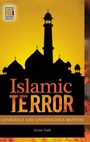
Islamic Terror
Conscious and Unconscious Motives
1st Edition
Published on 30. July 2008
280 pages
978-0-313-35765-7 (ISBN)
Description

Independent scholar Falk analyzes the genesis of Islamic terror from many standpoints, including religious, cultural, historical, political, social, economic and, above all, psychological. Drawing on his training as a clinical psychologist, Falk's writings specialize in psychohistory and political psychology. Here, he examines topics including infantile experience and adult terrorism, the meaning of terror, terrorists and their mothers, narcissistic rage and Islamic terror, and whether terrorists are normal people, as some scholars claim. He also describes the infantile development of terrorist pathology, non-psychoanalytic theories of terrorism, globalization's effect on terrorism, and the notion of the clash of civilizations. Other topics addressed in this reader-friendly analysis include history's first Islamic terrorists and three important cases-two recent, deadly terrorists and a primary figure in our current war on terror.
Independent scholar Falk analyzes the genesis of Islamic terror from many standpoints, including religious, cultural, historical, political, social, economic and, above all, psychological. Drawing on his training as a clinical psychologist, Falk's writings specialize in psychohistory and political psychology. Here, he examines topics including infantile experience and adult terrorism, the meaning of terror, terrorists and their mothers, narcissistic rage and Islamic terror, and whether terrorists are normal people, as some scholars claim. He also describes the infantile development of terrorist pathology, non-psychoanalytic theories of terrorism, globalization's effect on terrorism, and the notion of the clash of civilizations. Examining the emotional structure of traditional Muslim families, Falk shows us the Muslim child's ambivalence toward his or her parents, ways in which Muslims abuse women and children, and the roots of Muslim rage, and why all of that plays into the development of future terrorism. Other topics addressed in this reader-friendly analysis include history's first Islamic terrorists and three important cases-two recent, deadly terrorists and a primary figure in our current war on terror.
The central idea throughout the book is that a person's attitude toward terror and terrorism-as well as whether he or she becomes a murderous terrorist, or even who wages a global war on terror-has much to do with that person's own terrifying experiences in infancy and childhood. Such terror, usually experienced first in the earliest interactions with the mother, is symbolically expressed, as Falk shows, in fairy tales and myths about terrifying witches and female monsters. Further terror may be experienced in the relationship with the father and also in various other traumatic ways. It is these early terrors, when extreme and uncontrollable, that most often produce terrorists and wars on terror, Falk argues. Thus, his book focuses on the conscious, but also on the irrational and unconscious causes of terrorism.
Independent scholar Falk analyzes the genesis of Islamic terror from many standpoints, including religious, cultural, historical, political, social, economic and, above all, psychological. Drawing on his training as a clinical psychologist, Falk's writings specialize in psychohistory and political psychology. Here, he examines topics including infantile experience and adult terrorism, the meaning of terror, terrorists and their mothers, narcissistic rage and Islamic terror, and whether terrorists are normal people, as some scholars claim. He also describes the infantile development of terrorist pathology, non-psychoanalytic theories of terrorism, globalization's effect on terrorism, and the notion of the clash of civilizations. Examining the emotional structure of traditional Muslim families, Falk shows us the Muslim child's ambivalence toward his or her parents, ways in which Muslims abuse women and children, and the roots of Muslim rage, and why all of that plays into the development of future terrorism. Other topics addressed in this reader-friendly analysis include history's first Islamic terrorists and three important cases-two recent, deadly terrorists and a primary figure in our current war on terror.
The central idea throughout the book is that a person's attitude toward terror and terrorism-as well as whether he or she becomes a murderous terrorist, or even who wages a global war on terror-has much to do with that person's own terrifying experiences in infancy and childhood. Such terror, usually experienced first in the earliest interactions with the mother, is symbolically expressed, as Falk shows, in fairy tales and myths about terrifying witches and female monsters. Further terror may be experienced in the relationship with the father and also in various other traumatic ways. It is these early terrors, when extreme and uncontrollable, that most often produce terrorists and wars on terror, Falk argues. Thus, his book focuses on the conscious, but also on the irrational and unconscious causes of terrorism.
More details
Series
Edition
1. Auflage
Language
English
Place of publication
New York
United States
Publishing group
Bloomsbury Publishing Plc
Target group
Interest Age: From 7 to 17 years
ISBN-13
978-0-313-35765-7 (9780313357657)
Copyright in bibliographic data and cover images is held by Nielsen Book Services Limited or by the publishers or by their respective licensors: all rights reserved.
Schweitzer Classification
Other editions
Additional editions
Book
07/2008
Praeger Publishers Inc
€64.90
Shipment within 15-20 days
Person
Avner Falk is an internationally-known Israeli scholar, expert in the fields of psychohistory and political psychology. He trained as a clinical psychologist at The Hebrew University of Jerusalem and at Washington University in St. Louis. He practiced psychotherapy for 25 years, during which he served as Senior Clinical Psychologist at several mental health centers, before becoming a fulltime independent scholar. He authored seven earlier books, including Anti-Semitism: A History and Psychology of Hatred (Praeger, 2008), Fratricide in the Holy Land: A Psychoanalytic View of the Arab-Israeli Conflict, and Napoleon Against Himself: A Psychobiography.
Content
Introduction
A Short History Of Antisemitism
Psychoanalysis And Antisemitism
Psychoanalytic Antisemitism
Nazism And The Holocaust
Psychoanalytic Studies Of Nazism
Denying The Holocaust
Related Issues
Conclusion And Summary
A Short History Of Antisemitism
Psychoanalysis And Antisemitism
Psychoanalytic Antisemitism
Nazism And The Holocaust
Psychoanalytic Studies Of Nazism
Denying The Holocaust
Related Issues
Conclusion And Summary
