

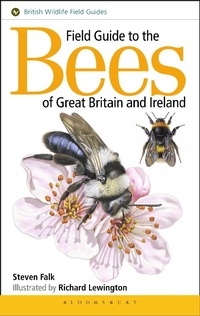
Field Guide to the Bees of Great Britain and Ireland
1st Edition
Published on 19. September 2019
432 pages
978-1-4729-7036-7 (ISBN)
Description

Bees are a fascinating and indispensable group of insects, but many species are in decline, and efforts to help determine distributions and changes in abundance have to date been compromised by a serious lack of identification resources.
This book is from author Steven Falk, who is a professional naturalist and conservationist with over forty years' experience of working with bees. It is a comprehensive introduction to bee classification, ecology, field techniques and recording, a full glossary, and information on how to separate the sexes and distinguish bees from other insects.
Also included are introductions to families and genera, describing key characters and life histories, as well as detailed species descriptions covering field and microscopic characters, similar species, variants, flight season, habitat, flowers visited, nesting habits, status & distribution, and parasites & associates. A series of innovative illustrated keys to genera and species are designed to guide the user step by step through the identification process.
The book is illustrated with over 1,000 colour and black and white artworks by Richard Lewington, one of Europe's leading insect artists. It also includes stunning photographs of living insects as seen in the wild and 234 up-to-date distribution maps.
This eagerly anticipated new addition to the highly acclaimed British Wildlife Field Guides series will unravel the complexities of identification, and is designed to cater for people new to the bee world as well as to more experienced recorders who wish to identify every species accurately. It provides the latest information on the identification, ecology, status and distribution of all 275 species of bee in Britain, Ireland and the Channel Islands.
This book is from author Steven Falk, who is a professional naturalist and conservationist with over forty years' experience of working with bees. It is a comprehensive introduction to bee classification, ecology, field techniques and recording, a full glossary, and information on how to separate the sexes and distinguish bees from other insects.
Also included are introductions to families and genera, describing key characters and life histories, as well as detailed species descriptions covering field and microscopic characters, similar species, variants, flight season, habitat, flowers visited, nesting habits, status & distribution, and parasites & associates. A series of innovative illustrated keys to genera and species are designed to guide the user step by step through the identification process.
The book is illustrated with over 1,000 colour and black and white artworks by Richard Lewington, one of Europe's leading insect artists. It also includes stunning photographs of living insects as seen in the wild and 234 up-to-date distribution maps.
This eagerly anticipated new addition to the highly acclaimed British Wildlife Field Guides series will unravel the complexities of identification, and is designed to cater for people new to the bee world as well as to more experienced recorders who wish to identify every species accurately. It provides the latest information on the identification, ecology, status and distribution of all 275 species of bee in Britain, Ireland and the Channel Islands.
More details
Series
Edition
1. Auflage
Language
English
Place of publication
London
United Kingdom
Publishing group
Bloomsbury Publishing PLC
Illustrations
300 col
ISBN-13
978-1-4729-7036-7 (9781472970367)
Copyright in bibliographic data and cover images is held by Nielsen Book Services Limited or by the publishers or by their respective licensors: all rights reserved.
Schweitzer Classification
Other editions
Additional editions
Book
12/2018
Bloomsbury Wildlife
€44.00
Shipment within 10-20 days
Persons
Steven Falk is a professional naturalist and conservationist with a particular love for insects. He has worked for the former Nature Conservancy Council, two large museum services, and a wildlife trust. He has been involved with natural history books since his teens, contributing colour artwork to books such as British Hoverflies and the Collins Field Guide to Insects of Britain and Northern Europe. He has also written many scientific papers, popular articles and a county flora for Warwickshire. He currently works for Buglife.
Over almost forty years, Richard Lewington has built up a reputation as one of Europe's finest wildlife illustrators. He first became interested in butterflies as a child when he inherited a cabinet of insects. He studied graphic design at the Berkshire College of Art, and since leaving in 1971 has specialised in natural-history illustration. His meticulous paintings of insects and other wildlife are the mainstay of many of the modern classics of field-guide art.
Over almost forty years, Richard Lewington has built up a reputation as one of Europe's finest wildlife illustrators. He first became interested in butterflies as a child when he inherited a cabinet of insects. He studied graphic design at the Berkshire College of Art, and since leaving in 1971 has specialised in natural-history illustration. His meticulous paintings of insects and other wildlife are the mainstay of many of the modern classics of field-guide art.
Content
Preface
Introduction
What is a bee?
Classification of bees
At-a-glance guide to bee genera
Species, races, forms and variations
The life cycle of bees
Enemies and associates of bees
Habitats of bees
Field techniques for finding and recording bees
Conserving bees
Societies and recording groups
Bees beyond Britain and Ireland
Further Reading
How to Use this Guide
Dichotomous keys
Format of the species accounts
The colour plates
Male or female?
Is it a bee?
Bee anatomy
Glossary
Author's web feature
Key to Bee Genera
Family colletidae
- Colletes - Plasterer bees
- Hylaeus - Yellow-face bees
Family andrenidae
- Andrena - Mining bees
- Panurgus - Shaggy bees
Family halictidae
- Halictus - End-banded furrow bees
- Lasioglossum - Base-banded furrow bees
- Sphecodes - Blood bees
- Rophites - Bristle-headed bees
- Dufourea - Short-faced bees
Family melittidae
- Melitta - Blunthorn bees
- Macropis - Oil-collecting bees
- Dasypoda - Pantaloon bees
Family megachilidae
- Anthidium - Wool carders
- Stelis - Dark bees
- Heriades - Resin bees
- Chelostoma - Scissor bees
- Osmia - Mason bees
- Hoplitis - Lesser masons
- Megachile - Leafcutter and mud bees
- Coelioxys - Sharp-tail bees
Family apidae
- Nomada - Nomad bees
- Epeolus - Variegated cuckoo bees
- Eucera - Long-horned bees
- Anthophora - Flower bees
- Melecta - Mourning bees
- Ceratina - Small carpenter bees
- Xylocopa - Large carpenter bees
- Bombus - Bumblebees
- Apis - Honey bees
Colour Plates
Checklist of the bees of Britain and Ireland
Index
Photographic credits
Introduction
What is a bee?
Classification of bees
At-a-glance guide to bee genera
Species, races, forms and variations
The life cycle of bees
Enemies and associates of bees
Habitats of bees
Field techniques for finding and recording bees
Conserving bees
Societies and recording groups
Bees beyond Britain and Ireland
Further Reading
How to Use this Guide
Dichotomous keys
Format of the species accounts
The colour plates
Male or female?
Is it a bee?
Bee anatomy
Glossary
Author's web feature
Key to Bee Genera
Family colletidae
- Colletes - Plasterer bees
- Hylaeus - Yellow-face bees
Family andrenidae
- Andrena - Mining bees
- Panurgus - Shaggy bees
Family halictidae
- Halictus - End-banded furrow bees
- Lasioglossum - Base-banded furrow bees
- Sphecodes - Blood bees
- Rophites - Bristle-headed bees
- Dufourea - Short-faced bees
Family melittidae
- Melitta - Blunthorn bees
- Macropis - Oil-collecting bees
- Dasypoda - Pantaloon bees
Family megachilidae
- Anthidium - Wool carders
- Stelis - Dark bees
- Heriades - Resin bees
- Chelostoma - Scissor bees
- Osmia - Mason bees
- Hoplitis - Lesser masons
- Megachile - Leafcutter and mud bees
- Coelioxys - Sharp-tail bees
Family apidae
- Nomada - Nomad bees
- Epeolus - Variegated cuckoo bees
- Eucera - Long-horned bees
- Anthophora - Flower bees
- Melecta - Mourning bees
- Ceratina - Small carpenter bees
- Xylocopa - Large carpenter bees
- Bombus - Bumblebees
- Apis - Honey bees
Colour Plates
Checklist of the bees of Britain and Ireland
Index
Photographic credits
