

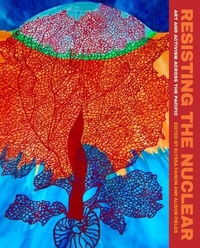
Resisting the Nuclear
Description

A transpacific tour of nuclear humanities
From uranium mines on the Navajo Nation to craters caused by nuclear testing on the Bikini and Enewetak Atolls, the production and deployment of nuclear weapon technologies have disproportionately harmed Indigenous lands. Sustained exposure to radiation from nuclear weapons and waste affects many communities from Japan to Oceania to the US West. While antinuclear activism often takes political and legal forms, artistic responses to nuclear regimes also prompt social action and resistance.
Resisting the Nuclear is an interdisciplinary edited collection featuring historians, anthropologists, artists, and activists who explore the multifaceted forms of resistance to nuclear regimes. Through a combination of interviews, scholarly essays, and discussions of contemporary art, contributors recenter the victims of nuclear technologies and demonstrate how political and artistic expression can respond to nuclear threats and effect change.
All prices
More details
Other editions
Additional editions
Persons
Elyssa Faison is L. R. Brammer Jr. Presidential Professor and associate professor of history at the University of Oklahoma. She is author of Managing Women: Disciplining Labor in Modern Japan. Alison Fields is Mary Lou Milner Carver Professor of Art of the American West and associate professor at the University of Oklahoma. She is author of Discordant Memories: Atomic Age Narratives and Visual Culture. Contributors: Melanie Armstrong, Holly Barker, Elyssa Faison, Alison Fields, Peter Goin, Margo Machida, Yuka Tsuchiya Moriguchi, Jennifer Richter, Shinpei Takeda, Seiichirō Takemine, Akiko Takenaka, Naoko Wake, Sherri Wasserman, and Ran Zwigenberg
Content
Acknowledgments Note on Naming and Orthography Introduction: Visuality, Temporality, Geography Elyssa Faison and Alison Fields 1 Targeting the Pacific: World War II in Asian American and Pacific Islander Art Margo Machida PART ONE. REMEMBERING ORIGINARY MOMENTS: TRINITY, HIROSHIMA, NAGASAKI 2 Security and Sacrifice: Nuclear Tourism in New Mexico Melanie Armstrong 3 A People's Atlas of Nuclear Colorado: Art and Activism in the Digital Space Melanie Armstrong, Sarah Kanouse, and Shiloh R. Krupar 4 Atoms for Life and for Death: Nuclear Energy and Hiroshima Activism in the 1950s Ran Zwigenberg 5 The Politics of Antimonumentalism: An Exhibit in Five Cities Shinpei Takeda 6 The Antimonument Research Collective Shuhei Matsukubo, Mariko Mikami, Maika Nakao, and Shinpei Takeda 7 Creating the Atomic Sublime: The Perpetual Production of Nuclear In/Security Jennifer Richter and Sherri Wasserman PART TWO. LEGACIES OF THE BIKINI TEST 8 Resisting US Nuclear Tests: The UN Petition from the Marshall Islands Seiichirō Takemine 9 Arts Education and the Nuclear Legacy in the Marshall Islands Jasmine alik, Holly Barker, Keyoka Kabua, Ariana Tibon, and Leimamo Wase 10 Nuclear Temples Peter Goin 11 Housewives Petitioning for World Peace: Ban-the-Bomb Activism in Cold War Japan Akiko Takenaka 12 Voices of Deep-Sea Tuna Fishermen in the Japanese Anti?Nuclear Test Movement Yuka Tsuchiya Moriguchi PART THREE. TRANSPACIFIC ACTIVISMS 13 A Long Road to Disability Compensation in Cold War America Naoko Wake 14 Barbara Reynolds and the Politics of Transnational Antinuclear Activism Elyssa Faison 15 An Interview with Artist Will Wilson Alison Fields and Will Wilson 16 Food Cultivation as Artistic Activism after Nuclear Disaster Alison Fields Contributors Index

