

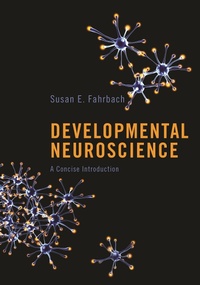
Developmental Neuroscience
Description

A concise introductory textbook on the development of the nervous system
This textbook offers a concise introduction to the exciting field of developmental neuroscience, a discipline concerned with the mechanisms by which complex nervous systems emerge during embryonic growth. Bridging the divide between basic and clinical research, it captures the extraordinary progress that has been achieved in the field. It provides an opportunity for students to apply and extend what they have learned in their introductory biology courses while also directing them to the primary literature.
This accessible textbook is unique in that it takes an in-depth look at a small number of key model systems and signaling pathways. The book's chapters logically follow the sequence of human brain development and explain how information obtained from models such as Drosophila and zebrafish addresses topics relevant to this area. Beginning with a brief presentation of methods for studying neural development, the book provides an overview of human development, followed by an introduction to animal models. Subsequent chapters consider the molecular mechanisms of selected earlier and later events, neurogenesis, and formation of synapses. Glial cells and postembryonic maturation of the nervous system round out later chapters. The book concludes by discussing the brain basis of human intellectual disabilities viewed from a developmental perspective.
Focusing on the mechanistic and functional, this textbook will be invaluable to biology majors, neuroscience students, and premedical and pre-health-professions students.
- An accessible introduction to nervous system development
- Suitable for one-semester developmental neuroscience course
- Thorough review of key model systems
- Selective coverage of topics allows professors to personalize courses
- Investigative reading exercises at the end of each chapter
- An online illustration package is available to professors
More details
Other editions
Additional editions
Person
Content
Preface xv
Acknowledgments xix
What Are Investigative Reading Questions? xxi
Teaching Using the Primary Literature and Investigative Reading Questions to Complement the Text xxiii
Chapter 1 Introduction
- What Do We Mean When We Say "Neural Development"? 1
- What Is in This Book and How to Use It 1
- Methods for Studying Development of the Nervous System 3
- Human Brain Imaging 17
- The Future 19
- Notes 20
- Investigative Reading 20
Chapter 2 Overview of Nervous System Development in Humans
- How Do We Know What We Know? 23
- Start by Working Backward 24
- The Carnegie Stages of Embryonic Development 26
- Development of the Fetal Brain 31
- Neural Tube Defects 33
- Notes 34
- Investigative Reading 35
Chapter 3 Animal Models
- Model Organisms 37
- Some Helpful Concepts for Thinking about Animal Models 38
- Practical Considerations 40
- The Mouse, Mus musculus 41
- The Zebrafi sh, Danio rerio 44
- The Fruit Fly, Drosophila melanogaster 48
- The Nematode Worm, Caenorhabditis elegans 52
- Typical Neurons 55
- Gray Matter and White Matter 57
- Phylogenetic Relationships 57
- Notes 60
- Investigative Reading 61
Chapter 4 Early Events
- Axis Determination and Neural Induction 63
- Defining Anterior and Making a Head 63
- Neural Induction 74
- Notes 77
- Investigative Reading 79
Chapter 5 Neurogenesis
- Production of Neurons by Neural Progenitors 81
- Neurogenesis in C. elegans 83
- Neurogenesis in Drosophila 88
- Neurogenesis in Zebrafi sh 97
- Neurogenesis in the Mouse 99
- Neurogenesis in Humans 106
- Adult Neurogenesis 110
- Notes 116
- Investigative Reading 118
Chapter 6 Later Events
- Not All Animals Are Segmented 121
- Regionalization in the Drosophila Nervous System 121
- Regionalization in the Vertebrate Nervous System 128
- Histogenesis of the Mammalian Cortex 135
- Notes 140
- Investigative Reading 141
Chapter 7 Becoming a Neuron
- Axons, Dendrites, and the Formation of Synapses 143
- The Decision to Grow a Process 145
- Microtubules, Actin, and Growth Cones 147
- Axon Path Finding 152
- Synaptogenesis 160
- Notes 164
- Investigative Reading 166
Chapter 8 Glia
- Glia and Neurons 169
- Glia in C. elegans 170
- Glia in Drosophila 171
- Glia in Zebrafish 176
- Glia in Mice 179
- Glia in Humans 189
- Fruit Flies and Glioblastoma 192
- Notes 194
- Investigative Reading 195
Chapter 9 Maturation
- Growing Up 197
- Metamorphosis 197
- Adolescence 206
- Summary 209
- Notes 210
- Investigative Reading 211
Chapter 10 Thinking about Intellectual Disability in the Context of Development
- Neuroscience and Intellectual Disability 213
- Perturbations of Neuronal Migration 215
- Dendritic Abnormalities 219
- Neonatal Hypothyroidism 221
- Rett Syndrome 222
- Fragile X Syndrome 225
- Down Syndrome 228
- Fetal Alcohol Syndrome 231
- Nonmammalian Models 234
- Reality Check 237
- Notes 238
- Investigative Reading 239
Abbreviations 241
References 251
Online Resources 271
Full Citations for Investigative Reading Exercises 277
Index 281
