

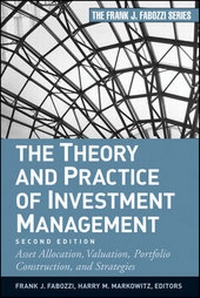
The Theory and Practice of Investment Management
Asset Allocation, Valuation, Portfolio Construction, and Strategies
2nd Edition
Published on 28. March 2011
704 pages
978-1-118-06741-3 (ISBN)
Description

An updated guide to the theory and practice of investmentmanagement
Many books focus on the theory of investment management andleave the details of the implementation of the theory up to you.This book illustrates how theory is applied in practice whilestressing the importance of the portfolio construction process.
The Second Edition of The Theory and Practice ofInvestment Management is the ultimate guide to understandingthe various aspects of investment management and investmentvehicles. Tying together theoretical advances in investmentmanagement with actual practical applications, this book gives youa unique opportunity to use proven investment management techniquesto protect and grow a portfolio under many differentcircumstances.
* Contains new material on the latest tools and strategies forboth equity and fixed income portfolio management
* Includes key take-aways as well as study questions at theconclusion of each chapter
* A timely updated guide to an important topic in today'sinvestment world
This comprehensive investment management resource combinesreal-world financial knowledge with investment management theory toprovide you with the practical guidance needed to succeed withinthe investment management arena.
More details
Other editions
Additional editions
Frank J. Fabozzi
The Theory and Practice of Investment Management
Asset Allocation, Valuation, Portfolio Construction, and Strategies
Book
04/2011
2nd Edition
Wiley
€93.00
Shipment within 10-20 days
Previous edition
Frank J. Fabozzi | Harry M. Markowitz
The Theory and Practice of Investment Management
E-Book
11/2002
Wiley
€63.99
Available for download
Persons
FRANK J. FABOZZI, PhD, CFA, CPA, is Professor in thePractice of Finance and Becton Fellow at the Yale School ofManagement, Editor of the Journal of Portfolio Management, and anAssociate Editor of the Journal of Fixed Income. He is onthe Advisory Council for the Department of Operations Research andFinancial Engineering at Princeton University.
HARRY M. MARKOWITZ, PHD, is a consultant in the area offinance. In 1990, he was awarded the Sveriges Riksbank Prize inEconomic Sciences in Memory of Alfred Nobel for his groundbreakingwork in portfolio theory. In 1989, he received the John von NeumannTheory Prize from the Operations Research Society of America forhis work in portfolio theory and other applications of mathematicsand computers to business practice.
Content
1 - The Theory and Practice of Investment Management, Second Edition [Seite 1]
1.1 - Contents [Seite 7]
1.2 - About the Editors [Seite 15]
1.3 - Contributing Authors [Seite 17]
1.4 - Foreword: Then and Now in Investing, and Why Now Is So Much Better [Seite 19]
1.5 - Part One: Instruments, Asset Allocation, Portfolio Selection, and Asset Pricing [Seite 25]
1.5.1 - Chapter 1: Overview of Investment Management [Seite 27]
1.5.1.1 - SETTING INVESTMENT OBJECTIVES [Seite 28]
1.5.1.2 - ESTABLISHING AN INVESTMENT POLICY [Seite 28]
1.5.1.3 - SELECTING A PORTFOLIO STRATEGY [Seite 30]
1.5.1.4 - CONSTRUCTING THE PORTFOLIO [Seite 30]
1.5.1.5 - MEASURING AND EVALUATING PERFORMANCE [Seite 31]
1.5.1.6 - KEY POINTS [Seite 38]
1.5.2 - Chapter 2: Asset Classes, Alternative Investments, Investment Companies, and Exchange-Traded Funds [Seite 39]
1.5.2.1 - ASSET CLASSES [Seite 39]
1.5.2.2 - OVERVIEW OF ALTERNATIVE ASSET PRODUCTS [Seite 45]
1.5.2.3 - INVESTMENT COMPANIES [Seite 55]
1.5.2.4 - EXCHANGE-TRADED FUNDS [Seite 60]
1.5.2.5 - MUTUAL FUNDS VS. ETFs: RELATIVE ADVANTAGES [Seite 63]
1.5.2.6 - KEY POINTS [Seite 65]
1.5.2.7 - QUESTIONS [Seite 68]
1.5.3 - Chapter 3: Portfolio Selection [Seite 69]
1.5.3.1 - SOME BASIC CONCEPTS [Seite 71]
1.5.3.2 - MEASURING A PORTFOLIO'S EXPECTED RETURN [Seite 73]
1.5.3.3 - MEASURING PORTFOLIO RISK [Seite 76]
1.5.3.4 - PORTFOLIO DIVERSIFICATION [Seite 80]
1.5.3.5 - CHOOSING A PORTFOLIO OF RISKY ASSETS [Seite 84]
1.5.3.6 - ISSUES IN PORTFOLIO SELECTION [Seite 92]
1.5.3.7 - KEY POINTS [Seite 100]
1.5.3.8 - QUESTIONS [Seite 102]
1.5.4 - Chapter 4: Capital Asset Pricing Models [Seite 103]
1.5.4.1 - SHARPE-LINTNER CAPM [Seite 103]
1.5.4.2 - ROY CAPM [Seite 105]
1.5.4.3 - CONFUSIONS REGARDING THE CAPM [Seite 106]
1.5.4.4 - TWO MEANINGS OF MARKET EFFICIENCY [Seite 107]
1.5.4.5 - CAPM INVESTORS DO NOT GET PAID FOR BEARING RISK [Seite 118]
1.5.4.6 - THE "TWO BETA" TRAP [Seite 119]
1.5.4.7 - KEY POINTS [Seite 124]
1.5.4.8 - QUESTIONS [Seite 125]
1.5.5 - Chapter 5: Factor Models [Seite 127]
1.5.5.1 - ARBITRAGE PRICING THEORY [Seite 128]
1.5.5.2 - TYPES OF FACTOR MODELS [Seite 129]
1.5.5.3 - FACTOR MODEL ESTIMATION [Seite 136]
1.5.5.4 - KEY POINTS [Seite 142]
1.5.5.5 - APPENDIX: PRINCIPAL COMPONENT ANALYSIS IN FINANCE [Seite 143]
1.5.5.6 - QUESTIONS [Seite 148]
1.5.6 - Chapter 6: Modeling Asset Price Dynamics [Seite 149]
1.5.6.1 - FINANCIAL TIME SERIES [Seite 149]
1.5.6.2 - BINOMIAL TREES [Seite 151]
1.5.6.3 - ARITHMETIC RANDOM WALKS [Seite 152]
1.5.6.4 - GEOMETRIC RANDOM WALKS [Seite 158]
1.5.6.5 - MEAN REVERSION [Seite 166]
1.5.6.6 - ADVANCED RANDOM WALK MODELS [Seite 172]
1.5.6.7 - STOCHASTIC PROCESSES [Seite 176]
1.5.6.8 - KEY POINTS [Seite 181]
1.5.6.9 - QUESTIONS [Seite 182]
1.5.7 - Chapter 7: Asset Allocation and Portfolio Construction [Seite 183]
1.5.7.1 - ASSET ALLOCATION AND PORTFOLIO CONSTRUCTION DECISIONS IN THE OPTIMAL DESIGN OF THE PERFORMANCE-SEEKING PORTFOLIO [Seite 185]
1.5.7.2 - ASSET ALLOCATION AND PORTFOLIO CONSTRUCTION DECISIONS IN THE OPTIMAL DESIGN OF THE LIABILITY-HEDGING PORTFOLIO [Seite 197]
1.5.7.3 - DYNAMIC ALLOCATION DECISIONS TO THE PERFORMANCE-SEEKING AND LIABILITY-HEDGING PORTFOLIOS [Seite 203]
1.5.7.4 - KEY POINTS [Seite 219]
1.5.7.5 - APPENDIX [Seite 220]
1.5.7.6 - QUESTIONS [Seite 226]
1.6 - Part Two: Equity Analysis and Portfolio Management [Seite 229]
1.6.1 - Chapter 8: Fundamentals of Common Stock [Seite 231]
1.6.1.1 - EARNINGS [Seite 232]
1.6.1.2 - DIVIDENDS [Seite 234]
1.6.1.3 - THE U.S. EQUITY MARKETS [Seite 237]
1.6.1.4 - TRADING MECHANICS [Seite 239]
1.6.1.5 - TRADING COSTS [Seite 244]
1.6.1.6 - STOCK MARKET INDICATORS [Seite 246]
1.6.1.7 - KEY POINTS [Seite 248]
1.6.1.8 - QUESTIONS [Seite 250]
1.6.2 - Chapter 9: Common Stock Portfolio Management Strategies [Seite 253]
1.6.2.1 - INTEGRATING THE EQUITY PORTFOLIO MANAGEMENT PROCESS [Seite 253]
1.6.2.2 - CAPITAL MARKET PRICE EFFICIENCY [Seite 254]
1.6.2.3 - TRACKING ERROR AND RELATED MEASURES [Seite 257]
1.6.2.4 - ACTIVE VS. PASSIVE PORTFOLIO MANAGEMENT [Seite 263]
1.6.2.5 - EQUITY STYLE MANAGEMENT [Seite 264]
1.6.2.6 - PASSIVE STRATEGIES [Seite 269]
1.6.2.7 - ACTIVE INVESTING [Seite 271]
1.6.2.8 - PERFORMANCE EVALUATION [Seite 288]
1.6.2.9 - KEY POINTS [Seite 291]
1.6.2.10 - QUESTIONS [Seite 292]
1.6.3 - Chapter 10: Approaches to Common Stock Valuation [Seite 295]
1.6.3.1 - DISCOUNTED CASH FLOW MODELS [Seite 295]
1.6.3.2 - RELATIVE VALUATION METHODS [Seite 302]
1.6.3.3 - KEY POINTS [Seite 308]
1.6.3.4 - QUESTIONS [Seite 309]
1.6.4 - Chapter 11: Quantitative Equity Portfolio Management [Seite 311]
1.6.4.1 - TRADITIONAL AND QUANTITATIVE APPROACHES TO EQUITY PORTFOLIO MANAGEMENT [Seite 313]
1.6.4.2 - FORECASTING STOCK RETURNS, RISKS, AND TRANSACTION COSTS [Seite 316]
1.6.4.3 - CONSTRUCTING PORTFOLIOS [Seite 322]
1.6.4.4 - TRADING [Seite 324]
1.6.4.5 - EVALUATING RESULTS AND UPDATING THE PROCESS [Seite 326]
1.6.4.6 - KEY POINTS [Seite 328]
1.6.4.7 - QUESTIONS [Seite 329]
1.6.5 - Chapter 12: Long-Short Equity Portfolios [Seite 331]
1.6.5.1 - CONSTRUCTING A MARKET-NEUTRAL PORTFOLIO [Seite 332]
1.6.5.2 - THE IMPORTANCE OF INTEGRATED OPTIMIZATION [Seite 336]
1.6.5.3 - ADDING BACK A MARKET RETURN [Seite 340]
1.6.5.4 - SOME CONCERNS ADDRESSED [Seite 345]
1.6.5.5 - EVALUATING LONG-SHORT [Seite 347]
1.6.5.6 - KEY POINTS [Seite 348]
1.6.5.7 - QUESTIONS [Seite 349]
1.6.6 - Chapter 13: Multifactor Equity Risk Models [Seite 351]
1.6.6.1 - MODEL DESCRIPTION AND ESTIMATION [Seite 352]
1.6.6.2 - RISK DECOMPOSITION [Seite 354]
1.6.6.3 - APPLICATIONS IN PORTFOLIO CONSTRUCTION AND RISK CONTROL [Seite 360]
1.6.6.4 - KEY POINTS [Seite 365]
1.6.6.5 - QUESTIONS [Seite 367]
1.6.7 - Chapter 14: Fundamentals of Equity Derivatives [Seite 369]
1.6.7.1 - THE ROLE OF DERIVATIVES [Seite 369]
1.6.7.2 - LISTED EQUITY OPTIONS [Seite 372]
1.6.7.3 - FUTURES CONTRACTS [Seite 390]
1.6.7.4 - PRICING STOCK INDEX FUTURES [Seite 394]
1.6.7.5 - OTC EQUITY DERIVATIVES [Seite 399]
1.6.7.6 - STRUCTURED PRODUCTS [Seite 404]
1.6.7.7 - KEY POINTS [Seite 405]
1.6.7.8 - QUESTIONS [Seite 406]
1.6.8 - Chapter 15: Using Equity Derivatives in Portfolio Management [Seite 407]
1.6.8.1 - EQUITY INVESTMENT MANAGEMENT [Seite 408]
1.6.8.2 - PORTFOLIO APPLICATIONS OF LISTED OPTIONS [Seite 410]
1.6.8.3 - PORTFOLIO APPLICATIONS OF STOCK INDEX FUTURES [Seite 414]
1.6.8.4 - APPLICATIONS OF OTC EQUITY DERIVATIVES [Seite 423]
1.6.8.5 - RISK AND EXPECTED RETURN OF OPTION STRATEGIES [Seite 434]
1.6.8.6 - KEY POINTS [Seite 437]
1.6.8.7 - QUESTIONS [Seite 438]
1.7 - Part Three: Bond Analysis and Portfolio Management [Seite 439]
1.7.1 - Chapter 16: Bonds, Asset-Backed Securities, and Mortgage-Backed Securities [Seite 441]
1.7.1.1 - GENERAL FEATURES OF BONDS [Seite 441]
1.7.1.2 - U.S. TREASURY SECURITIES [Seite 445]
1.7.1.3 - FEDERAL AGENCY SECURITIES [Seite 447]
1.7.1.4 - CORPORATE BONDS [Seite 448]
1.7.1.5 - MUNICIPAL SECURITIES [Seite 452]
1.7.1.6 - ASSET-BACKED SECURITIES [Seite 454]
1.7.1.7 - RESIDENTIAL MORTGAGE-BACKED SECURITIES [Seite 458]
1.7.1.8 - COMMERCIAL MORTGAGE-BACKED SECURITIES [Seite 474]
1.7.1.9 - KEY POINTS [Seite 477]
1.7.1.10 - QUESTIONS [Seite 480]
1.7.2 - Chapter 17: Bond Analytics: Basic Valuation, Yield Measures, and Interest Rate Risk Measures [Seite 481]
1.7.2.1 - BASIC VALUATION OF OPTION-FREE BONDS [Seite 481]
1.7.2.2 - CONVENTIONAL YIELD MEASURES [Seite 487]
1.7.2.3 - TOTAL RETURN [Seite 492]
1.7.2.4 - MEASURING INTEREST RATE RISK [Seite 495]
1.7.2.5 - KEY POINTS [Seite 508]
1.7.2.6 - QUESTIONS [Seite 510]
1.7.3 - Chapter 18: Bond Analytics: Spot Rates, Forward Rates, Yield Spreads, and Valuation [Seite 513]
1.7.3.1 - ARBITRAGE-FREE BOND VALUATION [Seite 513]
1.7.3.2 - YIELD SPREAD MEASURES [Seite 520]
1.7.3.3 - FORWARD RATES [Seite 522]
1.7.3.4 - OVERVIEW OF THE VALUATION OF BONDS WITH EMBEDDED OPTIONS [Seite 529]
1.7.3.5 - LATTICE MODEL [Seite 531]
1.7.3.6 - VALUATION OF MBS AND ABS [Seite 546]
1.7.3.7 - KEY POINTS [Seite 555]
1.7.3.8 - QUESTIONS [Seite 557]
1.7.4 - Chapter 19: Bond Portfolio Strategies for Outperforming a Benchmark [Seite 559]
1.7.4.1 - SELECTING THE BENCHMARK INDEX [Seite 560]
1.7.4.2 - CREATING A CUSTOM INDEX [Seite 563]
1.7.4.3 - BEATING THE BENCHMARK INDEX [Seite 568]
1.7.4.4 - KEY POINTS [Seite 577]
1.7.4.5 - QUESTIONS [Seite 578]
1.7.5 - Chapter 20: The Art of Fixed Income Portfolio Investing* [Seite 581]
1.7.5.1 - THE GLOBAL FIXED INCOME PORTFOLIO MANAGER [Seite 582]
1.7.5.2 - THE GLOBAL CHALLENGE [Seite 589]
1.7.5.3 - PORTFOLIO PARAMETERS [Seite 589]
1.7.5.4 - REGULATORY CHANGES, DEMOGRAPHIC TRENDS, AND INSTITUTIONAL BIAS [Seite 592]
1.7.5.5 - INFORMATION IN THE MARKETS [Seite 593]
1.7.5.6 - DURATION AND YIELD CURVE [Seite 597]
1.7.5.7 - VOLATILITY [Seite 598]
1.7.5.8 - INTERNATIONAL CORPORATE BONDS [Seite 601]
1.7.5.9 - INTERNATIONAL INVESTING AND POLITICAL EXTERNALITIES [Seite 603]
1.7.5.10 - FOREIGN INVESTMENT SELECTION [Seite 603]
1.7.5.11 - CURRENCY SELECTION [Seite 606]
1.7.5.12 - KEY POINTS [Seite 607]
1.7.5.13 - QUESTIONS [Seite 608]
1.7.6 - Chapter 21: Multifactor Fixed Income Risk Models and Their Applications* [Seite 609]
1.7.6.1 - APPROACHES USED TO ANALYZE RISK [Seite 611]
1.7.6.2 - APPLICATIONS OF RISK MODELING [Seite 639]
1.7.6.3 - KEY POINTS [Seite 645]
1.7.6.4 - QUESTIONS [Seite 646]
1.7.7 - Chapter 22: Interest Rate Derivatives and Risk Control [Seite 647]
1.7.7.1 - INTEREST RATE FUTURES AND FORWARD CONTRACTS [Seite 647]
1.7.7.2 - INTEREST RATE SWAPS [Seite 658]
1.7.7.3 - INTEREST RATE OPTIONS [Seite 664]
1.7.7.4 - INTEREST RATE AGREEMENTS (CAPS AND FLOORS) [Seite 666]
1.7.7.5 - KEY POINTS [Seite 667]
1.7.7.6 - QUESTIONS [Seite 668]
1.7.8 - Chapter 23: Credit Default Swaps and the Indexes [Seite 671]
1.7.8.1 - WHAT ARE CREDIT DEFAULT SWAPS? [Seite 672]
1.7.8.2 - CREDIT DEFAULT SWAPS INDEXES [Seite 678]
1.7.8.3 - KEY POINTS [Seite 682]
1.7.8.4 - QUESTIONS [Seite 682]
1.8 - About the Web Site [Seite 685]
1.9 - Index [Seite 687]
1.1 - Contents [Seite 7]
1.2 - About the Editors [Seite 15]
1.3 - Contributing Authors [Seite 17]
1.4 - Foreword: Then and Now in Investing, and Why Now Is So Much Better [Seite 19]
1.5 - Part One: Instruments, Asset Allocation, Portfolio Selection, and Asset Pricing [Seite 25]
1.5.1 - Chapter 1: Overview of Investment Management [Seite 27]
1.5.1.1 - SETTING INVESTMENT OBJECTIVES [Seite 28]
1.5.1.2 - ESTABLISHING AN INVESTMENT POLICY [Seite 28]
1.5.1.3 - SELECTING A PORTFOLIO STRATEGY [Seite 30]
1.5.1.4 - CONSTRUCTING THE PORTFOLIO [Seite 30]
1.5.1.5 - MEASURING AND EVALUATING PERFORMANCE [Seite 31]
1.5.1.6 - KEY POINTS [Seite 38]
1.5.2 - Chapter 2: Asset Classes, Alternative Investments, Investment Companies, and Exchange-Traded Funds [Seite 39]
1.5.2.1 - ASSET CLASSES [Seite 39]
1.5.2.2 - OVERVIEW OF ALTERNATIVE ASSET PRODUCTS [Seite 45]
1.5.2.3 - INVESTMENT COMPANIES [Seite 55]
1.5.2.4 - EXCHANGE-TRADED FUNDS [Seite 60]
1.5.2.5 - MUTUAL FUNDS VS. ETFs: RELATIVE ADVANTAGES [Seite 63]
1.5.2.6 - KEY POINTS [Seite 65]
1.5.2.7 - QUESTIONS [Seite 68]
1.5.3 - Chapter 3: Portfolio Selection [Seite 69]
1.5.3.1 - SOME BASIC CONCEPTS [Seite 71]
1.5.3.2 - MEASURING A PORTFOLIO'S EXPECTED RETURN [Seite 73]
1.5.3.3 - MEASURING PORTFOLIO RISK [Seite 76]
1.5.3.4 - PORTFOLIO DIVERSIFICATION [Seite 80]
1.5.3.5 - CHOOSING A PORTFOLIO OF RISKY ASSETS [Seite 84]
1.5.3.6 - ISSUES IN PORTFOLIO SELECTION [Seite 92]
1.5.3.7 - KEY POINTS [Seite 100]
1.5.3.8 - QUESTIONS [Seite 102]
1.5.4 - Chapter 4: Capital Asset Pricing Models [Seite 103]
1.5.4.1 - SHARPE-LINTNER CAPM [Seite 103]
1.5.4.2 - ROY CAPM [Seite 105]
1.5.4.3 - CONFUSIONS REGARDING THE CAPM [Seite 106]
1.5.4.4 - TWO MEANINGS OF MARKET EFFICIENCY [Seite 107]
1.5.4.5 - CAPM INVESTORS DO NOT GET PAID FOR BEARING RISK [Seite 118]
1.5.4.6 - THE "TWO BETA" TRAP [Seite 119]
1.5.4.7 - KEY POINTS [Seite 124]
1.5.4.8 - QUESTIONS [Seite 125]
1.5.5 - Chapter 5: Factor Models [Seite 127]
1.5.5.1 - ARBITRAGE PRICING THEORY [Seite 128]
1.5.5.2 - TYPES OF FACTOR MODELS [Seite 129]
1.5.5.3 - FACTOR MODEL ESTIMATION [Seite 136]
1.5.5.4 - KEY POINTS [Seite 142]
1.5.5.5 - APPENDIX: PRINCIPAL COMPONENT ANALYSIS IN FINANCE [Seite 143]
1.5.5.6 - QUESTIONS [Seite 148]
1.5.6 - Chapter 6: Modeling Asset Price Dynamics [Seite 149]
1.5.6.1 - FINANCIAL TIME SERIES [Seite 149]
1.5.6.2 - BINOMIAL TREES [Seite 151]
1.5.6.3 - ARITHMETIC RANDOM WALKS [Seite 152]
1.5.6.4 - GEOMETRIC RANDOM WALKS [Seite 158]
1.5.6.5 - MEAN REVERSION [Seite 166]
1.5.6.6 - ADVANCED RANDOM WALK MODELS [Seite 172]
1.5.6.7 - STOCHASTIC PROCESSES [Seite 176]
1.5.6.8 - KEY POINTS [Seite 181]
1.5.6.9 - QUESTIONS [Seite 182]
1.5.7 - Chapter 7: Asset Allocation and Portfolio Construction [Seite 183]
1.5.7.1 - ASSET ALLOCATION AND PORTFOLIO CONSTRUCTION DECISIONS IN THE OPTIMAL DESIGN OF THE PERFORMANCE-SEEKING PORTFOLIO [Seite 185]
1.5.7.2 - ASSET ALLOCATION AND PORTFOLIO CONSTRUCTION DECISIONS IN THE OPTIMAL DESIGN OF THE LIABILITY-HEDGING PORTFOLIO [Seite 197]
1.5.7.3 - DYNAMIC ALLOCATION DECISIONS TO THE PERFORMANCE-SEEKING AND LIABILITY-HEDGING PORTFOLIOS [Seite 203]
1.5.7.4 - KEY POINTS [Seite 219]
1.5.7.5 - APPENDIX [Seite 220]
1.5.7.6 - QUESTIONS [Seite 226]
1.6 - Part Two: Equity Analysis and Portfolio Management [Seite 229]
1.6.1 - Chapter 8: Fundamentals of Common Stock [Seite 231]
1.6.1.1 - EARNINGS [Seite 232]
1.6.1.2 - DIVIDENDS [Seite 234]
1.6.1.3 - THE U.S. EQUITY MARKETS [Seite 237]
1.6.1.4 - TRADING MECHANICS [Seite 239]
1.6.1.5 - TRADING COSTS [Seite 244]
1.6.1.6 - STOCK MARKET INDICATORS [Seite 246]
1.6.1.7 - KEY POINTS [Seite 248]
1.6.1.8 - QUESTIONS [Seite 250]
1.6.2 - Chapter 9: Common Stock Portfolio Management Strategies [Seite 253]
1.6.2.1 - INTEGRATING THE EQUITY PORTFOLIO MANAGEMENT PROCESS [Seite 253]
1.6.2.2 - CAPITAL MARKET PRICE EFFICIENCY [Seite 254]
1.6.2.3 - TRACKING ERROR AND RELATED MEASURES [Seite 257]
1.6.2.4 - ACTIVE VS. PASSIVE PORTFOLIO MANAGEMENT [Seite 263]
1.6.2.5 - EQUITY STYLE MANAGEMENT [Seite 264]
1.6.2.6 - PASSIVE STRATEGIES [Seite 269]
1.6.2.7 - ACTIVE INVESTING [Seite 271]
1.6.2.8 - PERFORMANCE EVALUATION [Seite 288]
1.6.2.9 - KEY POINTS [Seite 291]
1.6.2.10 - QUESTIONS [Seite 292]
1.6.3 - Chapter 10: Approaches to Common Stock Valuation [Seite 295]
1.6.3.1 - DISCOUNTED CASH FLOW MODELS [Seite 295]
1.6.3.2 - RELATIVE VALUATION METHODS [Seite 302]
1.6.3.3 - KEY POINTS [Seite 308]
1.6.3.4 - QUESTIONS [Seite 309]
1.6.4 - Chapter 11: Quantitative Equity Portfolio Management [Seite 311]
1.6.4.1 - TRADITIONAL AND QUANTITATIVE APPROACHES TO EQUITY PORTFOLIO MANAGEMENT [Seite 313]
1.6.4.2 - FORECASTING STOCK RETURNS, RISKS, AND TRANSACTION COSTS [Seite 316]
1.6.4.3 - CONSTRUCTING PORTFOLIOS [Seite 322]
1.6.4.4 - TRADING [Seite 324]
1.6.4.5 - EVALUATING RESULTS AND UPDATING THE PROCESS [Seite 326]
1.6.4.6 - KEY POINTS [Seite 328]
1.6.4.7 - QUESTIONS [Seite 329]
1.6.5 - Chapter 12: Long-Short Equity Portfolios [Seite 331]
1.6.5.1 - CONSTRUCTING A MARKET-NEUTRAL PORTFOLIO [Seite 332]
1.6.5.2 - THE IMPORTANCE OF INTEGRATED OPTIMIZATION [Seite 336]
1.6.5.3 - ADDING BACK A MARKET RETURN [Seite 340]
1.6.5.4 - SOME CONCERNS ADDRESSED [Seite 345]
1.6.5.5 - EVALUATING LONG-SHORT [Seite 347]
1.6.5.6 - KEY POINTS [Seite 348]
1.6.5.7 - QUESTIONS [Seite 349]
1.6.6 - Chapter 13: Multifactor Equity Risk Models [Seite 351]
1.6.6.1 - MODEL DESCRIPTION AND ESTIMATION [Seite 352]
1.6.6.2 - RISK DECOMPOSITION [Seite 354]
1.6.6.3 - APPLICATIONS IN PORTFOLIO CONSTRUCTION AND RISK CONTROL [Seite 360]
1.6.6.4 - KEY POINTS [Seite 365]
1.6.6.5 - QUESTIONS [Seite 367]
1.6.7 - Chapter 14: Fundamentals of Equity Derivatives [Seite 369]
1.6.7.1 - THE ROLE OF DERIVATIVES [Seite 369]
1.6.7.2 - LISTED EQUITY OPTIONS [Seite 372]
1.6.7.3 - FUTURES CONTRACTS [Seite 390]
1.6.7.4 - PRICING STOCK INDEX FUTURES [Seite 394]
1.6.7.5 - OTC EQUITY DERIVATIVES [Seite 399]
1.6.7.6 - STRUCTURED PRODUCTS [Seite 404]
1.6.7.7 - KEY POINTS [Seite 405]
1.6.7.8 - QUESTIONS [Seite 406]
1.6.8 - Chapter 15: Using Equity Derivatives in Portfolio Management [Seite 407]
1.6.8.1 - EQUITY INVESTMENT MANAGEMENT [Seite 408]
1.6.8.2 - PORTFOLIO APPLICATIONS OF LISTED OPTIONS [Seite 410]
1.6.8.3 - PORTFOLIO APPLICATIONS OF STOCK INDEX FUTURES [Seite 414]
1.6.8.4 - APPLICATIONS OF OTC EQUITY DERIVATIVES [Seite 423]
1.6.8.5 - RISK AND EXPECTED RETURN OF OPTION STRATEGIES [Seite 434]
1.6.8.6 - KEY POINTS [Seite 437]
1.6.8.7 - QUESTIONS [Seite 438]
1.7 - Part Three: Bond Analysis and Portfolio Management [Seite 439]
1.7.1 - Chapter 16: Bonds, Asset-Backed Securities, and Mortgage-Backed Securities [Seite 441]
1.7.1.1 - GENERAL FEATURES OF BONDS [Seite 441]
1.7.1.2 - U.S. TREASURY SECURITIES [Seite 445]
1.7.1.3 - FEDERAL AGENCY SECURITIES [Seite 447]
1.7.1.4 - CORPORATE BONDS [Seite 448]
1.7.1.5 - MUNICIPAL SECURITIES [Seite 452]
1.7.1.6 - ASSET-BACKED SECURITIES [Seite 454]
1.7.1.7 - RESIDENTIAL MORTGAGE-BACKED SECURITIES [Seite 458]
1.7.1.8 - COMMERCIAL MORTGAGE-BACKED SECURITIES [Seite 474]
1.7.1.9 - KEY POINTS [Seite 477]
1.7.1.10 - QUESTIONS [Seite 480]
1.7.2 - Chapter 17: Bond Analytics: Basic Valuation, Yield Measures, and Interest Rate Risk Measures [Seite 481]
1.7.2.1 - BASIC VALUATION OF OPTION-FREE BONDS [Seite 481]
1.7.2.2 - CONVENTIONAL YIELD MEASURES [Seite 487]
1.7.2.3 - TOTAL RETURN [Seite 492]
1.7.2.4 - MEASURING INTEREST RATE RISK [Seite 495]
1.7.2.5 - KEY POINTS [Seite 508]
1.7.2.6 - QUESTIONS [Seite 510]
1.7.3 - Chapter 18: Bond Analytics: Spot Rates, Forward Rates, Yield Spreads, and Valuation [Seite 513]
1.7.3.1 - ARBITRAGE-FREE BOND VALUATION [Seite 513]
1.7.3.2 - YIELD SPREAD MEASURES [Seite 520]
1.7.3.3 - FORWARD RATES [Seite 522]
1.7.3.4 - OVERVIEW OF THE VALUATION OF BONDS WITH EMBEDDED OPTIONS [Seite 529]
1.7.3.5 - LATTICE MODEL [Seite 531]
1.7.3.6 - VALUATION OF MBS AND ABS [Seite 546]
1.7.3.7 - KEY POINTS [Seite 555]
1.7.3.8 - QUESTIONS [Seite 557]
1.7.4 - Chapter 19: Bond Portfolio Strategies for Outperforming a Benchmark [Seite 559]
1.7.4.1 - SELECTING THE BENCHMARK INDEX [Seite 560]
1.7.4.2 - CREATING A CUSTOM INDEX [Seite 563]
1.7.4.3 - BEATING THE BENCHMARK INDEX [Seite 568]
1.7.4.4 - KEY POINTS [Seite 577]
1.7.4.5 - QUESTIONS [Seite 578]
1.7.5 - Chapter 20: The Art of Fixed Income Portfolio Investing* [Seite 581]
1.7.5.1 - THE GLOBAL FIXED INCOME PORTFOLIO MANAGER [Seite 582]
1.7.5.2 - THE GLOBAL CHALLENGE [Seite 589]
1.7.5.3 - PORTFOLIO PARAMETERS [Seite 589]
1.7.5.4 - REGULATORY CHANGES, DEMOGRAPHIC TRENDS, AND INSTITUTIONAL BIAS [Seite 592]
1.7.5.5 - INFORMATION IN THE MARKETS [Seite 593]
1.7.5.6 - DURATION AND YIELD CURVE [Seite 597]
1.7.5.7 - VOLATILITY [Seite 598]
1.7.5.8 - INTERNATIONAL CORPORATE BONDS [Seite 601]
1.7.5.9 - INTERNATIONAL INVESTING AND POLITICAL EXTERNALITIES [Seite 603]
1.7.5.10 - FOREIGN INVESTMENT SELECTION [Seite 603]
1.7.5.11 - CURRENCY SELECTION [Seite 606]
1.7.5.12 - KEY POINTS [Seite 607]
1.7.5.13 - QUESTIONS [Seite 608]
1.7.6 - Chapter 21: Multifactor Fixed Income Risk Models and Their Applications* [Seite 609]
1.7.6.1 - APPROACHES USED TO ANALYZE RISK [Seite 611]
1.7.6.2 - APPLICATIONS OF RISK MODELING [Seite 639]
1.7.6.3 - KEY POINTS [Seite 645]
1.7.6.4 - QUESTIONS [Seite 646]
1.7.7 - Chapter 22: Interest Rate Derivatives and Risk Control [Seite 647]
1.7.7.1 - INTEREST RATE FUTURES AND FORWARD CONTRACTS [Seite 647]
1.7.7.2 - INTEREST RATE SWAPS [Seite 658]
1.7.7.3 - INTEREST RATE OPTIONS [Seite 664]
1.7.7.4 - INTEREST RATE AGREEMENTS (CAPS AND FLOORS) [Seite 666]
1.7.7.5 - KEY POINTS [Seite 667]
1.7.7.6 - QUESTIONS [Seite 668]
1.7.8 - Chapter 23: Credit Default Swaps and the Indexes [Seite 671]
1.7.8.1 - WHAT ARE CREDIT DEFAULT SWAPS? [Seite 672]
1.7.8.2 - CREDIT DEFAULT SWAPS INDEXES [Seite 678]
1.7.8.3 - KEY POINTS [Seite 682]
1.7.8.4 - QUESTIONS [Seite 682]
1.8 - About the Web Site [Seite 685]
1.9 - Index [Seite 687]
