

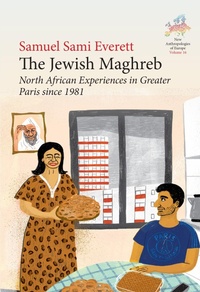
The Jewish Maghreb
Description

Homogenization, monochromatic rendering, and the process of schematic imposition is readily apparent in modern mainstream Jewish French politics. The Jewish Maghreb explores complex self and communal understandings of Maghrebi Jewish populations and their descendants in France through ethnography across generations. This study examines how colonial history, migration, and geopolitics shape ongoing Maghrebi belonging. From commercial networks in Paris to Algerian pilgrimage journeys, the book reveals communal North African Jewish navigation of plural sediments of self and history. The heuristic 'maghrebinicité,' works to illuminate ongoing negotiations of memory, citizenship, and cultural transmission in postcolonial France, offering fresh insights into diaspora, return, and the persistence of transnational connections.
More details
Person
Samuel Sami Everett is Research Fellow at the University of Cambridge and Associate Professor at the Parkes Institute for the Study of Jewish/non-Jewish Relations and the Winchester School of Art at the University of Southampton.
Content
List of Illustrations
Acknowledgements
Introduction
Chapter 1. Indigénéité: Indigeneity
Chapter 2. Perpetual Motion
Chapter 3. Diaspora
Chapter 4. Minority Solidarity
Chapter 5. Intergenerational Imaginaries
Chapter 6. Transmission
Chapter 7. Return
Afterword: Uncertainties
References
Index
