

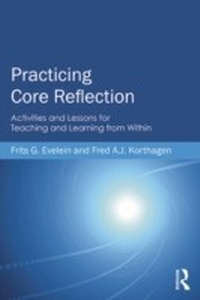
Practicing Core Reflection
Activities and Lessons for Teaching and Learning from Within
1st Edition
Published on 3. October 2014
206 pages
978-1-135-01966-2 (ISBN)
Description

Practicing Core Reflection features 78 concrete educational activities and exercises based on research. These can be used individually and in groups to support 'teaching and learning from within.' Core Reflection is an approach focused on people's personal strengths and on using practical strategies to overcome obstacles to the enactment of these strengths. This approach has been used in many contexts all over the world and has shown great promise in helping to re-chart the course for education and to re-think its purpose in global and democratic societies. Additional tools (Cards, Figures, Tables, Forms in a printable PDF format) are provided on this website (under the eResources tab). Building on the theoretical foundations established in Korthagen, Kim, and Green's Teaching and Learning from Within: A Core Reflection Approach to Quality and Inspiration in Education, this companion volume can be used together with it or on its own to engage educators in exploring what it means to bring out the best in oneself, in students, in colleagues, and others-a critically significant project if education is to realize new levels of possibility and potential.
Reviews / Votes
"The vast majority of teachers are passionate about their work; Evelein and Korthagen describe how to tap this passion in order to sustain them in their important work. This project is exciting and full of potential for me as a teacher mentor."Paul McCormick, University of Pennsylvania Graduate School of Education, USA
"This book is at the forefront of the field. As a 'workbook' it takes theory and practice, moulds them together in useable ways, and makes it possible for a teacher to not only make sense of the ideas but be capable of leading their development in classroom practice."
John Loughran, Monash University, Australia
"This is a unique collection that will enhance the work of all who aspire to become reflective practitioners."
Tom Russell, Queen's University, Canada
More details
Language
English
Place of publication
London
United Kingdom
Publishing group
Taylor & Francis Ltd
Target group
Professional and scholarly
Illustrations
7 s/w Tabellen
7 Tables, black and white
File size
1,31 MB
ISBN-13
978-1-135-01966-2 (9781135019662)
Copyright in bibliographic data and cover images is held by Nielsen Book Services Limited or by the publishers or by their respective licensors: all rights reserved.
Schweitzer Classification
Other editions
Additional editions
Frits G. Evelein | Fred A. J. Korthagen
Practicing Core Reflection
Activities and Lessons for Teaching and Learning from Within
Book
10/2014
1st Edition
Routledge
€60.00
Shipment within 15-20 days
Frits G. Evelein | Fred A. J. Korthagen
Practicing Core Reflection
Activities and Lessons for Teaching and Learning from Within
Book
09/2014
1st Edition
Routledge
€263.50
Shipment within 15-20 days
Persons
Frits G. Evelein is an expert in education and art. He held various positions as a professor in teacher education at Utrecht University in the Netherlands, and in music and arts education at Codarts University of Performing Arts in Rotterdam. Currently he is involved in developing innovations in education and art.
Fred A.J. Korthagen is emeritus professor of Education at Utrecht University in the Netherlands. In 2000 and in 2006, he received the Exemplary Research in Teaching and Teacher Education Award from the Teaching and Teacher Education division of AERA. In 2009, he received the Distinguished Research Award from the Association of Teacher Educators.
Fred A.J. Korthagen is emeritus professor of Education at Utrecht University in the Netherlands. In 2000 and in 2006, he received the Exemplary Research in Teaching and Teacher Education Award from the Teaching and Teacher Education division of AERA. In 2009, he received the Distinguished Research Award from the Association of Teacher Educators.
Content
Preface
1. Working from your inner core: An outline
1. Introductory activity: Reflection on inspiration and stagnation
2. Tapping into the power of your core qualities
2. Introductory activity: Looking at what makes people special
3. Introductory activity: Recognizing your own core qualities
4. Recognizing core qualities in situations
5. Recognizing different types of core qualities
6. Increasing your skills by applying core qualities
7. Expanding your core qualities
8. Applying new core qualities
9. Increasing your energy by applying your core qualities in the here and now
10. Working with the core qualities that give meaning to your life
11. Applying your core qualities specifically
12. Applying core qualities in difficult situations
13. Balancing core qualities
14. Recognizing and naming core qualities in a conversation
15. Recognizing core qualities of a group
3. Using three information channels: Thinking, feeling and wanting
16. Orientation activity: Experiencing the difference between thinking and feeling
17. Orientation activity: Using the information of thinking, feeling and wanting
18. Becoming aware of your thoughts in a difficult situation
19. Observing your thinking
20. Developing more focused thinking
21. Looking at a problem through different 'glasses'
22. Discerning differences among feelings
23. Becoming aware of the effects of your feelings
24. Deepening contact by using the elevator between thinking, feeling, and wanting
25. Managing the difference between 'wanting' and 'having to'
26. Using your willpower
27. Working and living from your passion
4. Using the power of your desires and ideals
28. Introductory activity: Knowing your needs
29. Introductory activity: Recognizing your basic psychological needs
30. Discovering the connection between fulfillment of the need for competence and success in your work
31. Discovering the connection between fulfillment of the need for autonomy and motivation for your work
32. Discovering the relationship between fulfillment of the need for relatedness and having contact
33. Being more successful at work by feeling more competent
34. Becoming more motivated by increasing your sense of autonomy
35. Improved contact with your students or colleagues through increased relatedness
36. Exploring different types of ideals
37. Exploring your own ideals
38. Using the power of an ideal to complete a task
39. Focusing your ideals
40. Addressing your doubts about ideals
41. Using your inner resources
42. Using a role model as a source of inspiration and strength
5. Going with the flow
43. Introductory activity: Recognizing flow
44. Introductory activity: Increasing flow; work as play
45. Exploring flow and non-flow
46. Using core qualities to increase flow
47. Increasing the flow of a group: Flow is contagious
6. Letting go of limitations
48. Introductory activity: Becoming aware of your limiting thoughts
49. Introductory activity: Recognizing the self-fulfilling prophesy
50. Becoming aware of the fight response
51. Becoming aware of the flight response
52. Becoming aware of freezing
7. Connecting the aspects of your personality
53. Introductory activity: Recognizing different aspects of your personality
54. Introductory activity: Recognizing a friction between layers
55. Becoming aware of influences from your environment
56. Changing your perception of your environment
57. Reflecting on your behavior in a certain situation
58. Reflecting on your competencies
59. Reflecting on less developed competencies
60. Recognizing destructive beliefs
61. Recognizing constructive beliefs
62. Changing destructive beliefs
63. Reflecting on roles
64. Reflecting on identity
65. Staying true to yourself
66. Directing your work
8. Working with presence and mindfulness
67. Introductory activity: Experiencing presence
68. Working with attention
69. Recognizing and preventing drifting
70. Recognizing automatisms
71. Becoming aware of the pros and cons of downloading
72. Developing more presence and mindfulness
73. Deepening the connection
74. Becoming aware of the timeless observer
9. Turning problems into opportunities for growth
75. Introductory activity: Learning to use a problem as a route to an ideal
76. Introductory activity: Learning to handle obstacles
77. Leading a session on core reflection
78. Applying core reflection to yourself
10. Working with this book: Some practical tips
About the authors
Appendix
References
Index
1. Working from your inner core: An outline
1. Introductory activity: Reflection on inspiration and stagnation
2. Tapping into the power of your core qualities
2. Introductory activity: Looking at what makes people special
3. Introductory activity: Recognizing your own core qualities
4. Recognizing core qualities in situations
5. Recognizing different types of core qualities
6. Increasing your skills by applying core qualities
7. Expanding your core qualities
8. Applying new core qualities
9. Increasing your energy by applying your core qualities in the here and now
10. Working with the core qualities that give meaning to your life
11. Applying your core qualities specifically
12. Applying core qualities in difficult situations
13. Balancing core qualities
14. Recognizing and naming core qualities in a conversation
15. Recognizing core qualities of a group
3. Using three information channels: Thinking, feeling and wanting
16. Orientation activity: Experiencing the difference between thinking and feeling
17. Orientation activity: Using the information of thinking, feeling and wanting
18. Becoming aware of your thoughts in a difficult situation
19. Observing your thinking
20. Developing more focused thinking
21. Looking at a problem through different 'glasses'
22. Discerning differences among feelings
23. Becoming aware of the effects of your feelings
24. Deepening contact by using the elevator between thinking, feeling, and wanting
25. Managing the difference between 'wanting' and 'having to'
26. Using your willpower
27. Working and living from your passion
4. Using the power of your desires and ideals
28. Introductory activity: Knowing your needs
29. Introductory activity: Recognizing your basic psychological needs
30. Discovering the connection between fulfillment of the need for competence and success in your work
31. Discovering the connection between fulfillment of the need for autonomy and motivation for your work
32. Discovering the relationship between fulfillment of the need for relatedness and having contact
33. Being more successful at work by feeling more competent
34. Becoming more motivated by increasing your sense of autonomy
35. Improved contact with your students or colleagues through increased relatedness
36. Exploring different types of ideals
37. Exploring your own ideals
38. Using the power of an ideal to complete a task
39. Focusing your ideals
40. Addressing your doubts about ideals
41. Using your inner resources
42. Using a role model as a source of inspiration and strength
5. Going with the flow
43. Introductory activity: Recognizing flow
44. Introductory activity: Increasing flow; work as play
45. Exploring flow and non-flow
46. Using core qualities to increase flow
47. Increasing the flow of a group: Flow is contagious
6. Letting go of limitations
48. Introductory activity: Becoming aware of your limiting thoughts
49. Introductory activity: Recognizing the self-fulfilling prophesy
50. Becoming aware of the fight response
51. Becoming aware of the flight response
52. Becoming aware of freezing
7. Connecting the aspects of your personality
53. Introductory activity: Recognizing different aspects of your personality
54. Introductory activity: Recognizing a friction between layers
55. Becoming aware of influences from your environment
56. Changing your perception of your environment
57. Reflecting on your behavior in a certain situation
58. Reflecting on your competencies
59. Reflecting on less developed competencies
60. Recognizing destructive beliefs
61. Recognizing constructive beliefs
62. Changing destructive beliefs
63. Reflecting on roles
64. Reflecting on identity
65. Staying true to yourself
66. Directing your work
8. Working with presence and mindfulness
67. Introductory activity: Experiencing presence
68. Working with attention
69. Recognizing and preventing drifting
70. Recognizing automatisms
71. Becoming aware of the pros and cons of downloading
72. Developing more presence and mindfulness
73. Deepening the connection
74. Becoming aware of the timeless observer
9. Turning problems into opportunities for growth
75. Introductory activity: Learning to use a problem as a route to an ideal
76. Introductory activity: Learning to handle obstacles
77. Leading a session on core reflection
78. Applying core reflection to yourself
10. Working with this book: Some practical tips
About the authors
Appendix
References
Index
