

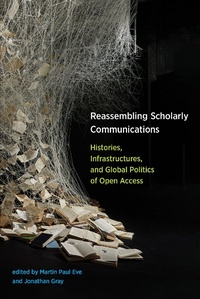
Reassembling Scholarly Communications
Histories, Infrastructures, and Global Politics of Open Access
Published on 20. October 2020
472 pages
978-0-262-36286-3 (ISBN)
Description

A range of perspectives on the complex political, philosophical, and pragmatic implications of opening research and scholarship through digital technologies.
The Open Access Movement proposes to remove price and permission barriers for accessing peer-reviewed research work--to use the power of the internet to duplicate material at an infinitesimal cost-per-copy. In this volume, contributors show that open access does not exist in a technological vacuum; there are complex political, philosophical, and pragmatic implications for opening research through digital technologies. The contributors examine open access across spans of colonial legacies, knowledge frameworks, publics and politics, archives and digital preservation, infrastructures and platforms, and global communities.
The Open Access Movement proposes to remove price and permission barriers for accessing peer-reviewed research work--to use the power of the internet to duplicate material at an infinitesimal cost-per-copy. In this volume, contributors show that open access does not exist in a technological vacuum; there are complex political, philosophical, and pragmatic implications for opening research through digital technologies. The contributors examine open access across spans of colonial legacies, knowledge frameworks, publics and politics, archives and digital preservation, infrastructures and platforms, and global communities.
More details
Other editions
Additional editions
Martin Paul Eve
Reassembling Scholarly Communications
Histories, Infrastructures, and Global Politics of Open Access
Book
10/2020
MIT Press
€36.60
Article exhausted; check different version
Persons
Martin Paul Eve is Professor of Literature, Technology, and Publishing at Birkbeck, University of London. Jonathan Gray is a Lecturer in Critical Infrastructure Studies in the Department of Digital Humanities at King's College London.
Content
Part I: Colonial Influences Chapter 1. Epistemic Alienation in African Scholarly Communications: Open Access as a Pharmakon
Chapter 2. Scholarly Communications and Social Justice
Chapter 3. Social Justice and Inclusivity: Drivers for the Dissemination of African Scholarship
Chapter 4. Can Open Scholarly Practices Redress Epistemic Injustice?
Part II: Epistemologies
Chapter 5. When the Law Advances Access to Learning: Locke and the Origins of Modern Copyright
Chapter 6. How Does a Format Make a Public?
Chapter 7. Peer Review: Readers in the Making of Scholarly Knowledge
Chapter 8. The Making of Empirical knowledge: Recipes, Craft, and Scholarly Communication
Part III: Publics and Politics
Chapter 9. The Royal Society and the Non-Commercial Circulation of Knowledge
Chapter 10. The Political Histories of UK Public Libraries and Access to Knowledge
Chapter 11. Libraries and their Publics in the United States
Chapter 12. Open Access, 'Publicity', and Democratic Knowledge
Part IV: Archives and Preservation
Chapter 13. Libraries, Museums, and Archives as Speculative Knowledge Infrastructure
Chapter 14. Preserving the Past for the Future: Whose Past? Everyone's Future
Chapter 15. Is There a Text in These Data? The Digital Humanities and Preserving the Evidence
Chapter 16. Accessing the Past, or Should Archives Provide Open Access?
Part V: Infrastructures and Platforms
Chapter 17. Infrastructural Experiments and the Politics of Open Access
Chapter 18. The Platformization of Open
Chapter 19. Reading Scholarship Digitally
Chapter 20. Towards Linked Open Data for Latin America
Chapter 21. The Pasts, Presents, and Futures of SciELO Part VI: Global Communities
Chapter 22. Not Self-Indulgence, but Self-Preservation: Open Access and the Ethics of Care
Chapter 23. Towards A Global Open-Access Scholarly Communications System
Chapter 24. Learned Societies, Humanities Publishing, and Scholarly Communication in the UK
Chapter 25. Not all Networks: Toward Open, Sustainable Research Communities
Chapter 2. Scholarly Communications and Social Justice
Chapter 3. Social Justice and Inclusivity: Drivers for the Dissemination of African Scholarship
Chapter 4. Can Open Scholarly Practices Redress Epistemic Injustice?
Part II: Epistemologies
Chapter 5. When the Law Advances Access to Learning: Locke and the Origins of Modern Copyright
Chapter 6. How Does a Format Make a Public?
Chapter 7. Peer Review: Readers in the Making of Scholarly Knowledge
Chapter 8. The Making of Empirical knowledge: Recipes, Craft, and Scholarly Communication
Part III: Publics and Politics
Chapter 9. The Royal Society and the Non-Commercial Circulation of Knowledge
Chapter 10. The Political Histories of UK Public Libraries and Access to Knowledge
Chapter 11. Libraries and their Publics in the United States
Chapter 12. Open Access, 'Publicity', and Democratic Knowledge
Part IV: Archives and Preservation
Chapter 13. Libraries, Museums, and Archives as Speculative Knowledge Infrastructure
Chapter 14. Preserving the Past for the Future: Whose Past? Everyone's Future
Chapter 15. Is There a Text in These Data? The Digital Humanities and Preserving the Evidence
Chapter 16. Accessing the Past, or Should Archives Provide Open Access?
Part V: Infrastructures and Platforms
Chapter 17. Infrastructural Experiments and the Politics of Open Access
Chapter 18. The Platformization of Open
Chapter 19. Reading Scholarship Digitally
Chapter 20. Towards Linked Open Data for Latin America
Chapter 21. The Pasts, Presents, and Futures of SciELO Part VI: Global Communities
Chapter 22. Not Self-Indulgence, but Self-Preservation: Open Access and the Ethics of Care
Chapter 23. Towards A Global Open-Access Scholarly Communications System
Chapter 24. Learned Societies, Humanities Publishing, and Scholarly Communication in the UK
Chapter 25. Not all Networks: Toward Open, Sustainable Research Communities
