

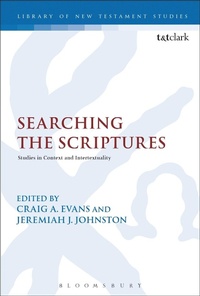
Searching the Scriptures
Studies in Context and Intertextuality
1st Edition
Published on 19. November 2015
336 pages
978-0-567-66383-2 (ISBN)
Description

This work critically engages the hermeneutical methods used to analyse the New Testament writings, so that the lenses through which studies of the texts have been traditionally viewed can be revised. Jeremy Hultin contributes an article on the rhetorical use of the chosen citations by Jewish rabbis in their commentary on scripture, while Mark Gignilliat writes on the potential implications for viewing Old Testament Scripture in the manner of the early Church exegetes and theologians. With these two contributions providing a frame for the other chapters, the essays explore a range of topics including the significance of the number 42 in Matthew; the study of Wisdom in Matthew, the extent to which the four gospels are underlined by Hebrew material, if any; the use of Hebrew material in shaping New Testament writings; and the uses of Scripture in the letters of Paul and the letters to the Hebrews.
Read separately, these articles provide fascinating insights and revisions to established ideas on intertextuality between the Old/Hebrew Bible and the New Testament writings. Taken together, the collection presents a solid argument for the fundamental revision of our current hermeneutical practice in Biblical Studies.
Read separately, these articles provide fascinating insights and revisions to established ideas on intertextuality between the Old/Hebrew Bible and the New Testament writings. Taken together, the collection presents a solid argument for the fundamental revision of our current hermeneutical practice in Biblical Studies.
More details
Series
Edition
1. Auflage
Language
English
Place of publication
London
United Kingdom
Publishing group
Bloomsbury Publishing PLC
Target group
Professional and scholarly
ISBN-13
978-0-567-66383-2 (9780567663832)
Copyright in bibliographic data and cover images is held by Nielsen Book Services Limited or by the publishers or by their respective licensors: all rights reserved.
Schweitzer Classification
Other editions
Additional editions
Craig A. Evans | Jeremiah J. Johnston
Searching the Scriptures
Studies in Context and Intertextuality
Book
06/2018
T.& T.Clark Ltd
€52.40
Shipment within 3-4 weeks
Craig A. Evans | Jeremiah J. Johnston
Searching the Scriptures
Studies in Context and Intertextuality
Book
09/2015
T.& T.Clark Ltd
€220.30
Shipment within 3-4 weeks
Persons
Craig A. Evans is the Payzant Distinguished Professor of New Testament at Acadia Divinity College of Acadia University, Canada.
Jeremiah J. Johnston is Associate Professor of Early Christianity at Houston Baptist University, USA.
Jeremiah J. Johnston is Associate Professor of Early Christianity at Houston Baptist University, USA.
Content
Preface
Abbreviations
List of Contributors
Introduction
General Studies
1: Singing Women and Promised Seed Isaiah 54: 1-3 as Christian Scripture
Mark S. Gignilliat, Beeson Divinity School, USA
2: Genesis Rabbah 48:1-6: Reflections on Thematic Unity and Exegetical Method
Jeremy F. Hultin, Murdoch University, Australia
Studies in the Gospels
3: Metaphorty-Two? The Wilderness and the People of God in Matthew 1: 1-17
Jason B. Hood, Christ United Methodist Church, USA
4: "The Rejection of Wisdom's Call": Matthew's use of Proverbs 1:20-33 in the Parable of Children in the Marketplace (Matthew 11:16-19/Luke 7: 31-35)
Brian C. Dennert, Loyola University, USA
5: John, Elijah and Naboth: What Does 1 Kings 21 Have to do with Matthew 14?
Jesse Rainbow, Harvard University, USA
6: Jesus as a Nazarite in Mark 14:25 Par., and Joseph's Reunion Meal in Judaic Tradition
Roger D. Aus, Lutherkirchengemeinde Alt-Reinickendorf, Germany
7: The Hebrew Scriptures in the Third Gospel
R. Steven Notley, Nyack College, USA and Jeffrey Garcia, New York University, USA
8: Intertextual Wisdom: Luke 12:13-34 and the Sapiental Conversation on Death and Possessions
Matthew S. Rindge, Gonzaga University, USA
9: Jesus said "Keep the Commandments" and the Rich Man asked "Which Ones?" The Decalogue as a Law Summary in the Story of the Rich Man
Diane Hakala, University of Cambridge, UK
10: They Shall Look Upon the One they have Pierced: Intertextuality, Intra-textuality, and Anti-Judaism in John 19:37
Ruth Sheridan, Charles Sturt University, Australia
Studies in the Letters
11: Toward a Theory of Narrative Transformation: The Importance of Both Contexts in Paul's Scriptural Citations
J. R. Daniel Kirk, Fuller Theological University, USA
12: Dominical Shame Tradition in Paul: An Allusion (Rom 1:16) to Jesus' Use of Shame Language (Mark 8: 38) from the Book of Daniel
Yongbom Lee, Los Angeles Antioch Presbyterian Church, USA
13: 'We Know that Whatever Law SAys...': Romans 3:9-20 as a Narrative Utilization of Intertextuality Developing its own Theory of Intertextuality
Alain Gignac, Universite de Montreal, Canada
14: Crushing Satan: Genesis 2-3 in Romans 16: 17-20A
Brian LePort, University of Bristol, UK
15: The Convergence of Adamic and Merkabah Traditions in the Christology of Hebrews
Silviu N. Bunta, University of Dayton, USA
Bibliography
Index
Abbreviations
List of Contributors
Introduction
General Studies
1: Singing Women and Promised Seed Isaiah 54: 1-3 as Christian Scripture
Mark S. Gignilliat, Beeson Divinity School, USA
2: Genesis Rabbah 48:1-6: Reflections on Thematic Unity and Exegetical Method
Jeremy F. Hultin, Murdoch University, Australia
Studies in the Gospels
3: Metaphorty-Two? The Wilderness and the People of God in Matthew 1: 1-17
Jason B. Hood, Christ United Methodist Church, USA
4: "The Rejection of Wisdom's Call": Matthew's use of Proverbs 1:20-33 in the Parable of Children in the Marketplace (Matthew 11:16-19/Luke 7: 31-35)
Brian C. Dennert, Loyola University, USA
5: John, Elijah and Naboth: What Does 1 Kings 21 Have to do with Matthew 14?
Jesse Rainbow, Harvard University, USA
6: Jesus as a Nazarite in Mark 14:25 Par., and Joseph's Reunion Meal in Judaic Tradition
Roger D. Aus, Lutherkirchengemeinde Alt-Reinickendorf, Germany
7: The Hebrew Scriptures in the Third Gospel
R. Steven Notley, Nyack College, USA and Jeffrey Garcia, New York University, USA
8: Intertextual Wisdom: Luke 12:13-34 and the Sapiental Conversation on Death and Possessions
Matthew S. Rindge, Gonzaga University, USA
9: Jesus said "Keep the Commandments" and the Rich Man asked "Which Ones?" The Decalogue as a Law Summary in the Story of the Rich Man
Diane Hakala, University of Cambridge, UK
10: They Shall Look Upon the One they have Pierced: Intertextuality, Intra-textuality, and Anti-Judaism in John 19:37
Ruth Sheridan, Charles Sturt University, Australia
Studies in the Letters
11: Toward a Theory of Narrative Transformation: The Importance of Both Contexts in Paul's Scriptural Citations
J. R. Daniel Kirk, Fuller Theological University, USA
12: Dominical Shame Tradition in Paul: An Allusion (Rom 1:16) to Jesus' Use of Shame Language (Mark 8: 38) from the Book of Daniel
Yongbom Lee, Los Angeles Antioch Presbyterian Church, USA
13: 'We Know that Whatever Law SAys...': Romans 3:9-20 as a Narrative Utilization of Intertextuality Developing its own Theory of Intertextuality
Alain Gignac, Universite de Montreal, Canada
14: Crushing Satan: Genesis 2-3 in Romans 16: 17-20A
Brian LePort, University of Bristol, UK
15: The Convergence of Adamic and Merkabah Traditions in the Christology of Hebrews
Silviu N. Bunta, University of Dayton, USA
Bibliography
Index
