

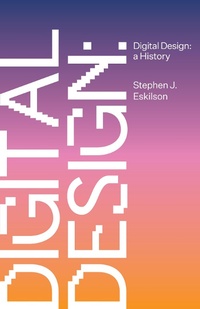
Digital Design
A History
1st Edition
Published on 31. October 2023
296 pages
978-0-691-25324-4 (ISBN)
Description

A groundbreaking history of digital design from the nineteenth century to today
Digital design has emerged as perhaps the most dynamic force in society, occupying a fluid, experimental space where product design intersects with art, film, business, engineering, theater, music, and artificial intelligence. Stephen Eskilson traces the history of digital design from its precursors in the nineteenth century to its technological and cultural ascendency today, providing a multifaceted account of a digital revolution that touches all aspects of our lives.
We live in a time when silicon processors, miniaturization, and CAD-enhanced 3D design have transformed the tangible world of cars and coffee makers as well as the screen world on our phones, computers, and game systems. Eskilson provides invaluable historical perspective to help readers better understand how digital design has become such a vibrant feature of the contemporary landscape. He covers topics ranging from graphic and product design to type, web design, architecture, data visualization, and virtual reality. Along the way, he paints compelling portraits of key innovators behind this transformation, from foundational figures such as Marshall McLuhan, Nam June Paik, and April Greiman to those mapping new frontiers, such as Jeanne Gang, Jony Ive, Yugo Nakamura, Neri Oxman, and Jewel Burks Solomon.
Bringing together an unprecedented array of sources on digital design, this comprehensive and richly illustrated book reveals how many of the digital practices we think of as cutting-edge actually originated in the analog age and how the history of digital design is as much about our changing relationship to forms as the forms themselves.
Digital design has emerged as perhaps the most dynamic force in society, occupying a fluid, experimental space where product design intersects with art, film, business, engineering, theater, music, and artificial intelligence. Stephen Eskilson traces the history of digital design from its precursors in the nineteenth century to its technological and cultural ascendency today, providing a multifaceted account of a digital revolution that touches all aspects of our lives.
We live in a time when silicon processors, miniaturization, and CAD-enhanced 3D design have transformed the tangible world of cars and coffee makers as well as the screen world on our phones, computers, and game systems. Eskilson provides invaluable historical perspective to help readers better understand how digital design has become such a vibrant feature of the contemporary landscape. He covers topics ranging from graphic and product design to type, web design, architecture, data visualization, and virtual reality. Along the way, he paints compelling portraits of key innovators behind this transformation, from foundational figures such as Marshall McLuhan, Nam June Paik, and April Greiman to those mapping new frontiers, such as Jeanne Gang, Jony Ive, Yugo Nakamura, Neri Oxman, and Jewel Burks Solomon.
Bringing together an unprecedented array of sources on digital design, this comprehensive and richly illustrated book reveals how many of the digital practices we think of as cutting-edge actually originated in the analog age and how the history of digital design is as much about our changing relationship to forms as the forms themselves.
More details
Other editions
Additional editions
Book
10/2023
Princeton University Press
€47.00
Shipment within 10-20 days
Person
Stephen J. Eskilson is professor of art and design history at Eastern Illinois University. His books include Graphic Design: A New History and The Age of Glass: A Cultural History of Glass in Modern and Contemporary Architecture.
Content
- Cover
- Contents
- Introduction
- One. The Visionaries
- Two. The Machines
- Three. Digital Type Design
- Four. Games and Experiments
- Five. Digital Print and Web 1.0
- Six. Digital Architecture I: Origins
- Seven. Digital Web 2.0
- Eight. Digital Architecture II: Parametrics and 3D Printing
- Nine. Digital Product Design: Sexy Plastic
- Ten. Algorithms and Artificial Intelligence
- Eleven. Data Visualization
- Twelve. Virtual Reality
- Coda. The Digital Future
- Acknowledgments
- Index
- Picture Credits
