

Cloud Computing
Concepts, Technology & Architecture
1st Edition
Published on 2. May 2013
528 pages
978-0-13-338751-3 (ISBN)
Description

Clouds are distributed technology platforms that leverage sophisticated technology innovations to provide highly scalable and resilient environments that can be remotely utilized by organizations in a multitude of powerful ways. To successfully build upon, integrate with, or even create a cloud environment requires an understanding of its common inner mechanics, architectural layers, and models, as well as an understanding of the business and economic factors that result from the adoption and real-world use of cloud-based services.
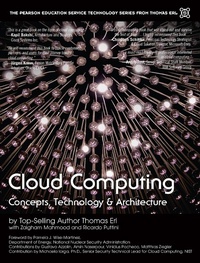
In Cloud Computing: Concepts, Technology & Architecture, Thomas Erl, one of the world's top-selling IT authors, teams up with cloud computing experts and researchers to break down proven and mature cloud computing technologies and practices into a series of well-defined concepts, models, technology mechanisms, and technology architectures, all from an industry-centric and vendor-neutral point of view. In doing so, the book establishes concrete, academic coverage with a focus on structure, clarity, and well-defined building blocks for mainstream cloud computing platforms and solutions.
Subsequent to technology-centric coverage, the book proceeds to establish business-centric models and metrics that allow for the financial assessment of cloud-based IT resources and their comparison to those hosted on traditional IT enterprise premises. Also provided are templates and formulas for calculating SLA-related quality-of-service values and numerous explorations of the SaaS, PaaS, and IaaS delivery models.
With more than 260 figures, 29 architectural models, and 20 mechanisms, this indispensable guide provides a comprehensive education of cloud computing essentials that will never leave your side.
In Cloud Computing: Concepts, Technology & Architecture, Thomas Erl, one of the world's top-selling IT authors, teams up with cloud computing experts and researchers to break down proven and mature cloud computing technologies and practices into a series of well-defined concepts, models, technology mechanisms, and technology architectures, all from an industry-centric and vendor-neutral point of view. In doing so, the book establishes concrete, academic coverage with a focus on structure, clarity, and well-defined building blocks for mainstream cloud computing platforms and solutions.
Subsequent to technology-centric coverage, the book proceeds to establish business-centric models and metrics that allow for the financial assessment of cloud-based IT resources and their comparison to those hosted on traditional IT enterprise premises. Also provided are templates and formulas for calculating SLA-related quality-of-service values and numerous explorations of the SaaS, PaaS, and IaaS delivery models.
With more than 260 figures, 29 architectural models, and 20 mechanisms, this indispensable guide provides a comprehensive education of cloud computing essentials that will never leave your side.
More details
Series
Edition
1. Auflage
Language
English
Place of publication
Hoboken
United States
Publishing group
Pearson Education (US)
Target group
College/higher education
File size
30,39 MB
ISBN-13
978-0-13-338751-3 (9780133387513)
Copyright in bibliographic data and cover images is held by Nielsen Book Services Limited or by the publishers or by their respective licensors: all rights reserved.
Schweitzer Classification
Other editions
Additional editions
Book
05/2013
Pearson
€50.12
Shipment within 15-20 days
Persons
Thomas Erl is a top-selling IT author, founder of Arcitura Education, editor of the Service Technology Magazine and series editor of the Prentice Hall Service Technology Series from Thomas Erl. With more than 175,000 copies in print world-wide, his books have become international bestsellers and have been formally endorsed by senior members of major IT organizations, such as IBM, Microsoft, Oracle, Intel, Accenture, IEEE, HL7, MITRE, SAP, CISCO, HP, and many others. As CEO of Arcitura Education Inc. and in cooperation with CloudSchool.com and SOASchool.com, Thomas has led the development of curricula for the internationally recognized Cloud Certified Professional (CCP) and SOA Certified Professional (SOACP) accreditation programs, which have established a series of formal, vendor-neutral industry certifications obtained by thousands of IT professionals around the world. Thomas has toured over 20 countries as a speaker and instructor and regularly participates in international conferences, including Service Technology Symposium and Gartner events. More than 100 articles and interviews by Thomas have been published in numerous publications, including The Wall Street Journal and CIO Magazine.
Dr. Zaigham Mahmood is a published author of six books, four of which are dedicated to cloud computing. He acts as a technology consultant at Debesis Education UK and a Researcher at the University of Derby, UK. He further holds positions as a foreign professor and professor extraordinaire with international educational institutions. Professor Mahmood is a certified cloud trainer and a regular speaker at the International SOA, Cloud + Service Technology Symposium, and he has published more than 100 articles. His specialized areas of research include distributed computing, project management, and e-government.
Professor Ricardo Puttini has 15 years of field experience as a senior IT consultant at major government organizations in Brazil. He has taught several undergraduate and graduate-level courses in service orientation, service-oriented architecture, and cloud computing. Ricardo was the general chair of the 4th International SOA Symposium and 3rd International Cloud Symposium that was held in the spring of 2011. He holds a Ph.D. in Communication Networks (2004) from the University of Brasilia, where he has taught in the Electrical Engineering department since 1998. Ricardo spent 18 months at the L'Ecole Superieure d'Electricite (Supelec) in Rennes, France, during his Ph.D., where he started researching distributed system architecture and security.
Dr. Zaigham Mahmood is a published author of six books, four of which are dedicated to cloud computing. He acts as a technology consultant at Debesis Education UK and a Researcher at the University of Derby, UK. He further holds positions as a foreign professor and professor extraordinaire with international educational institutions. Professor Mahmood is a certified cloud trainer and a regular speaker at the International SOA, Cloud + Service Technology Symposium, and he has published more than 100 articles. His specialized areas of research include distributed computing, project management, and e-government.
Professor Ricardo Puttini has 15 years of field experience as a senior IT consultant at major government organizations in Brazil. He has taught several undergraduate and graduate-level courses in service orientation, service-oriented architecture, and cloud computing. Ricardo was the general chair of the 4th International SOA Symposium and 3rd International Cloud Symposium that was held in the spring of 2011. He holds a Ph.D. in Communication Networks (2004) from the University of Brasilia, where he has taught in the Electrical Engineering department since 1998. Ricardo spent 18 months at the L'Ecole Superieure d'Electricite (Supelec) in Rennes, France, during his Ph.D., where he started researching distributed system architecture and security.
Content
CHAPTER 1: Introduction
CHAPTER 2: Case Study Background
PART I: FUNDAMENTAL CLOUD COMPUTING
CHAPTER 3: Understanding Cloud Computing
CHAPTER 4: Fundamental Concepts and Models
CHAPTER 5: Cloud-Enabling Technology
CHAPTER 6: Fundamental Cloud Security
PART II: CLOUD COMPUTING MECHANISMS
CHAPTER 7: Cloud Infrastructure Mechanisms
CHAPTER 8: Specialized Cloud Mechanisms
CHAPTER 9: Cloud Management Mechanisms
CHAPTER 10: Cloud Security Mechanisms
PART III: CLOUD COMPUTING ARCHITECTURE
CHAPTER 11: Fundamental Cloud Architectures
CHAPTER 12: Advanced Cloud Architectures
CHAPTER 13: Specialized Cloud Architectures
PART IV: WORKING WITH CLOUDS
CHAPTER 14: Cloud Delivery Model Considerations
CHAPTER 15: Cost Metrics and Pricing Models
CHAPTER 16: Service Quality Metrics and SLAs
PART V: APPENDICES
Appendix A: Case Study Conclusions
Appendix B: Industry Standards Organizations
Appendix C: Mapping Mechanisms to Characteristics
Appendix D: Data Center Facilities (TIA-942)
Appendix E: Emerging Technologies
Appendix F: Cloud Provisioning Contracts
Appendix G: Cloud Business Case Template
Index
CHAPTER 2: Case Study Background
PART I: FUNDAMENTAL CLOUD COMPUTING
CHAPTER 3: Understanding Cloud Computing
CHAPTER 4: Fundamental Concepts and Models
CHAPTER 5: Cloud-Enabling Technology
CHAPTER 6: Fundamental Cloud Security
PART II: CLOUD COMPUTING MECHANISMS
CHAPTER 7: Cloud Infrastructure Mechanisms
CHAPTER 8: Specialized Cloud Mechanisms
CHAPTER 9: Cloud Management Mechanisms
CHAPTER 10: Cloud Security Mechanisms
PART III: CLOUD COMPUTING ARCHITECTURE
CHAPTER 11: Fundamental Cloud Architectures
CHAPTER 12: Advanced Cloud Architectures
CHAPTER 13: Specialized Cloud Architectures
PART IV: WORKING WITH CLOUDS
CHAPTER 14: Cloud Delivery Model Considerations
CHAPTER 15: Cost Metrics and Pricing Models
CHAPTER 16: Service Quality Metrics and SLAs
PART V: APPENDICES
Appendix A: Case Study Conclusions
Appendix B: Industry Standards Organizations
Appendix C: Mapping Mechanisms to Characteristics
Appendix D: Data Center Facilities (TIA-942)
Appendix E: Emerging Technologies
Appendix F: Cloud Provisioning Contracts
Appendix G: Cloud Business Case Template
Index
