

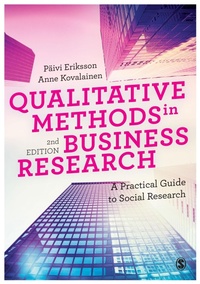
Qualitative Methods in Business Research
A Practical Guide to Social Research
2nd Edition
Published on 2. November 2015
376 pages
978-1-4739-5249-2 (ISBN)
Description

This pragmatic, applied textbook showcases the potential and impact of qualitative research in business and management. Using case studies and a global approach it provides you with an overview of the philosophies, methodologies and methods you will need to research in this field.
Demystifying the whole process, it walks you through every aspect of conducting and using research in business, including generating questions, collecting useful data, evaluating the research and disseminating your findings. It also:
Explores the challenges of working with qualitative data
Introduces qualitative methods including interviews, focus groups & ethnography
New to the 2nd edition:
The role of digital tools and social media, and how you can use them for data collection
3 new chapters on qualitative content analysis, visual research and publishing research.
Praise for the 1st edition:
`Comprehensive, current and compelling, a winning combination for any research student or practitioner interested in increasing his/her knowledge about qualitative methods as they apply to business research' - The Qualitative Report
Demystifying the whole process, it walks you through every aspect of conducting and using research in business, including generating questions, collecting useful data, evaluating the research and disseminating your findings. It also:
Explores the challenges of working with qualitative data
Introduces qualitative methods including interviews, focus groups & ethnography
New to the 2nd edition:
The role of digital tools and social media, and how you can use them for data collection
3 new chapters on qualitative content analysis, visual research and publishing research.
Praise for the 1st edition:
`Comprehensive, current and compelling, a winning combination for any research student or practitioner interested in increasing his/her knowledge about qualitative methods as they apply to business research' - The Qualitative Report
Reviews / Votes
Eriksson and Kovalainen have improved on what was already a very useful and usable guide to the theory and application of a range of qualitative methods. All the five new chapters add considerably to the book, but the chapters on content analysis and breaking field boundaries are particularly enlightening. This will be my go to book for research and teaching. -- Albert Mills Comprehensive, current and compelling, a winning combination for any research student or practitioner interested in increasing his/her knowledge about qualitative methods as they apply to business research -- The Qualitative ReportMore details
Series
Edition
Second Edition
Language
English
Place of publication
London
United Kingdom
Target group
College/higher education
Product notice
Reflowable
File size
0,58 MB
ISBN-13
978-1-4739-5249-2 (9781473952492)
Copyright in bibliographic data and cover images is held by Nielsen Book Services Limited or by the publishers or by their respective licensors: all rights reserved.
Schweitzer Classification
Other editions
Additional editions
Paeivi Eriksson | Anne Kovalainen
Qualitative Methods in Business Research
A Practical Guide to Social Research
Book
11/2015
2nd Edition
SAGE Publications Ltd
€71.69
Shipment within 15-20 days
Persons
Paeivi Eriksson is a Professor of Management at the University of Eastern Finland Business School. Her research focuses on innovation, commercialization, gender and qualitative research methods. She has published research in a number of scholarly journals and co-authored a book titled Qualitative Methods in Business Research (SAGE 2008; 2nd edition forthcoming in 2015/2016).
Content
PART 1: THE BUSINESS OF QUALITATIVE RESEARCH
Chapter 1: Introduction
Chapter 2: Research Philosophy
Chapter 3: Research Design and Process
Chapter 4: Research Questions and Literature Review
Chapter 5: Access and Relationships
Chapter 6: Ethics in Research
PART 2: WORKING WITH QUALITATIVE DATA
Chapter 7: Introduction to Qualitative Data
Chapter 8: Interviews and Observations
Chapter 9: Digital Data
Chapter 10: Qualitative Content Analysis
PART 3: QUALITATIVE RESEARCH APPROACHES
Chapter 11: Case Study Research
Chapter 12: Ethnographic Research
Chapter 13: Action Research
Chapter 14: Focus Group Research
Chapter 15: Grounded Theory Research
Chapter 16: Narrative Research
Chapter 17: Discourse Theoretical Research
Chapter 18: Critical Research
Chapter 19: Feminist Research
Chapter 20: Visual Research
PART 4: WRITING, EVALUATING AND PUBLISHING
Chapter 21: Writing Process
Chapter 22: Evaluation
Chapter 23: Publishing
Chapter 24: Breaking the Boundaries
Chapter 1: Introduction
Chapter 2: Research Philosophy
Chapter 3: Research Design and Process
Chapter 4: Research Questions and Literature Review
Chapter 5: Access and Relationships
Chapter 6: Ethics in Research
PART 2: WORKING WITH QUALITATIVE DATA
Chapter 7: Introduction to Qualitative Data
Chapter 8: Interviews and Observations
Chapter 9: Digital Data
Chapter 10: Qualitative Content Analysis
PART 3: QUALITATIVE RESEARCH APPROACHES
Chapter 11: Case Study Research
Chapter 12: Ethnographic Research
Chapter 13: Action Research
Chapter 14: Focus Group Research
Chapter 15: Grounded Theory Research
Chapter 16: Narrative Research
Chapter 17: Discourse Theoretical Research
Chapter 18: Critical Research
Chapter 19: Feminist Research
Chapter 20: Visual Research
PART 4: WRITING, EVALUATING AND PUBLISHING
Chapter 21: Writing Process
Chapter 22: Evaluation
Chapter 23: Publishing
Chapter 24: Breaking the Boundaries
