

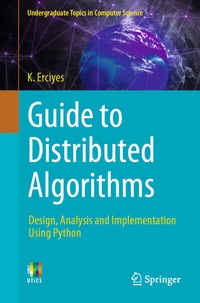
Guide to Distributed Algorithms
Description

The study of distributed algorithms provides the needed background in many real-life applications, such as: distributed real-time systems, wireless sensor networks, mobile ad hoc networks and distributed databases.
The main goal of Guide to Distributed Algorithms is to provide a detailed study of the design and analysis methods of distributed algorithms and to supply the implementations of most of the presented algorithms in Python language, which is the unique feature of the book not found in any other contemporary books on distributed computing.
Topics and features:
- Presents comprehensive design methods for distributed algorithms
- Provides detailed analysis for the algorithms presented
- Uses graph templates to demonstrate the working of algorithms
- Provides working Python code for most of the algorithms presented
This unique textbook/study manual can serve as a comprehensive manual of distributed algorithms for Computer Science and non-CS majors as well as practitioners of distributed algorithms in research projects.
More details
Other editions
Additional editions
Person
Dr. Kayhan Erciyes is a full Professor in the Department of Computer Engineering at Yasar University, Izmir , Türkiye . His other publications include the Springer titles Distributed Real-Time Systems , Guide to Graph Algorithms , Distributed and Sequential Algorithms for Bioinformatics , Discrete Mathematics and Graph Theory.
Content
Part I: Background - 1. Introduction.- 2. Basic Concepts.- 3. Models.- Part II: Fundamental Algorithms.- 4. Time Management.- 5. Distributed Mutual Exclusion.- 6. Distributed Snapshots and Global States.- 7. Coordination.- 8. Fault Tolerance.- 9. Consensus and Agreement.- 10. Multicast Communication and Message Ordering.- 11. Distributed Transactions and Replication.- Part III: Distributed Graph Algorithms - 12. Trees and Traversals.- 13. Weighted Graphs.- 14. Graph Decomposition.- Part IV: Applications.- 15. Mobile Ad hoc Networks.- 16. Wireless Sensor Networks. 17. The Internet and the Internet of Things.
