

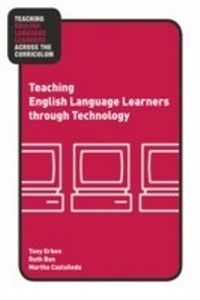
Teaching English Language Learners through Technology
1st Edition
Published on 1. September 2008
240 pages
978-1-135-90693-1 (ISBN)
Description

In Teaching English Language Learners through Technology, the authors explore the use of computers/technology as a pedagogical tool to aid in the appropriate instruction of ELLs across all content areas. The special focus of this book is on the informed use of various technologies and software programs that can specifically aid ELLs. Strategies are also provided for varying levels of access--whether teachers teach in a one computer classroom, have access to multiple computers, or have the ability to go into a computer lab at their school. A fully annotated list of web and print resources completes the volume, making this a valuable reference to help teachers harness the power of computer-assisted technologies in meeting the challenges of including all learners in effective instruction.
Reviews / Votes
"Erben, Ban, and Castanda provide comprehensible, logical discussions in a three-part format for both pre- and in-service teachers who consider technology use in their teaching."--Hung-che Chen, Education Review (November 2009)More details
Series
Language
English
Place of publication
London
United Kingdom
Publishing group
Taylor & Francis Ltd
Target group
College/higher education
Product notice
Reflowable
Illustrations
10 s/w Tabellen
10 Tables, black and white
File size
2,23 MB
ISBN-13
978-1-135-90693-1 (9781135906931)
Copyright in bibliographic data and cover images is held by Nielsen Book Services Limited or by the publishers or by their respective licensors: all rights reserved.
Schweitzer Classification
Other editions
Additional editions
Tony Erben | Ruth Ban | Martha Castaneda
Teaching English Language Learners through Technology
Book
08/2008
1st Edition
Routledge
€63.40
Shipment within 15-20 days
Tony Erben | Ruth Ban | Martha Castaneda
Teaching English Language Learners through Technology
Book
08/2008
1st Edition
Routledge
€260.70
Shipment within 15-20 days
Persons
Tony Erben is Assistant Professor of Education and Director of the ESOL Endorsement Program at the University of Tampa.
Ruth Ban is Assistant Professor of Education in TESOL at Barry University.
Martha Castaneda is Assistant Professor of Foreign Language Education at Miami University.
Ruth Ban is Assistant Professor of Education in TESOL at Barry University.
Martha Castaneda is Assistant Professor of Foreign Language Education at Miami University.
Content
@contents:PART ONE: YOUR ENGLISH LANGUAGE LEARNER
1.1 Orientation
1.2 The Process of English Language Learning and What to Expect
1.3 Deciding on the Best ESOL Program
1.4 Teaching for English Language Development
1.5 Not All ELLs are the Same
1.6 Culturally Responsive Pedagogy
1.7 Not All Parents are the Same: Home/School Communication
1.8 English language Learners with Special Needs
PART TWO: WHAT WE KNOW FROM RESEARCH
2.1 Taking the Lead from Vygotsky
2.2 Differentiated Instruction, Project-based Learning, Constructivist Pedagogy Principles
2.3 Making Accommodations for ELLs and Infusing Technology into a Lesson
2.4 Principles of Technology Use in Educational Settings
2.5 Computer-Assisted Language Learning (CALL) Research
PART THREE: TEACHING ELLs THROUGH TECHNOLOGY
3.1 Orientation
3.2 E-Creation Tools & Self-made Computer-based Resources: getting ELLs to play & be creative with language
3.3 Communicative Facilitating E-Tools: getting ELLs to produce language
3.4 Writing/Reading Facilitative E-tools: getting ELLs to improve & focus on their literacy skills
3.5 Listening Facilitative E-tools: Improving ELLs comprehension skills
3.6 E-Assessments: Portfolios, Quizzes & Rubrics
3.7 Managing Teaching through Virtual Learning Environments
PART FOUR: ANNOTATED RESOURCES
4.1 WWW Resources
4.2 Print Materials for Teachers
4.3 Resources for Students
4.4 GLOSSARY
1.1 Orientation
1.2 The Process of English Language Learning and What to Expect
1.3 Deciding on the Best ESOL Program
1.4 Teaching for English Language Development
1.5 Not All ELLs are the Same
1.6 Culturally Responsive Pedagogy
1.7 Not All Parents are the Same: Home/School Communication
1.8 English language Learners with Special Needs
PART TWO: WHAT WE KNOW FROM RESEARCH
2.1 Taking the Lead from Vygotsky
2.2 Differentiated Instruction, Project-based Learning, Constructivist Pedagogy Principles
2.3 Making Accommodations for ELLs and Infusing Technology into a Lesson
2.4 Principles of Technology Use in Educational Settings
2.5 Computer-Assisted Language Learning (CALL) Research
PART THREE: TEACHING ELLs THROUGH TECHNOLOGY
3.1 Orientation
3.2 E-Creation Tools & Self-made Computer-based Resources: getting ELLs to play & be creative with language
3.3 Communicative Facilitating E-Tools: getting ELLs to produce language
3.4 Writing/Reading Facilitative E-tools: getting ELLs to improve & focus on their literacy skills
3.5 Listening Facilitative E-tools: Improving ELLs comprehension skills
3.6 E-Assessments: Portfolios, Quizzes & Rubrics
3.7 Managing Teaching through Virtual Learning Environments
PART FOUR: ANNOTATED RESOURCES
4.1 WWW Resources
4.2 Print Materials for Teachers
4.3 Resources for Students
4.4 GLOSSARY
