

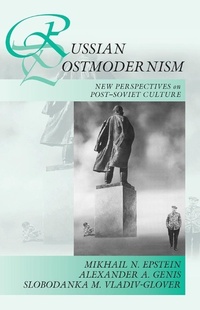
Russian Postmodernism
New Perspectives on Post-Soviet Culture
2nd Edition
Published on 1. December 2015
602 pages
978-1-78238-865-4 (ISBN)
Description

Recent decades have been decisive for Russia not only politically but culturally as well. The end of the Cold War has enabled Russia to take part in the global rise and crystallization of postmodernism. This volume investigates the manifestations of this crucial trend in Russian fiction, poetry, art, and spirituality, demonstrating how Russian postmodernism is its own unique entity. It offers a point of departure and valuable guide to an area of contemporary literary-cultural studies insufficiently represented in English-language scholarship. This second edition includes additional essays on the topic and a new introduction examining the most recent developments.
Reviews / Votes
"Authors of this volume are well-known specialists in Russian literature and culture... This collection of essays has considerable cultural and documentary value (a second edition proves this) and may inspire everyone with interesting cultural paradigms and thoughtful observations... [It] raises many crucial issues and opens up new perspectives on research in the mentioned fields." ? Slavic and East European Journal"Subtle readings and carefully argued interpretations. The articles and manifestoes, supplemented by a valuable 'Who's Who,' answer a great many of the questions associated with postmodernism in general, and the Russian variety in particular." ? Slavic Review
"The most up-to-date reference book on Russian postmodernist culture. An important contribution to the growing area of Russian cultural studies." ? New Zealand Slavonic Journal-Russian Section
"The most comprehensive examination of Russian postmodern thought available in English." ? World Literature Today
More details
Edition
2nd edition
Language
English
Place of publication
Oxford
United Kingdom
Target group
Professional and scholarly
Illustrations
Index
ISBN-13
978-1-78238-865-4 (9781782388654)
DOI
10.3167/9781782388647
Copyright in bibliographic data and cover images is held by Nielsen Book Services Limited or by the publishers or by their respective licensors: all rights reserved.
Schweitzer Classification
Other editions
Additional editions
Mikhail N. Epstein | Alexander A. Genis | Slobodanka Millicent Vladiv-Glover
Russian Postmodernism
New Perspectives on Post-Soviet Culture
Book
12/2015
2nd Edition
Berghahn Books
€53.70
Shipment within 3-4 weeks
Michael N. Epstein | Alexander A. Genis | Slobodanka M. Vladiv-Glover
Russian Postmodernism
New Perspectives on Post-Soviet Culture
Book
12/1998
1st Edition
Berghahn Books, Incorporated
€113.00
Article exhausted; check different version
Persons
Mikhail N. Epstein was one of the main proponents of postmodernism in Russia and the founder of the Laboratory of Modern Culture, Experimental Center of Creativity, Moscow. He is S. C. Dobbs Professor of Cultural Theory and Russian Literature at Emory University (USA) and Professor of Russian and Cultural Theory, Director of Centre for Humanities Innovation, at Durham University (UK).
Content
Preface to the 1st edition
Thomas Epstein
Preface to the 2nd edition: Postmodernism and the Explosive Style of the Twenty-First Century
Mikhail Epstein
Introduction: "New Sectarianism" and the Pleasure Principle in Postmodern Russian Culture
Slobodanka Vladiv-Glover
PART I: THE MAKING OF RUSSIAN POSTMODERNISM
Chapter 1. The Dialectics of Hyper: From Modernism to Postmodernism
Mikhail Epstein
Chapter 2. Postmodernism, Communism, and Sots-Art
Mikhail Epstein
Chapter 3. Representation of the Other in the Literature of the 1960s
Slobodanka Vladiv-Glover
Chapter 4. Perestroika as a Literary Paradigm Shift
Alexander Genis
PART II: MANIFESTOS OF RUSSIAN POSTMODERNISM
Literary Manifestos
Mikhail Epstein
Chapter 5. Theses on Metarealism and Conceptualism (1983)
Chapter 6. On Olga Sedakova and Lev Rubinshtein (1984)
Chapter 7. What is Metarealism? Facts and Hypotheses (1986)
Chapter 8. What is Metabole? On the Third Trope (1986)
Chapter 9. Like a Corpse in the Desert: On the New Moscow Poetry (1987)
Chapter 10. A Catalogue of New Poetries (1987)
Cultural Manifestos
Mikhail Epstein
Chapter 11. Essayism: An Essay on the Essay (1982)
Chapter 12. The Ecology of Thinking (1982)
Chapter 13. Minimal Religion (1982)
Chapter 14. The Age of Universalism (1983)
Chapter 15. The Paradox of Acceleration (1985)
PART III: SOCIALIST REALISM AND POSTMODERNISM
Chapter 16. Archaic Postmodernism: The Aesthetics of Andrei Sinyavsky
Alexander Genis
Chapter 17. Postmodernism and Socialist Realism: From Sinyavsky to Sorokin
Alexander Genis
Chapter 18. Borders and Metamorphoses: Victor Pelevin in the Context of Post-Soviet Literature
Alexander Genis
PART IV: CONCEPTUALISM
Chapter 19. The New Model of Discourse in Post-Soviet Fiction: Liudmila Petrushevskaia and Tatiana Tolstaia
Slobodanka Vladiv-Glover
Chapter 20. Heterogeneity and the Post-Avant-Garde: The Excremental Poetics of Vladimir Sorokin
Slobodanka Vladiv-Glover
Chapter 21. Emptiness as Technique: Word and Image in Ilya Kabakov
Mikhail Epstein
Chapter 22. The Philosophical Implications of Russian Conceptualism
Mikhail Epstein
PART V: POSTMODERNISM AND SPIRITUALITY
Chapter 23. Post-Atheism: From Apophatic Theology to "Minimal Religion"
Mikhail Epstein
Chapter 24. Onions and Cabbages: Paradigms of Contemporary Culture
Alexander Genis
Chapter 25. The Charms of Entropy and New Sentimentality
Mikhail Epstein
Conclusion: On the Place of Postmodernism in Postmodernity
Mikhail Epstein
Select Bibliography
Index of Names
Index of Subjects
Thomas Epstein
Preface to the 2nd edition: Postmodernism and the Explosive Style of the Twenty-First Century
Mikhail Epstein
Introduction: "New Sectarianism" and the Pleasure Principle in Postmodern Russian Culture
Slobodanka Vladiv-Glover
PART I: THE MAKING OF RUSSIAN POSTMODERNISM
Chapter 1. The Dialectics of Hyper: From Modernism to Postmodernism
Mikhail Epstein
Chapter 2. Postmodernism, Communism, and Sots-Art
Mikhail Epstein
Chapter 3. Representation of the Other in the Literature of the 1960s
Slobodanka Vladiv-Glover
Chapter 4. Perestroika as a Literary Paradigm Shift
Alexander Genis
PART II: MANIFESTOS OF RUSSIAN POSTMODERNISM
Literary Manifestos
Mikhail Epstein
Chapter 5. Theses on Metarealism and Conceptualism (1983)
Chapter 6. On Olga Sedakova and Lev Rubinshtein (1984)
Chapter 7. What is Metarealism? Facts and Hypotheses (1986)
Chapter 8. What is Metabole? On the Third Trope (1986)
Chapter 9. Like a Corpse in the Desert: On the New Moscow Poetry (1987)
Chapter 10. A Catalogue of New Poetries (1987)
Cultural Manifestos
Mikhail Epstein
Chapter 11. Essayism: An Essay on the Essay (1982)
Chapter 12. The Ecology of Thinking (1982)
Chapter 13. Minimal Religion (1982)
Chapter 14. The Age of Universalism (1983)
Chapter 15. The Paradox of Acceleration (1985)
PART III: SOCIALIST REALISM AND POSTMODERNISM
Chapter 16. Archaic Postmodernism: The Aesthetics of Andrei Sinyavsky
Alexander Genis
Chapter 17. Postmodernism and Socialist Realism: From Sinyavsky to Sorokin
Alexander Genis
Chapter 18. Borders and Metamorphoses: Victor Pelevin in the Context of Post-Soviet Literature
Alexander Genis
PART IV: CONCEPTUALISM
Chapter 19. The New Model of Discourse in Post-Soviet Fiction: Liudmila Petrushevskaia and Tatiana Tolstaia
Slobodanka Vladiv-Glover
Chapter 20. Heterogeneity and the Post-Avant-Garde: The Excremental Poetics of Vladimir Sorokin
Slobodanka Vladiv-Glover
Chapter 21. Emptiness as Technique: Word and Image in Ilya Kabakov
Mikhail Epstein
Chapter 22. The Philosophical Implications of Russian Conceptualism
Mikhail Epstein
PART V: POSTMODERNISM AND SPIRITUALITY
Chapter 23. Post-Atheism: From Apophatic Theology to "Minimal Religion"
Mikhail Epstein
Chapter 24. Onions and Cabbages: Paradigms of Contemporary Culture
Alexander Genis
Chapter 25. The Charms of Entropy and New Sentimentality
Mikhail Epstein
Conclusion: On the Place of Postmodernism in Postmodernity
Mikhail Epstein
Select Bibliography
Index of Names
Index of Subjects
