

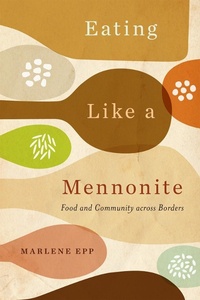
Eating Like a Mennonite
Food and Community across Borders
1st Edition
Published on 8. September 2023
305 pages
978-0-2280-1950-3 (ISBN)
Description

Mennonites are often associated with food, both by outsiders and by Mennonites themselves. Eating in abundance, eating together, preserving food, and preparing so-called traditional foods are just some of the connections mentioned in cookbooks, food advertising, memoirs, and everyday food talk. Yet since Mennonites are found around the world - from Europe to Canada to Mexico, from Paraguay to India to the Democratic Republic of the Congo - what can it mean to eat like one?
In Eating Like a Mennonite Marlene Epp finds that the answer depends on the eater: on their ancestral history, current home, gender, socio-economic position, family traditions, and personal tastes. Originating in central Europe in the sixteenth century, Mennonites migrated around the world even as their religious teachings historically emphasized their separateness from others. The idea of Mennonite food became a way of maintaining community identity, even as unfamiliar environments obliged Mennonites to borrow and learn from their neighbours. Looking at Mennonites past and present, Epp shows that foodstuffs (cuisine) and foodways (practices) depend on historical and cultural context. She explores how diets have evolved as a result of migration, settlement, and mission; how food and gender identities relate to both power and fear; how cookbooks and recipes are full of social meaning; how experiences and memories of food scarcity shape identity; and how food is an expression of religious beliefs - as a symbol, in ritual, and in acts of charity.
From zwieback to tamales and from sauerkraut to spring rolls, Eating Like a Mennonite reveals food as a complex ingredient in ethnic, religious, and personal identities, with the ability to create both bonds and boundaries between people.
In Eating Like a Mennonite Marlene Epp finds that the answer depends on the eater: on their ancestral history, current home, gender, socio-economic position, family traditions, and personal tastes. Originating in central Europe in the sixteenth century, Mennonites migrated around the world even as their religious teachings historically emphasized their separateness from others. The idea of Mennonite food became a way of maintaining community identity, even as unfamiliar environments obliged Mennonites to borrow and learn from their neighbours. Looking at Mennonites past and present, Epp shows that foodstuffs (cuisine) and foodways (practices) depend on historical and cultural context. She explores how diets have evolved as a result of migration, settlement, and mission; how food and gender identities relate to both power and fear; how cookbooks and recipes are full of social meaning; how experiences and memories of food scarcity shape identity; and how food is an expression of religious beliefs - as a symbol, in ritual, and in acts of charity.
From zwieback to tamales and from sauerkraut to spring rolls, Eating Like a Mennonite reveals food as a complex ingredient in ethnic, religious, and personal identities, with the ability to create both bonds and boundaries between people.
Reviews / Votes
"While food studies is an increasingly popular field of research, there remains a continued tendency to neglect domestic food production. Eating Like a Mennonite makes a major contribution by examining these intimate and quotidian acts of nourishment. Moreover, it is a delight to read, and made me hungry for the foods of my childhood." Janis Thiessen, University of Winnipeg "Written in lively prose, Eating Like a Mennonite provides specific angles of entry into the broader topic of Mennonite self-identity and culture in a global context. Marlene Epp takes care to explore the foodways of Mennonites in such different regions of the world as Eastern Europe, India, China, Paraguay, Pennsylvania and Waterloo, Ontario. With each example, she traces foods prepared and packed for the journey, and how they come to represent comfort amidst discomfort, and familiarity in unfamiliar circumstances." Nathalie Cooke, McGill University "Eating Like a Mennonite reveals important connections between ethnoreligious identity and immigration, colonization, gender, and memory. Epp strives to keep it accessible to a general audience by interjecting her own experiences [and] underscore the material nature of a book in which food is central." American Historical ReviewMore details
Language
English
Place of publication
Montreal, QC
Canada
Target group
Professional and scholarly
Edition type
Digital original
Illustrations
22 photos
22 photos
File size
16,38 MB
ISBN-13
978-0-2280-1950-3 (9780228019503)
Copyright in bibliographic data and cover images is held by Nielsen Book Services Limited or by the publishers or by their respective licensors: all rights reserved.
Schweitzer Classification
Other editions
Additional editions

Book
09/2023
McGill-Queen's University Press
€33.00
Shipment within 15-20 days

Book
09/2023
McGill-Queen's University Press
€143.50
Shipment within 15-20 days
Person
Marlene Epp is professor emeritus of history at Conrad Grebel University College at the University of Waterloo.
Content
- Cover
- Eating Like a Mennonite
- Title
- Copyright
- Contents
- Figures
- Acknowledgments
- Introduction: Eating Like a Mennonite
- 1 Eating Encounters: Mennonites Move across Time and Place
- 2 Mennonite Women Can Cook: Gendered Notions of Foodways
- 3 Recipes and Beyond: The Cookbook Phenomenon
- 4 Food Trauma: Memories of Hunger and Scarcity
- 5 Breaking and Baking Bread Together: Food and Religious Practice
- Conclusion
- Notes
- Bibliography
- Index
