


Political Science and the Problem of Social Order
Published on 23. March 2022
978-1-009-09049-0 (ISBN)
Description

The problem of social order is the question of what holds complex and diverse societies together. Today, this question has become increasingly urgent in the world. Yet our ability to ask and answer the question in a helpful way is constrained by the intellectual legacy through which the question has been handed down to us. In this impressive, erudite study, Henrik Enroth describes and analyzes how the problem of social order has shaped concept formation, theory, and normative arguments in political science. The book covers a broad range of influential thinkers and theories throughout the history of political science, from the early twentieth century onwards. Social order has long been a presupposition for inquiry in political science; now we face the challenge of turning it into an object of inquiry.
Reviews / Votes
'What holds society together? This book shows how political scientists across the twentieth century answered this question - and also how, at least sometimes, they avoided confronting it directly, sublimating controversial theories of social order into conceptual presuppositions. Both masterful storyteller and incisive critic, Enroth has a knack for the accessible presentation of ideas in ways that do not flatten their complexity, capturing their strengths and their vulnerabilities with enviable economy, elegance, and wit.' Patchen Markell, Cornell University 'In this lucid and erudite book, Henrik Enroth shows how modern political science has wrestled with the problem of social order from its inception, and how a range of ultimately incoherent solutions to this problem have animated political inquiry ever since. From this Enroth distills a lesson of great value to all political scientists: that social order cannot be taken for granted, but that its creation should constitute a topic of inquiry in its own right.' Jens Bartelson, Lund University 'This book offers a new angle on the discipline of political science. The author argues that, although 'the problem of social order' has been central to debates in political science from the early twentieth century onwards, the centrality of this problem has rarely been recognized as such. Consequentially, political science tends to keep, with relatively minor variations, addressing a problem that cannot be solved. Enroth's arguments are convincingly presented and well argued. A pleasure to read.' Peter Wagner, Universitat de Barcelona, School of Sociology 'Enroth's sweeping panorama is exciting in its intellectual ambition and persuasive in its analytical clarity. It is at once a revisionist history of political science and a probing investigation of contemporary modernity.' Jeffrey Alexander, Yale University '... an important, welcome addition to the still-growing literature on the history of political science and should soon find itself at the center of discussions about the discipline, its problems, and its competing or complementary histories.' James Farr, Perspectives on Politics 'A compelling perspective on the historical and intellectual changes within the political science discipline. ... Highly recommended.' M. J. Dudas, ChoiceMore details
Language
English
Place of publication
Cambridge
United Kingdom
Target group
College/higher education
Illustrations
Worked examples or Exercises
File size
2,15 MB
ISBN-13
978-1-009-09049-0 (9781009090490)
Copyright in bibliographic data and cover images is held by Nielsen Book Services Limited or by the publishers or by their respective licensors: all rights reserved.
Schweitzer Classification
Other editions
Additional editions
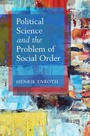
Henrik Enroth
Political Science and the Problem of Social Order
Book
03/2022
Cambridge University Press
€135.30
Shipment within 15-20 days
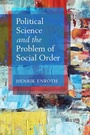
Henrik Enroth
Political Science and the Problem of Social Order
Book
03/2022
Cambridge University Press
€48.50
Shipment within 15-20 days
Content
Preface; 1. The problem of social order and the history of political science; 2. Plurality and unity; 3. Processing community; 4. Bringing community back in; 5. Conflict and consensus; 6. Support for the system; 7. Questioning consensus; 8. Power and participation; 9. The problem of social order and the future of political science; Bibliography.
