

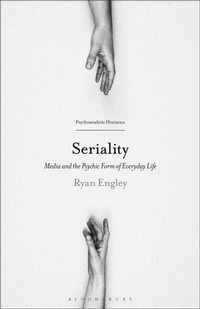
Seriality
Media and the Psychic Form of Everyday Life
Will be published approx. on 23. July 2026
240 pages
979-8-216-19781-2 (ISBN)
Description

This material and theoretical history of seriality shows it to be the dominant form of culture since its inception within 19th-century print culture, as both a media structure and a psychic one.
The serial is everywhere. Commonly identified by the segmented release structure of an ongoing narrative - from installments of Victorian novels to TV episodes to comic books - seriality names the spread of installment-based storytelling across a range of media. However, Ryan Engley argues that seriality is not only a narrative structure but also a psychic structure. Seriality - in its dependence on gaps, delay, and constraint - names the fundamental trauma of contemporary life: that there exists an intrinsic relation between self and other, a relation that is often difficult to see and difficult to bear.
Through formal readings of media texts alongside Freudian and Lacanian psychoanalysis, the dialectical method of G.W.F. Hegel, and Jean-Paul Sartre's existentialism, Seriality: Media and the Psychic Form of Everyday Life shifts the focus of seriality studies. In so doing, Engley presents a rebuttal to the common refrain that our lives, like contemporary media, have become endlessly fragmented. Rather, Engley finds, we have become radically - serially - connected.
The serial is everywhere. Commonly identified by the segmented release structure of an ongoing narrative - from installments of Victorian novels to TV episodes to comic books - seriality names the spread of installment-based storytelling across a range of media. However, Ryan Engley argues that seriality is not only a narrative structure but also a psychic structure. Seriality - in its dependence on gaps, delay, and constraint - names the fundamental trauma of contemporary life: that there exists an intrinsic relation between self and other, a relation that is often difficult to see and difficult to bear.
Through formal readings of media texts alongside Freudian and Lacanian psychoanalysis, the dialectical method of G.W.F. Hegel, and Jean-Paul Sartre's existentialism, Seriality: Media and the Psychic Form of Everyday Life shifts the focus of seriality studies. In so doing, Engley presents a rebuttal to the common refrain that our lives, like contemporary media, have become endlessly fragmented. Rather, Engley finds, we have become radically - serially - connected.
More details
Series
Language
English
Place of publication
United States
Publishing group
Bloomsbury Publishing Plc
Target group
College/higher education
Professional and scholarly
Illustrations
1 bw illus
File size
2,34 MB
ISBN-13
979-8-216-19781-2 (9798216197812)
Copyright in bibliographic data and cover images is held by Nielsen Book Services Limited or by the publishers or by their respective licensors: all rights reserved.
Schweitzer Classification
Other editions
Additional editions
Book
approx. 08/2026
Bloomsbury Academic
€25.00
Not yet published
Person
Ryan Engley is Associate Professor of Media Studies at Pomona College, USA. He is series editor of Film Theory in Practice (Bloomsbury) and co-hosts the Why Theory podcast.
Content
Acknowledgments
Introduction: Mind the Gap
1. Psyche Is Extended: Dickens, Marx, Freud, and Seriality's Theoretical Beginnings
2. Lacan, Relation, and the Serial Symbolic
3. Theorizing the Cut of Seriality: Why the Quilting Point Arrests and the Master Signifier Obscures
4. Seriality at the Formal Limit of Television
5. From Film Serials to Streaming Television, or the Gaps in the Gapless
6. Social Media Against Seriality
7. Radical Repetition
Conclusion: The Serial Is Serious
Notes
Bibliography
Index
Introduction: Mind the Gap
1. Psyche Is Extended: Dickens, Marx, Freud, and Seriality's Theoretical Beginnings
2. Lacan, Relation, and the Serial Symbolic
3. Theorizing the Cut of Seriality: Why the Quilting Point Arrests and the Master Signifier Obscures
4. Seriality at the Formal Limit of Television
5. From Film Serials to Streaming Television, or the Gaps in the Gapless
6. Social Media Against Seriality
7. Radical Repetition
Conclusion: The Serial Is Serious
Notes
Bibliography
Index
