


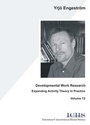
Developmental Work Research
Expanding Activity Theorie In Practice
1st Edition
Published in February 2005
492 pages
978-3-86541-694-0 (ISBN)
Description

Developmental work research is an innovative approach to the study and reshaping of work and learning. It expands cultural-historical activity theory by bringing it to the domains of work, technology and organizations.
The world of work is in turmoil, increasingly dominated by 'runaway objects' generated by globalization and greed. Developmental work research rediscovers and expands use values in runaway objects. In workplace interventions it engages practitioners in expansive re-forging of the objects of their work.
In 18 chapters, this book lays out the theoretical and methodological foundations of developmental work research. The practical potential of the approach is demonstrated in a number of case studies, ranging from courts of law and factories to schools and health care clinics.
Yrjö Engeström is Professor of Communication at University of California, San Diego and Professor of Adult Education at University of Helsinki. He is Director of the Center for Activity Theory and Developmental Work Research in Helsinki.
More details
Other editions
Additional editions
Book
02/2005
1st Edition
Lehmanns Media
€38.00
Shipment within 7-9 days
Person
Content
1 - Titel [Seite Titel]
- 3 [Seite 3]
2 - CONTENTS [Seite 5]
3 - FOREWORD [Seite 6]
4 - INTRODUCTION: IN SEARCH OF THE SAMPO [Seite 8]
5 - PART I: THEORY AND METHODOLOGY [Seite 14]
5.1 - 1. Activity theory and individual and social transformation [Seite 1. Activity theory and individual and social transformation]
- 15 [Seite 15]
5.2 - 2. Development as breaking away and opening up: [Seite 2. Development as breaking away and opening up:]
A challenge to Vygotsky and Piaget - 35 [Seite 35]
5.3 - 3. [Seite 3.]
Interobjectivity, ideality, and dialectics - 47 [Seite 47]
5.4 - 4. [Seite 4.]
Expansive learning at work: Toward an activity-theoretical reconceptualization - 57 [Seite 57]
5.5 - 5. [Seite 5.]
Object-oriented interagency: Toward understanding collective - [Seite Object-oriented interagency: Toward understanding collective]
intentionality in distributed activity fields - 86 [Seite 86]
5.6 - 6. [Seite 6.]
Values, objects and rubbish - 115 [Seite 115]
5.7 - 7. [Seite 7.]
Communication, discourse and activity - 134 [Seite 134]
5.8 - 8. [Seite 8.]
Activity theory and the social construction of knowledge: - [Seite Activity theory and the social construction of knowledge:]
A story of four umpires - 153 [Seite 153]
5.9 - 9. [Seite 9.]
From individual action to collective activity and back: - [Seite From individual action to collective activity and back:]
Developmental work research as an interventionist methodology - 164 [Seite 164]
6 - PART II: EMPIRICAL APPLICATIONS [Seite 190]
6.1 - 10. [Seite 10.]
Coordination, cooperation and communication in courts: - [Seite Coordination, cooperation and communication in courts:]
Expansive transitions in legal work - 191 [Seite 191]
6.2 - 11. [Seite 11.]
Polycontextuality and boundary crossing in expert cognition: - [Seite Polycontextuality and boundary crossing in expert cognition:]
Learning and problem solving in complex work activities - 209 [Seite 209]
6.3 - 12. [Seite 12.]
Mundane tool or object of affection? The rise and fall of the - [Seite Mundane tool or object of affection? The rise and fall of the]
Postal Buddy - 233 [Seite 233]
6.4 - 13. [Seite 13.]
Change Laboratory as a tool for transforming work - 282 [Seite 282]
6.5 - 14. [Seite 14.]
Learning actions and knowledge creation in industrial work teams - 297 [Seite 297]
6.6 - 15. [Seite 15.]
On the materiality of social capital: An activity-theoretical exploration - 357 [Seite 357]
6.7 - 16. [Seite 16.]
Can a school community learn to master its own future? An activitytheoretical - [Seite Can a school community learn to master its own future? An activitytheoretical]
study of expansive learning among middle school teachers - 371 [Seite 371]
6.8 - 17. [Seite 17.]
The discursive construction of collaborative care - 388 [Seite 388]
6.9 - 18. [Seite 18.]
New forms of learning in co-configuration work - 425 [Seite 425]
7 - References [Seite 437]
8 - Index [Seite 466]
- 3 [Seite 3]
2 - CONTENTS [Seite 5]
3 - FOREWORD [Seite 6]
4 - INTRODUCTION: IN SEARCH OF THE SAMPO [Seite 8]
5 - PART I: THEORY AND METHODOLOGY [Seite 14]
5.1 - 1. Activity theory and individual and social transformation [Seite 1. Activity theory and individual and social transformation]
- 15 [Seite 15]
5.2 - 2. Development as breaking away and opening up: [Seite 2. Development as breaking away and opening up:]
A challenge to Vygotsky and Piaget - 35 [Seite 35]
5.3 - 3. [Seite 3.]
Interobjectivity, ideality, and dialectics - 47 [Seite 47]
5.4 - 4. [Seite 4.]
Expansive learning at work: Toward an activity-theoretical reconceptualization - 57 [Seite 57]
5.5 - 5. [Seite 5.]
Object-oriented interagency: Toward understanding collective - [Seite Object-oriented interagency: Toward understanding collective]
intentionality in distributed activity fields - 86 [Seite 86]
5.6 - 6. [Seite 6.]
Values, objects and rubbish - 115 [Seite 115]
5.7 - 7. [Seite 7.]
Communication, discourse and activity - 134 [Seite 134]
5.8 - 8. [Seite 8.]
Activity theory and the social construction of knowledge: - [Seite Activity theory and the social construction of knowledge:]
A story of four umpires - 153 [Seite 153]
5.9 - 9. [Seite 9.]
From individual action to collective activity and back: - [Seite From individual action to collective activity and back:]
Developmental work research as an interventionist methodology - 164 [Seite 164]
6 - PART II: EMPIRICAL APPLICATIONS [Seite 190]
6.1 - 10. [Seite 10.]
Coordination, cooperation and communication in courts: - [Seite Coordination, cooperation and communication in courts:]
Expansive transitions in legal work - 191 [Seite 191]
6.2 - 11. [Seite 11.]
Polycontextuality and boundary crossing in expert cognition: - [Seite Polycontextuality and boundary crossing in expert cognition:]
Learning and problem solving in complex work activities - 209 [Seite 209]
6.3 - 12. [Seite 12.]
Mundane tool or object of affection? The rise and fall of the - [Seite Mundane tool or object of affection? The rise and fall of the]
Postal Buddy - 233 [Seite 233]
6.4 - 13. [Seite 13.]
Change Laboratory as a tool for transforming work - 282 [Seite 282]
6.5 - 14. [Seite 14.]
Learning actions and knowledge creation in industrial work teams - 297 [Seite 297]
6.6 - 15. [Seite 15.]
On the materiality of social capital: An activity-theoretical exploration - 357 [Seite 357]
6.7 - 16. [Seite 16.]
Can a school community learn to master its own future? An activitytheoretical - [Seite Can a school community learn to master its own future? An activitytheoretical]
study of expansive learning among middle school teachers - 371 [Seite 371]
6.8 - 17. [Seite 17.]
The discursive construction of collaborative care - 388 [Seite 388]
6.9 - 18. [Seite 18.]
New forms of learning in co-configuration work - 425 [Seite 425]
7 - References [Seite 437]
8 - Index [Seite 466]
