

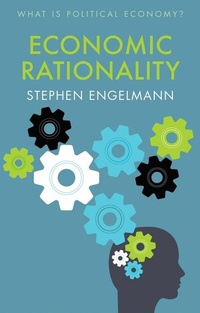
Economic Rationality
Description

Economics used to be called political economy, and the loss of the “political” tracks the ascendance of the idea of rational choice within the discipline. Where does this idea of economic rationality – choosing to maximize benefits and minimize costs – come from? What are the consequences of its rise?
In this new book, Stephen Engelmann assesses these questions through a consideration of the often-hidden links between choice and government, ranging from the Benthamic utilitarianism that inspired modern economics to the contemporary economic psychologists trying to nudge everyone to choose more rationally. Multiple global crises are exposing how deficient economic rationality is as a political theory, since a focus on choice turns actors away from relations in the common. Political economy once targeted aristocratic rule – heralding a politics and ethics of egalitarian self-command and spurring democratic reform – but economics allows domination and forecloses alternatives to it.
This accessible volume will be of interest to students and scholars of politics and economics, and to general readers concerned about the various ways that psychology and management have infiltrated our politics.
Stephen Engelmann is Associate Professor in the Department of Political Science at the University of Illinois at Chicago.
More details
Other editions
Additional editions
Person
Content
2 Textbook Rationality and the Behavioral Critique
3 Political Economy
4 Economics as Politics
5 Conclusion
