

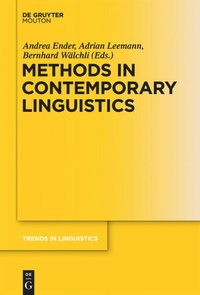
Methods in Contemporary Linguistics
1st Edition
Published on 31. August 2012
XIII, 536 pages
978-3-11-027568-1 (ISBN)
Description

The present volume is a broad overview of methods and methodologies in linguistics, illustrated with examples from concrete research. It collects insights gained from a broad range of linguistic sub-disciplines, ranging from core disciplines to topics in cross-linguistic and language-internal diversity or to contributions towards language, space and society. Given its critical and innovative nature, the volume is a valuable source for students and researchers of a broad range of linguistic interests.
Reviews / Votes
"Overall, then, this book is a welcome addition to existing works considering the importance of an open discussion of methodology in linguistics."Annis Shepherd in: Linguist List 24.487More details
Other editions
Additional editions
Andrea Ender | Adrian Leemann | Bernhard Wälchli
Methods in Contemporary Linguistics
Book
08/2012
1st Edition
De Gruyter Mouton
€189.95
Shipment within 7-9 days
Persons
Andrea Ender, Albert-Ludwigs-Universität Freiburg, Germany; Adrian Leemann, University of Zurich, Zurich, Switzerland; Bernhard Wälchli, University of Stockholm, Sweden.
Content
1 - Contents [Seite 7]
2 - List of contributors [Seite 11]
3 - Introduction [Seite 15]
4 - Part I: Core domains: From phonetics to pragmatics [Seite 33]
4.1 - Methodological reflections on the phonetic-phonological continuum, illustrated on the prosody of Swiss German dialects [Seite 35]
4.2 - Phonological typology, rhythm types and the phonetics-phonology interface. A methodological overview and three case studies on Italo-Romance dialects [Seite 59]
4.3 - Indirect measurement in morphological typology [Seite 83]
4.4 - Is a syntactic dialectology possible? Contributions from Swiss German [Seite 107]
4.5 - Methods for modalities [Seite 135]
4.6 - The making of a festschrift, is it a ritual? [Seite 157]
5 - Part II: Cross-linguistic and language internal diversity [Seite 183]
5.1 - Language description and linguistic typology [Seite 185]
5.2 - Multiple languages and multiple methods: Qualitative and quantitative ways of tapping into the multilingual repertoire [Seite 209]
5.3 - Koineization and cake baking: Reflections on methods in dialect contact research [Seite 233]
5.4 - Variation in a second language as a methodological challenge: Knowledge and use of relative clauses [Seite 253]
5.5 - Polish tea is Czech coffee: advantages and pitfalls in using a parallel corpus in linguistic research [Seite 277]
6 - Part III: Dynamic language [Seite 297]
6.1 - Historical text analysis: Underlying parameters and methodological procedures [Seite 299]
6.2 - Using methods of historical linguistics in Indo-European and Tibetan [Seite 323]
6.3 - Etyma, shouldered adzes and molecular variants [Seite 349]
6.4 - Experimental methods in psycholinguistics [Seite 377]
7 - Part IV: Writing [Seite 401]
7.1 - Coming to grips with dynamics and complexity. Methodological challenges to real-life writing research [Seite 403]
7.2 - Evolving methods for written representations of signed languages of the Deaf [Seite 425]
8 - Part V: Language, Space and Society [Seite 453]
8.1 - Crossing perspectives on onomastic methodology: Reflections on fieldwork in place name research. An essay in interactional onomastics [Seite 455]
8.2 - Does the territoriality principle work in practice? The principle's applicability to the Romansh area in the Swiss Canton of Grisons [Seite 477]
8.3 - Procedures of methodological triangulation in sociolinguistic research on multilingualism [Seite 501]
9 - Subject index [Seite 529]
10 - Author index [Seite 541]
2 - List of contributors [Seite 11]
3 - Introduction [Seite 15]
4 - Part I: Core domains: From phonetics to pragmatics [Seite 33]
4.1 - Methodological reflections on the phonetic-phonological continuum, illustrated on the prosody of Swiss German dialects [Seite 35]
4.2 - Phonological typology, rhythm types and the phonetics-phonology interface. A methodological overview and three case studies on Italo-Romance dialects [Seite 59]
4.3 - Indirect measurement in morphological typology [Seite 83]
4.4 - Is a syntactic dialectology possible? Contributions from Swiss German [Seite 107]
4.5 - Methods for modalities [Seite 135]
4.6 - The making of a festschrift, is it a ritual? [Seite 157]
5 - Part II: Cross-linguistic and language internal diversity [Seite 183]
5.1 - Language description and linguistic typology [Seite 185]
5.2 - Multiple languages and multiple methods: Qualitative and quantitative ways of tapping into the multilingual repertoire [Seite 209]
5.3 - Koineization and cake baking: Reflections on methods in dialect contact research [Seite 233]
5.4 - Variation in a second language as a methodological challenge: Knowledge and use of relative clauses [Seite 253]
5.5 - Polish tea is Czech coffee: advantages and pitfalls in using a parallel corpus in linguistic research [Seite 277]
6 - Part III: Dynamic language [Seite 297]
6.1 - Historical text analysis: Underlying parameters and methodological procedures [Seite 299]
6.2 - Using methods of historical linguistics in Indo-European and Tibetan [Seite 323]
6.3 - Etyma, shouldered adzes and molecular variants [Seite 349]
6.4 - Experimental methods in psycholinguistics [Seite 377]
7 - Part IV: Writing [Seite 401]
7.1 - Coming to grips with dynamics and complexity. Methodological challenges to real-life writing research [Seite 403]
7.2 - Evolving methods for written representations of signed languages of the Deaf [Seite 425]
8 - Part V: Language, Space and Society [Seite 453]
8.1 - Crossing perspectives on onomastic methodology: Reflections on fieldwork in place name research. An essay in interactional onomastics [Seite 455]
8.2 - Does the territoriality principle work in practice? The principle's applicability to the Romansh area in the Swiss Canton of Grisons [Seite 477]
8.3 - Procedures of methodological triangulation in sociolinguistic research on multilingualism [Seite 501]
9 - Subject index [Seite 529]
10 - Author index [Seite 541]
