

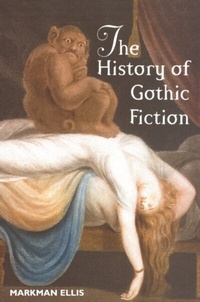
History of Gothic Fiction
1st Edition
Published on 24. June 2021
224 pages
978-1-4744-9710-7 (ISBN)
Description

The History of Gothic Fiction debates the rise of the genre from its origins in the late eighteenth-century novel through nineteenth-century fictions of tyrants, monsters, conspirators and vampires to the twentieth-century zombie film.Approaching key novels by authors such as Walpole (The Castle of Otranto), Radcliffe (The Romance of the Forest and The Mysteries of Udolpho), Austen (Northanger Abbey), Wollstonecraft (The Wrongs of Woman), Lewis (The Monk), Shelley (Frankenstein), Stoker (Dracula) and Halperin (White Zombie), the argument proceeds on historicist principles, analysing the peculiar tone of these fictions and uncovering themes of credulity and reason, secrecy and enlightenment, tyranny and libertinism, sexuality and gender, race and miscegenation. The final chapters on the vampire and the zombie examine how the un-dead of gothic terror are embedded in an argument from history.Written with an undergraduate audience in mind, this text offers a synthesis of the main topics of Gothic interest and clearly argued summaries of critical debate. It signals its difference from popular psychoanalytic readings of Gothic and argues instead for a more complex, multilayered approach via an historicist reading of Gothic fiction. Illustrated with ten black and white plates and including up-to-date bibliographies, this will be an ideal text for all those with an interest in the Gothic.Key Features:* written with an undergraduate audience in mind* covers topics such as vampires, zombies, tyrants, banditti and demon-lovers* offers clearly argued summaries of critical debate
More details
Other editions
Additional editions
Markman Ellis
The History of Gothic Fiction
Book
08/2000
Edinburgh University Press
€45.50
Shipment within 15-20 days
Content
- Cover
- Title Page
- Copyright Page
- Contents
- Acknowledgements
- List of illustrations
- Prologue: The history of gothic fiction
- On the pleasure derived from objects of terror
- Gothic and history
- 1. History and the gothic novel
- I. What's gothic about the gothic novel?
- Questions of form: the novel and the romance
- Questions of history: Goths and the age of enlightenment
- Reading history and the gothic constitution
- II. Reading gothic histories: Walpole's The Castle of Otranto
- Patriotism, Wilkes and the gothic
- 2. Female gothic and the secret terrors of sensibility
- I. Radcliffe and the politics of female sensibility
- Radcliffe and gothic masculinity: banditti and tyrants
- II. Radcliffe and the politics of masculine sensibility
- The 'supernatural explained' and the politics of gothic form
- III. Gothic radicals: Wollstonecraft's The Wrongs of Woman
- 3. Revolution and libertinism in the gothic novel
- I. Compositional politics of The Monk
- Libertine writing and the revolutionary enlightenment
- II. Lewis and the French Revolutionary Wars
- Lewis and the Terror
- III. Publication and the politics of censorship
- The Monk: criticism and censorship
- 4. Science, conspiracy and the gothic enlightenment
- I. Charles Brockden Brown: conspiracy, enlightenment and the supernatural explained
- A 'single family' and 'the condition of a nation'
- Superstition and madness, reason and wonder
- Gothic revolutionaries and the secret enlightenment
- Conspiracy and enlightenment in Carwin's 'memoirs'
- II. Fictions of science in Mary Shelley's Frankenstein
- Alchemy and modern science
- Secrecy and subversion
- 5. Vampires, credulity and reason
- I. The 1730s vampire controversy
- Walpole, the new commercial society and the excise vampire
- Antiquarian vampires and the birth of folklore
- II. Romance vampires and the romantic poets
- Byron's The Giaour (1813): the vampire as modern tyrant
- John William Polidori, The Vampyre and Byron
- Vampires and the science of folklore
- III. History, the vampire and Dracula
- Modernity and atavism in the vampire
- 6. Zombies and the occultation of slavery
- Answering the question 'What is a zombie?'
- I. Slavery and the zombie
- Rebel slaves and the devil-king Zombi
- Lafcadio Hearn's zombie stories: history as spectre
- II. Twentieth-century gothic and the zombies of modernity
- Modern slavery in Seabrook's The Magic Island
- Gothic hybrids and the white zombies
- III. The occultation of miscegenation and slavery in the zombie film
- Select bibliography of gothic resources
- Index
