

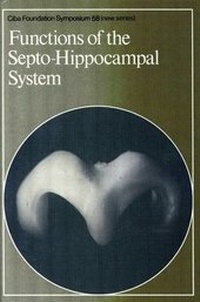
Functions of the Septo-Hippocampal System
Published on 16. September 2009
352 pages
978-0-470-71808-7 (ISBN)
Description

The Novartis Foundation Series is a popular collection of the proceedings from Novartis Foundation Symposia, in which groups of leading scientists from a range of topics across biology, chemistry and medicine assembled to present papers and discuss results. The Novartis Foundation, originally known as the Ciba Foundation, is well known to scientists and clinicians around the world.
More details
Other editions
Additional editions
Software
07/2008
Wiley
€82.61
No shipping information available

Book
12/1978
Wiley
Unfortunately, price unknown
Withdrawn from sale
Persons
Katherine Elliott is the editor of Functions of the Septo-Hippocampal System, published by Wiley.
Julie Whelan is the editor of Functions of the Septo-Hippocampal System, published by Wiley.
Content
1 - Functions of the Septo-Hippocampal System [Seite 1]
1.1 - Contents [Seite 7]
1.1.1 - Chairman's introduction [Seite 11]
1.1.2 - Objectives of the meeting [Seite 13]
1.1.3 - Anatomical and functional aspects of the septo-hippocampal projections [Seite 15]
1.1.3.1 - Discussion [Seite 30]
1.1.4 - The anatomical organization of septo-hippocampal projections [Seite 35]
1.1.4.1 - Discussion [Seite 54]
1.1.5 - Localization of putative transmitters in the hippocampal formation (with a note on the connections to septum and hypothalamus) [Seite 59]
1.1.5.1 - Discussion [Seite 90]
1.1.6 - Long-lasting facilitation of synaptic transmission [Seite 97]
1.1.6.1 - Discussion [Seite 112]
1.1.7 - Cholinergic mechanisms and short-term potentiation [Seite 119]
1.1.7.1 - Discussion [Seite 132]
1.1.8 - General Discussion I: [Seite 137]
1.1.8.1 - Monoaminergic inputs to the hippocampus [Seite 137]
1.1.8.2 - Nicotinic transmission in the hippocampus [Seite 140]
1.1.8.3 - Specific pathways between septum and hippocampus [Seite 148]
1.1.9 - Neuronal aspects of septohippocampal relations [Seite 155]
1.1.9.1 - Discussion [Seite 181]
1.1.10 - Single unit and lesion experiments on the sensory inputs to the hippocampal cognitive map [Seite 189]
1.1.10.1 - Discussion [Seite 202]
1.1.11 - Hippocampal electrical activity during waking behaviour and sleep: analyses using centrally acting drugs [Seite 209]
1.1.11.1 - Discussion [Seite 231]
1.1.12 - An experimental dissection of the septal syndrome [Seite 237]
1.1.12.1 - Discussion [Seite 270]
1.1.13 - The role of the septo-hippocampal system and its noradrenergic afferents in behavioural responses to non-reward [Seite 285]
1.1.13.1 - Discussion [Seite 310]
1.1.14 - General Discussion II: [Seite 319]
1.1.14.1 - Hippocampal units and theta activity [Seite 319]
1.1.14.2 - Mechanism of theta activity [Seite 329]
1.1.14.3 - Functional significance of theta activity [Seite 331]
1.1.15 - The function of septo-hippocampal connections in spatially organized behaviour [Seite 337]
1.1.15.1 - Discussion [Seite 353]
1.1.16 - Multivariate analysis of the septal syndrome [Seite 361]
1.1.16.1 - Discussion [Seite 379]
1.1.17 - A comparison of hippocampal pathology in man and other animals [Seite 383]
1.1.17.1 - Discussion [Seite 398]
1.1.18 - Final General Discussion: [Seite 417]
1.1.18.1 - Frequency potentiation and memory [Seite 417]
1.1.18.2 - Further comments on the hippocampal cognitive map theory [Seite 422]
1.1.18.3 - Functions of the septo-hippocampal system in man and other animals [Seite 427]
1.1.19 - Index of contributors [Seite 439]
1.1.20 - Subject index [Seite 440]
1.1 - Contents [Seite 7]
1.1.1 - Chairman's introduction [Seite 11]
1.1.2 - Objectives of the meeting [Seite 13]
1.1.3 - Anatomical and functional aspects of the septo-hippocampal projections [Seite 15]
1.1.3.1 - Discussion [Seite 30]
1.1.4 - The anatomical organization of septo-hippocampal projections [Seite 35]
1.1.4.1 - Discussion [Seite 54]
1.1.5 - Localization of putative transmitters in the hippocampal formation (with a note on the connections to septum and hypothalamus) [Seite 59]
1.1.5.1 - Discussion [Seite 90]
1.1.6 - Long-lasting facilitation of synaptic transmission [Seite 97]
1.1.6.1 - Discussion [Seite 112]
1.1.7 - Cholinergic mechanisms and short-term potentiation [Seite 119]
1.1.7.1 - Discussion [Seite 132]
1.1.8 - General Discussion I: [Seite 137]
1.1.8.1 - Monoaminergic inputs to the hippocampus [Seite 137]
1.1.8.2 - Nicotinic transmission in the hippocampus [Seite 140]
1.1.8.3 - Specific pathways between septum and hippocampus [Seite 148]
1.1.9 - Neuronal aspects of septohippocampal relations [Seite 155]
1.1.9.1 - Discussion [Seite 181]
1.1.10 - Single unit and lesion experiments on the sensory inputs to the hippocampal cognitive map [Seite 189]
1.1.10.1 - Discussion [Seite 202]
1.1.11 - Hippocampal electrical activity during waking behaviour and sleep: analyses using centrally acting drugs [Seite 209]
1.1.11.1 - Discussion [Seite 231]
1.1.12 - An experimental dissection of the septal syndrome [Seite 237]
1.1.12.1 - Discussion [Seite 270]
1.1.13 - The role of the septo-hippocampal system and its noradrenergic afferents in behavioural responses to non-reward [Seite 285]
1.1.13.1 - Discussion [Seite 310]
1.1.14 - General Discussion II: [Seite 319]
1.1.14.1 - Hippocampal units and theta activity [Seite 319]
1.1.14.2 - Mechanism of theta activity [Seite 329]
1.1.14.3 - Functional significance of theta activity [Seite 331]
1.1.15 - The function of septo-hippocampal connections in spatially organized behaviour [Seite 337]
1.1.15.1 - Discussion [Seite 353]
1.1.16 - Multivariate analysis of the septal syndrome [Seite 361]
1.1.16.1 - Discussion [Seite 379]
1.1.17 - A comparison of hippocampal pathology in man and other animals [Seite 383]
1.1.17.1 - Discussion [Seite 398]
1.1.18 - Final General Discussion: [Seite 417]
1.1.18.1 - Frequency potentiation and memory [Seite 417]
1.1.18.2 - Further comments on the hippocampal cognitive map theory [Seite 422]
1.1.18.3 - Functions of the septo-hippocampal system in man and other animals [Seite 427]
1.1.19 - Index of contributors [Seite 439]
1.1.20 - Subject index [Seite 440]
