

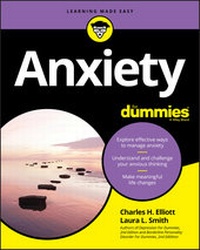
Anxiety For Dummies
Description

Feel like your life is spinning out of control? Not sure how to handle what seems like constant change and chaos? You're not alone--the world has taken some pretty crazy turns recently--but if you suffer from an anxiety disorder, you're likely suffering far more than you need to. Anxiety is our natural reaction to unfamiliar, stressful, and dangerous situations, but for some of us this reaction can become all-consuming and ultimately debilitating. Anxiety For Dummies has the antidote to this, showing you how to manage feelings of uneasiness, distress, and dread--and take back control of your life.
In a straightforward and friendly style, clinical psychologists Charles H. Elliot and Laura L. Smith show you how to pinpoint your triggers, use proven techniques and therapies, improve health and eating habits, and make other practical changes to your lifestyle that will have you feeling better fast.
* Understand what makes you anxious and learn to let go
* Change your thinking to "right-size" your worry
* Evaluate self-help as an adjunct to professional therapy
* Explore healthy lifestyles and medication options
Including updates to the clinical literature and discussions of the impacts of world events--such as COVID-19--this book has everything you need to manage your worries and put you, not them, in charge of your life.
More details
Other editions
Additional editions
Persons
Content
- Intro
- Title Page
- Copyright
- Table of Contents
- Introduction
- About This Book
- Foolish Assumptions
- Icons Used in This Book
- Beyond the Book
- Where to Go from Here
- Part 1: Detecting and Exposing Anxiety
- Chapter 1: Analyzing and Attacking Anxiety
- Anxiety: Everybody's Doing It
- Tabulating the Costs of Anxiety
- Recognizing the Symptoms of Anxiety
- Seeking Help for Your Anxiety
- Chapter 2: Examining What Anxiety Is All About
- Anxiety: Help or Hindrance?
- What Anxiety Looks Like
- How Anxiety Differs from Other Emotional Disorders
- Chapter 3: Investigating the Brain and Biology
- Examining the Anxious Brain
- Preparing to Fight or Flee
- Mimicking Anxiety: Drugs, Diet, and Diseases
- Chapter 4: Clearing the Roadblocks to Change
- Digging Out the Roots of Anxiety
- Finding Self-Acceptance
- Having Second Thoughts about Change
- Deciding to Get the Show on the Road
- Watching Worries Come and Go
- Getting Help from Others
- Part 2: Battling Anxiety
- Chapter 5: Understanding Feelings
- What Do You Feel and Why?
- Distinguishing Thoughts from Feelings
- Looking at the Feeling Cycle in Action
- Chapter 6: Rethinking Your Thoughts
- Tackling Your Thoughts
- Cultivating Calm Thinking
- Watching Out for Worry Words
- Refuting and Replacing Your Worry Words
- Chapter 7: Busting Up Your Anxious Assumptions
- Understanding Anxious Assumptions
- Sizing Up Anxious Assumptions
- Coming Down with a Case of Anxious Assumptions
- Challenging Those Nasty Assumptions: Running a Cost/Benefit Analysis
- Designing Calm, Balanced Assumptions
- Above All: Be Kind to Yourself!
- Chapter 8: Mindful Acceptance
- Accepting Anxiety? Hey, That's a Switch!
- Connecting with the Here and Now
- Accepting Mindfulness into Your Life
- Savoring Spirituality
- Chapter 9: Facing Fear
- All About Avoidance
- Exposure: Coming to Grips with Your Fears
- Conquering Different Types of Fears
- Expecting the Impossible
- Chapter 10: Medications and Other Biological Options
- Making Up Your Mind About Medications
- Understanding Medication Options
- Searching for Vitamins and Supplements
- Stimulating the Brain
- Part 3: Letting Go of the Battle
- Chapter 11: Looking at Lifestyle
- Friends and Family - Can't Live with 'em, Can't Live without 'em
- Ready . Exorcise!
- The ABCs of Getting Your Zs
- Designing Calm Diets
- Chapter 12: Meditating as Part of a Healthy Lifestyle
- Meditation Basics
- What's So Good About Meditating?
- Meditation Methods
- Discovering Other Meditation Resources
- Buyer Beware: Meditation Myths
- Part 4: Zeroing in on Specific Worries
- Chapter 13: Emotional Preparedness During a Pandemic
- Pushing Through Pandemic-Related Anxiety and Stress
- Figuring out Fact versus Fiction
- Chapter 14: Facing a Career Crisis and Financial Woes
- Meeting Job Worries Head-On
- Taking Stock of Your Resources
- Committing to a New Game Plan
- Chapter 15: Keeping Steady When the World Is Shaking
- Assessing Your Risks
- Preparing a Plan for Realistic Worries
- Imagining and Dealing with the Worst
- Doing Your Part to Improve the World
- Chapter 16: Racism and Anxiety
- Racism: The Elephant in the Room and the Snake in the Grass
- How Racism Leads to Anxiety
- Coping with Racism
- Fighting Racism
- Chapter 17: Keeping Out of Danger
- Evaluating Your Actual, Personal Risks
- Avoiding Unnecessary Risks
- Dealing with Trauma-Related Anxiety
- Accepting a Certain Degree of Uncertainty
- Part 5: Helping Others with Anxiety
- Chapter 18: When a Family Member or Friend Suffers from Anxiety
- When Your Loved One Suffers from Anxiety
- Talking Together about Anxiety
- Guiding the Way
- Teaming Up against Anxiety
- Accepting Anxiety with Love
- Chapter 19: Recognizing Anxiety in Kids
- Separating Normal from Abnormal
- Reviewing the Most Common Anxieties in Children
- Chapter 20: Helping Kids Conquer Anxiety
- Nipping Anxiety in the Bud
- Helping Already Anxious Children
- Getting Help from Others
- Part 6: The Part of Tens
- Chapter 21: Ten Approaches That Just Don't Work
- Avoiding What Makes You Anxious
- Whining and Complaining
- Seeking Comfort
- Looking for a Quick Fix
- Sipping Herbal Tea
- Drowning Your Sorrows
- Trying Too Hard
- Hoping for Miracles
- Taking Medication as a Solution
- Getting Help on the Couch
- Chapter 22: Ten Ways to Deal with Relapse
- Expecting Anxiety
- Counting the Swallows
- Checking Out Why Anxiety Returned
- Seeing a Doctor
- Revisiting What Worked Before
- Doing Something Different
- Getting Support
- Considering Booster Sessions
- Doubling Down on Exposure
- Accepting Anxiety
- Chapter 23: Ten Signs That You Need Professional Help
- Having Suicidal Thoughts or Plans
- Feeling Hopeless
- Handling Anxiety and Depression
- Trying to No Avail
- Struggling at Home
- Dealing with Major Problems at Work
- Suffering from Severe Obsessions or Compulsions
- Understanding Post-Traumatic Stress Disorder
- Going through Sleepless Nights
- Getting High
- Finding Help
- Appendix: Resources for You
- Books about Anxiety
- Books about Racism
- Resources to Help Anxious Children
- Websites to Discover More about Anxiety
- Index
- About the Authors
- Advertisement Page
- Connect with Dummies
- End User License Agreement
Chapter 1
Analyzing and Attacking Anxiety
IN THIS CHAPTER
Growing by leaps and bounds: Anxiety's proliferation
Paying the tab for anxiety
Understanding anxiety symptoms
Getting the help you need
Stroll down the street and about one in four of the people you walk by has significant problems with anxiety. And almost half of the people you encounter will struggle with anxiety to one degree or another. The rate of anxiety across the world has climbed for many decades, and no end is in sight.
The whole world watches on edge as disasters, terrorism, financial collapse, pandemics, social unrest, crime, and war threaten the security of home and family. Anxiety creates havoc in the home, destroys relationships, erodes health, causes employees to lose time from work, and prevents people from living full, productive lives.
In this chapter, you find out how to recognize the signs and symptoms of anxiety. We clarify the costs of anxiety - both personal and societal. We provide a brief overview of the treatments presented in greater detail in later chapters. You also get a glimpse of how to help if someone you care about or your child has anxiety. If you worry too much, or care for someone who has serious problems with anxiety, this book is here to help!
Anxiety: Everybody's Doing It
Anxiety involves feelings of uneasiness, worry, apprehension, and/or fear, and it's the most common of all the emotional disorders. In other words, you definitely aren't alone if you have unwanted anxiety. And the numbers have grown over the years. At no time in history has anxiety tormented more people than it does today. Why?
Life has always been menacing. But today people around the world are glued to screens watching the latest horrors in real time. News feeds, blogs, tweets, newsprint, and social media chronicle crime, war, disease, discrimination, and corruption. The media's portrayal of these modern plagues includes full-color images with unprecedented, graphic clarity.
In addition, recurring financial crises rock the fragile stability of the poor as well as the middle class. The lack of basic necessities like food, shelter, education, healthcare, clean water, and sanitation endanger many lives throughout the world. No wonder anxiety is its own worldwide pandemic.
Unfortunately, as stressful and anxiety-arousing as the world is today, only a minority of those suffering from anxiety seek professional treatment. That's a problem, because anxiety causes not only emotional pain and distress but also physical strain and even death, given that anxiety extracts a serious toll on the body and sometimes even contributes to suicide. Furthermore, anxiety costs society as a whole, to the tune of billions of dollars.
When people talk about what anxiety feels like, you may hear any or all of the following descriptions:
- When my panic attacks begin, I feel tightness in my chest. It's as though I'm drowning or suffocating, and I begin to sweat; the fear is overwhelming. I feel like I'm going to die, and I have to sit down because I may faint.
- I've always been painfully shy. I want friends, but I'm too embarrassed to call anyone. I guess I feel like anyone I call will think I'm not worth talking to. I feel really lonely, but I can't even think about reaching out. It's just too risky.
- I wake with worry every day, even on the weekends. Ever since I lost my job, I worry all the time. Sometimes, when it's really bad, I feel like I'm going crazy, and I can't even sleep.
- I'm so afraid of everything that I can barely leave the house. I've stopped even looking for jobs. My family has to bring me groceries.
As you can see, anxiety results in all sorts of thoughts, behaviors, and feelings. When your anxiety begins to interfere with day-to-day life, you need to find ways to put your fears and worries at ease.
Tabulating the Costs of Anxiety
Anxiety costs. It costs the sufferer in emotional, physical, and financial terms. But it doesn't stop there. Anxiety also incurs a financial burden for everyone. Stress, worry, and anxiety disrupt relationships, work, and family.
THE HEARTBREAK OF ANXIETY
Cardiovascular disease stands as the number one cause of death throughout the world. And research has demonstrated that chronic anxiety is a major contributor to poor cardiac health. So, early diagnosis and treatment for anxiety may help prevent some heart disease.
When patients are diagnosed with heart disease, anxiety often increases, even among people without a history of anxiety. Numerous studies have shown that untreated anxiety among cardiac patients is linked to poorer outcomes. These poor outcomes include recurrent cardiac events and even higher rates of death.
Therefore, it's been recommended that all cardiac patients should be assessed for the presence of problems with anxiety. Since anxiety can be successfully treated, it makes sense to include evaluation and treatment for anxiety when it occurs in cardiac patients. Such interventions are likely to alleviate anxiety as well as contribute to improved cardiovascular health, but further research is needed to firmly establish this relationship.
What does anxiety cost you?
Obviously, if you have a problem with anxiety, you experience the cost of distressed, anxious feelings. Anxiety feels lousy. You don't need to read a book to know that. But did you know that untreated anxiety runs up a tab in other ways as well? These costs include
- A physical toll: Higher blood pressure, tension headaches, and gastrointestinal symptoms can affect your body. In fact, recent research found that certain types of chronic anxiety disorders change the makeup of your brain's structures.
- A toll on your kids: Parents with anxiety more often have anxious children. This is due in part to genetics, but it's also because kids learn from observation. Anxious kids may be so stressed that they can't pay attention in school.
- Fat: Anxiety and stress increase the stress hormone known as cortisol. Cortisol causes fat storage in the abdominal area, thus increasing the risk of heart disease and stroke. Stress also leads to increased eating.
- More trips to the doctor: That's because those with anxiety frequently experience worrisome physical symptoms. In addition, anxious people often worry a great deal about their health.
- Relationship problems: People with anxiety frequently feel irritable. Sometimes, they withdraw emotionally or do the opposite and dependently cling to their partners.
- Downtime: Those with anxiety disorders miss work more often than other people, usually as an effort to temporarily quell their distress.
The cost to society
Anxiety costs hundreds of billions of dollars worldwide each year. Most of the cost is due to loss of productivity. Decreased productivity is sometimes due to health problems made worse by anxiety. But the financial loss from downtime and healthcare costs doesn't include the dollars lost to substance abuse, which many of those with anxiety disorders turn to in order to deal with their anxiety. Thus, directly and indirectly, anxiety extracts a colossal toll on both the person who experiences it and society at large.
Recognizing the Symptoms of Anxiety
You may not know if you suffer from problematic anxiety. That's because anxiety involves a wide range of symptoms. Each person experiences a slightly different constellation of these symptoms. For now, you should know that some signs of anxiety appear in the form of thoughts or beliefs. Other indications of anxiety manifest themselves in bodily sensations. Still other symptoms show up in various kinds of anxious behaviors. Some people experience anxiety signs in all three ways, while others only perceive their anxiety in one or two areas.
Thinking anxiously
Folks with anxiety generally think in ways that differ from the ways that other people think. You're probably thinking anxiously if you experience:
- Approval addiction: If you're an approval addict, you worry a great deal about what other people think about you.
- Living in the future and predicting the worst: When you do this, you think about everything that lies ahead and assume the worst possible outcome.
- Dependency: Some people believe they must have help from others and are unable to achieve on their own.
- Perfectionism: If you're a perfectionist, you assume that any mistake means total failure.
- Poor concentration: Anxious people routinely report that they struggle with focusing their thoughts. Short-term memory sometimes suffers as well.
- Racing thoughts: Thoughts zip through your mind in a stream of almost uncontrollable worry and concern.
We discuss anxious thinking in great detail in Chapters 5, 6, and 7.
Behaving anxiously
We have three words to describe anxious behavior - avoidance, avoidance, and avoidance. Anxious people inevitably attempt to stay away from the things that make them anxious. Whether it's snakes, heights, crowds, freeways, parties, paying bills, reminders of bad times, or public speaking, anxious...
