

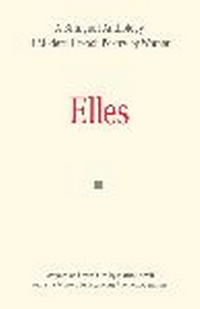
Elles
A Bilingual Anthology of Modern French Poetry by Women
University of Exeter Press
1st Edition
Published on 2. March 2015
268 pages
978-0-85989-911-6 (ISBN)
Description

Elles is the first bilingual anthology of its kind. It introduces English-speaking readers to some of the best French poetry written by women over the last twenty years. Martin Sorrell has chosen a selection of work from seventeen distinctive and diverse poets, and provided lively facing-page verse translations, poems in their own right, alongside the originals.
Martin Sorrell's Introduction situates the poets in their context and discusses the issues which confronted him as compiler and translator, not least as a man responding to creative work written by women. Each poet introduces herself with an essay on her conception of poetry and her own position as a writer. These biographical pieces are published in French and in an English translation. There is also a selected bibliography for each poet.
The Afterword, by Jacqueline Chenieux-Gendron - Director of Research at the Centre National de la Recherche Scientifique in Paris, and a leading specialist in modern French literature - is also published in French and in an English translation. The poets represented in ELLES are Marie-Claire Bancquart, Christiane Baroche, Genevieve Bon, Claude de Burine, Andree Chedid, Louise Herlin, Jeanne Hyvrard, Leslie Kaplan, Josee Lapeyrere, Jo-Ann Leon, Anne Portugal, Gisele Prassinos, Jacqueline Risset, Amina Said, Sylvia Baron Supervielle, Marguerite Yourcenar, Celine Zins
Martin Sorrell's Introduction situates the poets in their context and discusses the issues which confronted him as compiler and translator, not least as a man responding to creative work written by women. Each poet introduces herself with an essay on her conception of poetry and her own position as a writer. These biographical pieces are published in French and in an English translation. There is also a selected bibliography for each poet.
The Afterword, by Jacqueline Chenieux-Gendron - Director of Research at the Centre National de la Recherche Scientifique in Paris, and a leading specialist in modern French literature - is also published in French and in an English translation. The poets represented in ELLES are Marie-Claire Bancquart, Christiane Baroche, Genevieve Bon, Claude de Burine, Andree Chedid, Louise Herlin, Jeanne Hyvrard, Leslie Kaplan, Josee Lapeyrere, Jo-Ann Leon, Anne Portugal, Gisele Prassinos, Jacqueline Risset, Amina Said, Sylvia Baron Supervielle, Marguerite Yourcenar, Celine Zins
Reviews / Votes
This exciting new collection, the first of its kind to introduce a powerful selection of contemporary French poetry by women to an anglophone audience, is much more than an anthology. Martin Sorrell presents the question of gender and universality in poetry in a dialogue of feminine/feministe voices, both well-known poets such as Chedid, Hyvrard and Yourcenar and their company of lesser-known sisters. His sensitive introduction and translations, which above all seek to respect and do justice to the tongue of each woman poet, take full account of the question, 'Could and should a man translate and publish a selection he had made of women's poems? Sorrell's response is the very unencapsulating mode of both his selection, the way in which he sets his translation alongside the original poem in the context of her viewpoint on herself and poet and on poetry, and the listening quality of his translation Jacqueline Chenieux-Gendron's afterword pinpoints the diversity of these poets, but their common voice, the touch of women's tongues, is sure and tender. But so, too, as this book clearly demonstrates, may be the voice of the translator a la Sorrell(e). This book, then, sets new and high standard for poetry anthologies and translations of poetry. * Forum for Modern Language Studies * (The) strategy of identifying a strong semantic line and building the translation round it is inevitably selective but here it produces English texts that work as poems in their own right. It is the bilingual reader, however, who has most to gain: moving back and forth between versions, one begins to understand the choices (semantic, tonal, rhythmic) made by the translator, which in turn illuminate and enrich one's reading of the original. At its best, as here, this type of translation is as analytical as any literary commentary. * Modern Language Review *More details
Language
English
Place of publication
Exeter
United Kingdom
Target group
College/higher education
File size
11,31 MB
ISBN-13
978-0-85989-911-6 (9780859899116)
Copyright in bibliographic data and cover images is held by Nielsen Book Services Limited or by the publishers or by their respective licensors: all rights reserved.
Schweitzer Classification
Other editions
Additional editions
Elles
A Bilingual Anthology of Modern French Poetry by Women
Book
10/1995
University of Exeter
€23.90
Shipment within 15-20 days
Persons
Content
Introduction by Martin Sorrell
1. Marie-Claire Bancquart
2. Christine Baroche
3. Genevieve Bon
4. Claude de Burine
5. Andree Chedid
6. Louise Herlin
7. Jeanne Hyvrard
8. Leslie Kaplan
9. Josee Lapeyrere
10. Jo-Ann Leon
11. Anne Portugal
12. Gisele Prassinos
13. Jacqueline Risset
14. Amina Said
15. Silvia Baron Supervielle
16. Marguerite Yourcenar
17. Celine Zins
Epilogue by Jacqueline Chenieux-Gendron
Afterword (English version)
Index of Titles and First Lines
Acknowledgements
1. Marie-Claire Bancquart
2. Christine Baroche
3. Genevieve Bon
4. Claude de Burine
5. Andree Chedid
6. Louise Herlin
7. Jeanne Hyvrard
8. Leslie Kaplan
9. Josee Lapeyrere
10. Jo-Ann Leon
11. Anne Portugal
12. Gisele Prassinos
13. Jacqueline Risset
14. Amina Said
15. Silvia Baron Supervielle
16. Marguerite Yourcenar
17. Celine Zins
Epilogue by Jacqueline Chenieux-Gendron
Afterword (English version)
Index of Titles and First Lines
Acknowledgements
