

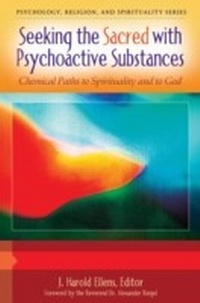
Seeking the Sacred with Psychoactive Substances
Chemical Paths to Spirituality and to God [2 Volumes]
1st Edition
Published on 28. October 2014
888 pages
978-1-4408-3088-4 (ISBN)
Description

Can drugs be used intelligently and responsibly to expand human consciousness and heighten spirituality? This two-volume work presents objective scientific information and personal stories aiming to answer the question.
The first of its kind, this intriguing two-volume set objectively reports on and assesses this modern psycho-social movement in world culture: the constructive medical use of entheogens and related mind-altering substances. Covering the use of substances such as ayahuasca, cannabis, LSD, peyote, and psilocybin, the work seeks to illuminate the topic in a scholarly and scientific fashion so as to lift the typical division between those who are supporters of research and exploration of entheogens and those who are strongly opposed to any such experimentation altogether.
The volumes address the history and use of mind-altering drugs in medical research and religious practice in the endeavor to expand and heighten spirituality and the sense of the divine, providing unbiased coverage of the relevant arguments and controversies regarding the subject matter. Chapters include examinations of how psychoactive agents are used to achieve altered states in Judaism, Christianity, Islam, and Buddhism as well as in the rituals of shamanism and other less widely known faiths. This highly readable work will appeal to everyone from high school students to seasoned professors, in both the secular world and in devoted church groups and religious colleges.
The first of its kind, this intriguing two-volume set objectively reports on and assesses this modern psycho-social movement in world culture: the constructive medical use of entheogens and related mind-altering substances. Covering the use of substances such as ayahuasca, cannabis, LSD, peyote, and psilocybin, the work seeks to illuminate the topic in a scholarly and scientific fashion so as to lift the typical division between those who are supporters of research and exploration of entheogens and those who are strongly opposed to any such experimentation altogether.
The volumes address the history and use of mind-altering drugs in medical research and religious practice in the endeavor to expand and heighten spirituality and the sense of the divine, providing unbiased coverage of the relevant arguments and controversies regarding the subject matter. Chapters include examinations of how psychoactive agents are used to achieve altered states in Judaism, Christianity, Islam, and Buddhism as well as in the rituals of shamanism and other less widely known faiths. This highly readable work will appeal to everyone from high school students to seasoned professors, in both the secular world and in devoted church groups and religious colleges.
All prices
More details
Series
Edition
1. Auflage
Language
English
Place of publication
United States
Publishing group
Bloomsbury Publishing Plc
Target group
Interest Age: From 7 to 17 years
ISBN-13
978-1-4408-3088-4 (9781440830884)
Copyright in bibliographic data and cover images is held by Nielsen Book Services Limited or by the publishers or by their respective licensors: all rights reserved.
Schweitzer Classification
Other editions
Additional editions
J. Harold Ellens
Seeking the Sacred with Psychoactive Substances
Chemical Paths to Spirituality and to God [2 volumes]
Book
10/2014
Praeger Publishers Inc
€159.22
Shipment within 10-20 days
Persons
J. Harold Ellens, PhD, is a retired professor of psychology and philosophy, a retired Presbyterian theologian and pastor, and a psychotherapist in private practice.
Content
Volume 2: Insights, Arguments, and Controversies
Series Editor's Foreword
Foreword by the Reverend Dr. Alexander Riegel
Acknowledgments
Introduction by J. Harold Ellens
Chapter 1 The Rebirth of Research with Entheogens: Lessons from the Past and Hypotheses for the Future
William A. Richards
Chapter 2 Entheogens in the Study of Religious Experiences: Current Status
William A. Richards
Chapter 3 Psilocybin Research at Johns Hopkins: A 2014 Report
Robert Jesse and Roland R. Griffiths
Chapter 4 Shamanic Induction of Altered States for Spiritual Inspiration
Carl A. P. Ruck
Chapter 5 The Therapeutic Use of Peyote in the Native American Church
Joseph D. Calabrese
Chapter 6 "One Heart": Personal Insights into Spiritual Dimensions of Participation in Contemporary Ayahuasca Rituals
Evgenia Fotiou
Chapter 7 The UDV Religion, Science, and Academic Research
Beatriz Caiuby Labate and Rosa Melo
Chapter 8 Implications of LSD and Experimental Mysticism
Walter N. Pahnke and William A. Richards
Chapter 9 Personal Experiences with Psychoactive Agents: Our First Time
Zalman Schachter-Shalomi and Stanley Krippner
Chapter 10 The Religious Use of Psychedelic Experiences in Shamanism and the Question of the Value and Validity of Such Experiences
Roger Walsh
Chapter 11 Chemically Facilitated Mysticism and the Question of Veridicality
Ralph W. Hood Jr.
Chapter 12 Psychedelic Spirituality and Discernment
Dan Merkur
Chapter 13 The Mystical Core of Organized Religion
David Steindl-Rast
Chapter 14 Reflections on the Mystery of Death and Rebirth in LSD Therapy
Christopher M. Bache
Chapter 15 Psilocybin and Mystical Experience: Implications for the Alleviation of Existential and Psycho-Spiritual Distress at the End of Life
Anthony P. Bossis
Chapter 16 Luther's "A Mighty Fortress is Our God"-Insights from Grof's Perinatal Theory
Thomas B. Roberts
Chapter 17 Psychedelic Research: Past, Present, and Future
Stanislav Grof
Chapter 18 A New Means for Perennial Ends: Self-Transcendent Experiences and Noninvasive Brain Stimulation
David B. Yaden and Andrew B. Newberg
Chapter 19 Chemical Paths to Spirituality: Philosophical, Legal, and Religious Perspectives
Robert C. Fuller
Index
About the Series Editor and Advisors
About the Editor and Contributors
Series Editor's Foreword
Foreword by the Reverend Dr. Alexander Riegel
Acknowledgments
Introduction by J. Harold Ellens
Chapter 1 The Rebirth of Research with Entheogens: Lessons from the Past and Hypotheses for the Future
William A. Richards
Chapter 2 Entheogens in the Study of Religious Experiences: Current Status
William A. Richards
Chapter 3 Psilocybin Research at Johns Hopkins: A 2014 Report
Robert Jesse and Roland R. Griffiths
Chapter 4 Shamanic Induction of Altered States for Spiritual Inspiration
Carl A. P. Ruck
Chapter 5 The Therapeutic Use of Peyote in the Native American Church
Joseph D. Calabrese
Chapter 6 "One Heart": Personal Insights into Spiritual Dimensions of Participation in Contemporary Ayahuasca Rituals
Evgenia Fotiou
Chapter 7 The UDV Religion, Science, and Academic Research
Beatriz Caiuby Labate and Rosa Melo
Chapter 8 Implications of LSD and Experimental Mysticism
Walter N. Pahnke and William A. Richards
Chapter 9 Personal Experiences with Psychoactive Agents: Our First Time
Zalman Schachter-Shalomi and Stanley Krippner
Chapter 10 The Religious Use of Psychedelic Experiences in Shamanism and the Question of the Value and Validity of Such Experiences
Roger Walsh
Chapter 11 Chemically Facilitated Mysticism and the Question of Veridicality
Ralph W. Hood Jr.
Chapter 12 Psychedelic Spirituality and Discernment
Dan Merkur
Chapter 13 The Mystical Core of Organized Religion
David Steindl-Rast
Chapter 14 Reflections on the Mystery of Death and Rebirth in LSD Therapy
Christopher M. Bache
Chapter 15 Psilocybin and Mystical Experience: Implications for the Alleviation of Existential and Psycho-Spiritual Distress at the End of Life
Anthony P. Bossis
Chapter 16 Luther's "A Mighty Fortress is Our God"-Insights from Grof's Perinatal Theory
Thomas B. Roberts
Chapter 17 Psychedelic Research: Past, Present, and Future
Stanislav Grof
Chapter 18 A New Means for Perennial Ends: Self-Transcendent Experiences and Noninvasive Brain Stimulation
David B. Yaden and Andrew B. Newberg
Chapter 19 Chemical Paths to Spirituality: Philosophical, Legal, and Religious Perspectives
Robert C. Fuller
Index
About the Series Editor and Advisors
About the Editor and Contributors

