

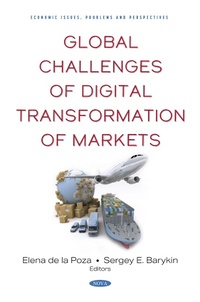
Global Challenges of Digital Transformation of Markets
Published on 7. July 2021
626 pages
978-1-5361-9864-5 (ISBN)
Description

As rapid changes are brought on by technologies and by the challenges facing humanity, existing businesses consistently update and reinvent. This book tackles the challenges of adopting and reinventing business models due to the digital transformation in logistics and supply chain management, digitization of trade networks and global markets, with a primary focus on business processes, marketing transformation and human resources management.
More details
Other editions
Additional editions
Elena de la Poza
Global Challenges of Digital Transformation of Markets
Book
07/2021
Nova Science Publishers Inc
€409.20
Shipment within 15-20 days
Content
- Intro
- Contents
- Preface
- Chapter 1
- Assessment of Stability
- of Network Logistics Business
- Abstract
- 1. Introduction
- 2. Problem Statement
- 3. Main Formalisms
- 4. General Mathematical Model
- 5. Study of Solution Stability
- Conclusion
- References
- Chapter 2
- Algorithm for Supporting Multimodal Logistics in Conditions of Market Uncertainty
- Abstract
- 1. Introduction
- 2. Problem Statement
- 3. Main Mathematical Formalisms
- 4. Algorithm
- 5. Results
- 6. Calculation
- Conclusion
- References
- Chapter 3
- Stochastic Algorithms for Managing the Flows of Material Resources of a Logistics Hub
- Abstract
- 1. Introduction
- 2. Objectives
- 3. Developing a Mathematical Description
- 4. Forming a General Model
- 5. Example of DC Calculation
- Conclusion
- References
- Chapter 4
- Digital Transformation SCM in View of Covid-19 from Thailand SMEs Perspective
- Abstract
- 1. Introduction
- 2. Materials and Methods
- 2.1. Driving Factors Expediting Digital Transformation
- Globalization
- Fourth Industrial Revolution
- Internet of Things (IoT)
- Effects of Generation Z on the Market
- Blockchain
- Cloud Computing
- Increase Use of Smartphones
- 3D Printers
- Chatbots
- Big Data
- Augmented Reality (AR)
- Developing a Circular Economy
- Nanotechnology (N)
- Digital Supply Chain (DSC)
- Robotics
- Advanced Manufacturing Technologies
- 2.2. Digital Transformation in Thailand
- 2.3. Tactical Stage of Transformation
- 2.4. Digital Transformation of SMEs in Thailand
- Data-Based Transformation
- Adoption of a Learning Culture
- Roadmap Development
- Creation of Awareness
- Collaboration
- Support
- 3. Results
- 4. Discussion
- Conclusion
- References
- Chapter 5
- Digital Conversion of Life Cycle Processes Transportation and Logistics Systems
- Abstract
- 1. Introduction
- 2. Materials and Methods
- 3. Results
- 4. Discussion
- Conclusion
- References
- Chapter 6
- Business Process Transformation in Air Cargo Logistics
- Abstract
- 1. Introduction
- 1.1. Air Cargo Business Processes
- 1.2. Related Work
- 2. Materials and Methods
- 2.1. Changes in the Process
- 2.2. Camera-Based Barcode Scanning
- 2.3. Cloud Platform
- 2.4. Autonomous Truck
- 3. Results
- 3.1. Test Scenarios
- 3.2. Results of the Camera-Based Barcode Scanning
- 4. Discussion
- Conclusion
- Acknowledgments
- References
- Chapter 7
- Structuring Indicators in Assessing the Effectiveness of Digital Transformation of Logistics
- Abstract
- 1. Introduction
- 2. Materials and Methods
- 3. Results
- 4. Discussion
- Conclusion
- References
- Chapter 8
- Digital Transformation Challenges in Supply Chain Management: A Case Study of Alpine Biomedical
- Abstract
- 1. Introduction
- 1.1. Biomedical Diagnostic Industry
- 1.2. Innovation at Alpine Biomedicals
- 2. Materials and Methods
- 2.1. Business Process: Supply Chain Management
- 2.2. Digital Transformation of Supply Chain Management
- 2.3. Goals of Digital Transformation of SCM
- 2.4. The Procedural framework
- 3. Results
- 3.1. Impact of Digitized SCM at Alpine Biomedicals
- 4. Discussion
- Conclusion
- Acknowledgment
- Appendix
- Appendix 1. Products Manufactured at Alpine Biomedicals
- Appendix 2. Certificate of Compliance
- Appendix 3. Facility Overview
- Appendix 4. Approval form NIV & CDSCO
- References
- Chapter 9
- Logistics Concept of Knowledge Transfer
- Abstract
- 1. Introduction
- 2. Literature Review
- 3. Problem Statement
- 4. Methodology
- Conclusion
- References
- Chapter 10
- Smart Supply Chains' Development within the Ecosystems of Digital Transport Corridors
- Abstract
- 1. Introduction
- 2. Literature Review
- 3. Materials and Methods
- 4. Results of the Study
- 5. Discussion
- Conclusion
- References
- Chapter 11
- Online Food Trade in Non-Capital Regions
- Abstract
- 1. Introduction
- 2. Materials and Methods
- 2.1. Criteria Selection and Region Grouping
- 2.2. Grouping of Online Trading Enterprises by the Volume of Functions Performed
- 2.2.1. Intermediary Companies (First and Second Groups)
- 2.2.2. Other Companies (Third, Fourth, and Fifth Groups)
- 3. Results
- 3.1. First Quadrant
- 3.2. Second Quadrant
- 3.3. Third Quadrant
- 3.4. Fourth Quadrant
- 4. Discussion
- Conclusion
- References
- Chapter 12
- Identification of Sector Leaders: Analysis of Agricultural Companies Using Kohonen Networks
- Abstract
- 1. Introduction
- 2. Materials and Methods
- 3. Results
- 3.1. Analysis of Average Values
- 3.2. Analysis of Absolute Indicators
- 4. Discussion
- Conclusion
- References
- Chapter 13
- Tools Making Optimal Management Decisions to Ensure Economic Stability of Economic Entities
- Abstract
- 1. Introduction
- 2. Materials and Methods
- 3. Results
- Discussion
- Conclusion
- References
- Chapter 14
- Technological Transformation of the Macroregion Economy as a Result of Digitalization
- Abstract
- 1. Introduction
- 2. Materials and Methods
- 3. Results
- 4. Discussion
- 4.1. The State of Fixed Assets and Investments in Fixed Assets in the Studied Macroregion
- 4.2. General Characteristics and Specific Features of the Macroregion Technological Structure
- 4.3. Digitalization as a Way of a Macroregion Economy Technologizing
- Conclusion
- Acknowledgment
- References
- Chapter 15
- Digital Business Model Transformation in Order to Improve the Efficiency of the Company's Management Process
- Abstract
- 1. Introduction
- 2. Materials and Methods
- 3. Results
- 4. Discussion
- Example of Digital Business Model Transformation
- Conclusion
- References
- Chapter 16
- Substantiation of Factors for Assessing the Historical and Cultural Value of the Territories of Settlements Using Digital Technologies
- Abstract
- 1. Introduction
- 2. Materials and Methods
- 2.1. The Concept of the Methodology for Assessing the Historical and Cultural Value of the Territory
- 2.2. Selection and Justification of a Preliminary Set of Assessment Factors
- 3. Results
- 3.1. Checking the Estimated Factors for Multicollinearity and Justifying Their Final List
- 4. Discussion
- Conclusion
- References
- Chapter 17
- Digital Transformation and New Era of Technological Innovations of Global Hospitality Service Markets
- Abstract
- 1. Introduction
- 2. Materials and Methods
- 2.1. Sample and Procedure
- 3. Results
- 4. Discussion
- Conclusion
- Managerial Implications
- References
- Chapter 18
- Digital Image of a Dynamic Sales Funnel
- Abstract
- 1. Introduction
- 2. Main Characteristics of the Sales Funnel
- 3. Statement of the Problem
- 4. Mathematical Model
- 5. Economic and Mathematical Modeling
- 6. Calculation
- Conclusion
- References
- Chapter 19
- Predictive Methodology for Assessing Periodic Market Fluctuations
- Abstract
- 1. Introduction
- 2. Materials and Methods
- 3. Main Formalisms of the Mathematical Model
- 4. Initial Data of the Model
- 5. Accounting for Market Uncertainty
- 6. Mathematical Model
- Conclusion
- References
- Chapter 20
- Digital Transformation of Trade: Opportunities for the Development of Online Stores
- Abstract
- 1. Introduction
- 2. Materials and Methods
- 2.1. Research Theory and Methodology
- 2.2. Theoretical Foundations
- 3. Results
- 4. Discussion
- Conclusion
- References
- Chapter 21
- The Digital Communications Strategy Development as a Factor of the Brand Identity Promotion
- Abstract
- 1. Introduction
- 2. Materials and Methods
- 2.1. Literature Review
- 2.2. Theoretical Fundamentals
- 2.3. The Methodology of the Research
- 3. Results
- 3.1. Brand Identity
- 3.2. Integrated Marketing Communications in the Modern Digitalized Environment
- 3.2.1. Digital Marketing Communications Strategy
- 4. Discussion
- Conclusion
- References
- Chapter 22
- Digital Transformation of the Russian Venture Ecosystem under the Impact of the COVID-19
- Abstract
- 1. Introduction
- 2. Materials and Methods
- 3. Results
- 4. Discussion
- Conclusion
- References
- Chapter 23
- The Efficiency of Service Sector Organizations on the Basis of Customer Satisfaction
- Abstract
- 1. Introduction
- 2. Materials and Methods
- 3. Results
- 4. Discussion
- Conclusion
- References
- Chapter 24
- The Study of the Dynamic Series of Economic Indicators of Enterprises in the Hotel Sector
- Abstract
- 1. Introduction
- 2. Materials and Methods
- 2.1. Activity of Collective Placements
- 3. Results
- 3.1. Operational Indicators of Activity of Hotels
- 4. Discussion
- 4.1. The Interpretation of the Results of the Calculation
- 4.1.1. The Hotel Barnaul
- 4.1.2. The Hotel Novorossiysk
- 4.1.3. The Hotel Tomsk
- Conclusion
- References
- Chapter 25
- Impact of Digitalization on the Image and Overall Number of Visitors of Shopping Centers
- Abstract
- 1. Introduction
- 2. Materials and Methods
- 3. Results
- Discussion
- Conclusion
- References
- Chapter 26
- Implementation of Integrated Digital Solutions in the Passenger Car Market
- Abstract
- 1. Introduction
- 2. Materials and Methods
- 3. Results
- 3.1. Selection of Alternatives and Criteria for Evaluation
- 3.2. Development of a Nomenclature of Quality and Safety Indicators
- 3.3. Selection of Quality and Safety Indicators for Car Pneumatic Tires
- 3.4. Determining the Weighting Factors for the Quality and Safety of Car Pneumatic Tires
- 3.5. Qualimetric Evaluation of Pneumatic Car Tires
- 4. Discussion
- Conclusion
- References
- Chapter 27
- Determining Ways to Improve the Company's Business Processes Based on the Assessment of the Probability of Bankruptcy in the Digital Economy
- Abstract
- 1. Introduction
- 2. Materials and Methods
- 3. Results
- 4. Discussion
- Conclusion
- Acknowledgments
- References
- Chapter 28
- Influence of Digital Economy on
- the Transformation of Banking for Business
- Abstract
- 1. Introduction
- 2. Materials and Methods
- 3. Results
- 3.1. Level of Availability of Russian Banking Services
- 3.2. Asymmetry of the Russian Banking Sector
- 3.3. Digitalization Trends of Business and Banking Sector Interaction
- 3.3.1. Trend 1
- 3.3.2. Trend 2
- 3.3.3. Trend 3
- 3.3.4. Trend 4
- 3.3.5. Trend 5
- 3.3.6. Trend 6
- 3.3.7. Trend 7
- 4. Discussion
- Conclusion
- References
- Chapter 29
- Post-COVID Marketing 2019: Launching
- a New Cycle of Digital Development
- Abstract
- 1. Introduction
- 2. Materials and Methods
- 3. Results
- 4. Discussion
- Conclusion
- References
- Chapter 30
- RFID System as a Modern Trend in the Field of Digitalization of Russian Retail
- Abstract
- 1. Introduction
- 2. Materials and Methods
- 3. Results
- 4. Discussion
- Conclusion
- References
- Chapter 31
- Post-Purchase Dissonance in Online and Offline Consumer Behavior in Handmade Industry
- Abstract
- 1. Introduction
- 1.1. Post-purchase Dissonance: Factors and Effects
- 1.2. Post-purchase Dissonance and Impulse Purchases
- 1.3. Post-purchase Dissonance and Online Shopping
- 1.4. Handmade Industry
- 2. Materials and Methods
- 2.1. Questionnaire Development
- 2.2. Data Collection
- 3. Results
- 3.1. Characteristics of the Experience of Online Shopping, Online and Offline Shopping For Handmade Goods
- 3.2. Characteristics of Dissonance in Online and Offline Purchases of Handmade Goods
- 3.3. Characterization of Dissonance by the Type of Dissonance: Regret about the Result and Regret about the Decision-Making Process
- 4. Discussion
- Conclusion
- Acknowledgments
- References
- Chapter 32
- Digital Trends of the Sharing Economy in the Field of Tool Rental
- Abstract
- 1. Introduction
- 1.1. Sharing Economy
- 1.2. Digitalization
- 1.3. Tool Rental
- 1.4. Search Query Statistics
- 2. Materials and Methods
- 3. Results
- 4. Discussion
- Conclusion
- Acknowledgments
- References
- Chapter 33
- Regression Impact Analysis in Digital Payment Systems
- Abstract
- 1. Introduction
- 1.1. Research Problem Coverage
- 1.2. Worldwide Statistic
- 1.3. Digital Payment Transformation
- 2. Materials and Methods
- 2.1. System Description
- 2.2. Version Control
- 2.3. Functional Area
- 2.4. Codebase Annotation
- 2.5. Use Case Description
- 2.6. Dependency Model
- 3. Results
- 4. Discussion
- Conclusion
- References
- Chapter 34
- Diagnostics and Forecasting of Business Processes in the Service Sector as a Tool for Strategic Planning and Development of the Consumer Market in the Economy of the Region
- Abstract
- 1. Introduction
- 2. Materials and Methods
- 3. Results
- 4. Discussion
- Conclusion
- References
- Chapter 35
- Influence of the Evolution of Institutions in the Digital Retail Environment on the Transformation of Consumer Behavior
- Abstract
- 1. Introduction
- 2. Materials and Methods
- 3. Results
- 4. Discussion
- Conclusion
- Acknowledgment
- References
- Chapter 36
- Model Tools for Managing Regional Business Processes in the Era of Digitalization
- Abstract
- 1. Introduction
- 2. Materials and Methods
- 2.1. Regression Models
- 2.2. Autoregressive Models
- 2.3. Simulation Models
- 3. Results
- 4. Discussion
- Conclusion
- Acknowledgments
- References
- Chapter 37
- Development of Methodology for Assessing Effectiveness of Online Store Promotion Tools
- Abstract
- 1. Introduction
- 2. Literature Review
- 2.1. SEO-Promotion
- 2.2. Contextual Advertising
- 2.3. Media and Banner Advertising
- 2.4. S??
- 2.5. Content Marketing
- 3. Materials and Methods
- 4. Results
- 5. Discussion
- Conclusion
- Acknowledgments
- References
- Chapter 38
- The Impact of Marketing Incentives on Online and Offline Impulse Buying Behavior in Handmade Industry
- Abstract
- 1. Introduction
- 1.1. Impulse Buying Behavior
- 1.2. Online Impulse Buying Behavior
- 1.3. Handmade Industry
- 2. Materials and Methods
- 2.1. Questionnaire Development
- 2.2. Data Collection
- 3. Results
- 3.1. Impact of Marketing Incentives on Impulse Purchases of Handmade Goods in Offline Environment
- 3.2. Impact of Marketing Incentives on Impulse Purchases of Handmade Goods in the Online Environment
- 3.3. Comparison of the Impact of Marketing Incentives on Impulse Purchases of Handmade Goods in Offline and Online Environments
- 4. Discussion
- Conclusion
- Acknowledgments
- References
- Chapter 39
- Trends and Factors of Higher Education Development in Digital Economy
- Abstract
- 1. Introduction
- 2. Materials and Methods
- 3. Results
- 4. Discussion
- Conclusion
- Acknowledgment
- References
- Chapter 40
- Assessment of Investments in Human Resources
- Abstract
- 1. Introduction
- 2. Materials and Methods
- 2.1. Research Methods and Materials
- 2.2. Typification of Investments in Human Capital
- 3. Results
- 3.1. Method and Formula for Calculating Investment in Human Resources
- 3.2. Approbation of the Effectiveness of Investments in Human Capital Using Data of LLC "Alternativa
- 4. Discussion
- Conclusion
- Acknowledgments
- References
- Chapter 41
- Computer Vision, AI and ML in HR
- and Event Management
- Abstract
- 1. Introduction
- 2. Materials and Methods
- 2.1. Technologies Used
- 2.2. Methodologies Used
- 2.3. Metrics
- 3. Results
- 3.1. Automation of HR Analysis
- 3.2. Automation of Event-Analysis
- 3.3. Technology Application
- 4. Discussion
- Conclusion
- Acknowledgments
- References
- About the Editors
- Index
- Blank Page
- Blank Page
