

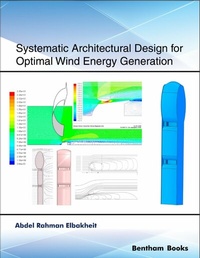
Systematic Architectural Design for Optimal Wind Energy Generation
Description

Systematic Architectural Design for Optimal Wind Energy Generation is a handy reference on the aerodynamic architectural forms in buildings for optimizing wind energy conversion processes. Chapters of the book cover the basics of wind energy generation and building design that make them more conducive for generating wind power, and in line with sustainable energy design goals.
Key Features:
- 7 chapters organized in a simple, reader friendly layout
- A learning approach to the subject that highlights key concepts in architectural science and wind energy physics
- Introduces readers to the application of computational Fluid Dynamics (CFD) tools to visualize and simulate architectural forms under wind actions
- An objective focus on architectural forms is presented, including the role of the form in optimizing wind energy conversion and the negative effects of wind on certain forms
- Covers the building and positioning of different types of wind turbines
- References for further reading
Systematic Architectural Design for Optimal Wind Energy Generation is an essential reference for students of architecture at all levels, professional architects, as well as readers interested in green building design, renewable energy and sustainability studies that pave the way towards proactive environment-friendly solutions.
All prices
More details
Other editions
Additional editions
Content
- Cover
- Title
- Copyright
- End User License Agreement
- Contents
- Preface
- CONSENT FOR PUBLICATION
- CONFLICT OF INTEREST
- ACKNOWLEDGEMENTS
- REFERENCES
- Wind and Architecture
- 1. INTRODUCTION
- 2. EXAMPLES OF FULLY DEVELOPED ARCHITECTURAL DESIGNS FOR WIND ENERGY HARVESTING
- 2.1. Bahrain World Trade Center
- 2.2. Strata SE1
- 2.3. Pearl River Tower
- 3. WIND AND ARCHITECTURAL SAFETY
- 3.1. Wind-induced Vibration in Buildings-Definition and Cause
- 3.2. Wind-induced Vibration in Buildings-Remedies and Measures
- 3.3. Performance Criteria for Tall Buildings under Wind Design
- 3.3.1. Human Comfort
- 4. BUILDING'S AERODYNAMIC PERFORMANCE
- CONCLUSION
- REFERENCES
- Aerodynamic Architectural Design
- 1. INTRODUCTION
- 2. REASONS FOR AERODYNAMIC ARCHITECTURAL DESIGN
- 2.1. Ventilation
- 2.1.1. Natural Wind Pressure
- 2.1.2. Displacement or Stack Ventilation
- 2.1.3. Bernoulli Effect
- 2.1.4. Venturi Tube
- 2.1.5. Types of Wind Flows: Laminar, Separated, Turbulent or Eddy Flows
- 2.1.6. Air Inertia
- 2.1.7. No Vacuum in the Atmosphere
- 3. WIND ENERGY HARVESTING
- 3.1. Building Design Optimisation for Potential Wind Energy Collection
- 3.1.1. Overview
- 3.2. Aerodynamic Aerofoils for Wind Energy Generation
- CONCLUSION
- REFERENCES
- Wind as an On-site Energy Source
- 1. INTRODUCTION
- 2. WIND ENERGY AVAILABILITY
- 3. WIND AVAILABILITY WITH HEIGHT
- 4. VARIABILITY
- 5. CAPACITY FACTOR
- CONCLUSION
- REFERENCES
- Architectural Aerofoil Form Optimisation for Wind Energy Generation
- 1. INTRODUCTION
- 2. ANALYSIS OF WIND TURBINE INTEGRATION INTO BUILDING DESIGN
- 2.1. Assumptions
- 2.2. Wind Turbine Integration
- 2.3. Optimising Aerofoil Proximity to Roof Surface
- 2.4. Underlying Simulation Strategies
- 2.5. Computational Fluid Dynamics
- 2.5.1. Effect of Domain Size
- 2.5.1. Mesh-independent Solution
- 2.5.3. Grid Convergence Study
- 2.6. The Effect of Models of Turbulence
- 2.7. The Effect of the Aerofoil Position on Top of the Roof
- 2.8. The Effect of Different Wind Directions
- 2.9. Summary of Optimising the Aerofoil Proximity to the Roof of the House
- 2.10. Summary of Optimisation of the Aerofoil Front Shape
- 2.11. Effect of Increasing the Angle of Attack
- 3. POWER ESTIMATION
- 3.1. Effect of Aerofoil Angle of Attack and Aerofoil Proximity on the Power Output
- CONCLUSION
- REFERENCES
- Building-Integrated Wind Turbines
- 1. INTRODUCTION
- 2. NOISE REDUCTION OR PREVENTION
- 3. WIND-INDUCED VIBRATIONS IN WIND TURBINES
- 4. INCREASING WIND VELOCITY FOR WIND TURBINES
- 4.1. Diffuser Design Evolution
- 4.2. Technical Background
- 4.3. Velocity and Pressure of the Diffuser
- 4.4. Classifications of Ducted Wind Turbines
- 4.4.1. Simple Diffusers
- 4.4.2. Multi-slot Diffuser
- 4.4.3. Brim or Flange Diffuser
- 4.4.4. Vorticity-based Diffuser/Turbine
- 4.4.5. Mixer Ejector Wind Turbine
- 4.4.6. Rotating Diffuser
- CONCLUSION
- REFERENCES
- Effect of Turbine Resistance and Positioning on the Performance of Aerofoil Building-Augmented Wind Energy Generation
- 1. INTRODUCTION
- 2. EFFECT OF TURBINE RESISTANCE ON RESULTING VELOCITIES AND FLOW PATTERNS
- 2.1. Effect of Turbine Resistance on Wind Flow Patterns
- 2.2. Effect of Turbine Resistance on Resulting Wind Velocities
- 3. EFFECT OF TURBINE RESISTANCE ON RESULTING PRESSURE COEFFICIENT
- 4. EFFECT OF TURBINE RESISTANCE ON RESULTING POWER GENERATION
- 5. TURBINE POSITIONS UNDER THE AEROFOIL
- 6. EFFECT OF BUILDING HEIGHT ON RESULTING WIND VELOCITIES
- 6.1. Results of the Effect of Building Height
- CONCLUSION
- REFERENCES
- Conclusion
- Subject Index
